1. What Relative Humidity Means in the Oxidation Room
Relative humidity is the ratio of the mass of water vapour actually present in a parcel of air to the maximum mass that air could hold at the same temperature, expressed as a percentage. At 90 per cent RH and 25 °C, the air carries nine-tenths of the moisture it would hold at saturation (100 per cent RH, the dew point). For tea oxidation the number matters because it governs the vapour-pressure gradient between the wet leaf surface and the surrounding atmosphere: if room RH sits below the equilibrium vapour pressure of the water in the leaf sap—roughly 95–96 per cent at typical rolled-leaf moisture content—water evaporates from the surface faster than capillary action draws fresh sap to replace it, the surface film thins and dries, and the enzymes embedded in that film lose the aqueous environment they require.
Conversely, when room RH climbs to 98 or 100 per cent, the gradient reverses or vanishes. Water vapour condenses onto the leaf, forming visible droplets that flood the stomatal cavities and intercellular air spaces. Oxygen must now dissolve through a water film to reach polyphenol oxidase active sites—a much slower process than gas-phase diffusion—and the diluted enzyme and substrate concentrations further depress reaction velocity. The 85–95 per cent sweet spot sits just below the leaf's equilibrium point: enough gradient to keep the surface moist and pliable, not so much that the leaf sheds water or that condensation blocks oxygen pathways.
It is worth noting that RH is temperature-dependent. Warm air at a given dew point reads lower RH than cool air at the same absolute moisture content, because warm air's saturation capacity is higher. Raising the oxidation room from 22 to 28 °C without adding water can drop RH by ten percentage points, which is why climate-controlled factories pair heating mats with ultrasonic humidifiers or steam injection, adjusting both variables in tandem to hold the target RH regardless of metabolic heat generated by the oxidising pile.
RH Is Temperature's Shadow
Whenever you raise oxidation-room temperature—by heater, sunlight or metabolic heat—relative humidity falls unless you add moisture. Always measure both and adjust together.
2. Why 85–95 Per Cent RH Sustains Enzyme Activity
Polyphenol oxidase and peroxidase are aqueous enzymes: their tertiary structure, substrate binding and catalytic turnover all depend on a surrounding water shell. When the leaf-surface moisture film thins below a critical thickness—typically occurring below 75 per cent room RH—local water activity (aw) at the enzyme's microenvironment drops toward 0.85, approaching the threshold at which many oxidoreductases denature or adopt inactive conformations. The reaction does not stop instantly, but measured rates of catechin disappearance and theaflavin formation decline by 50–70 per cent within fifteen minutes once surface aw falls below 0.90.
At the upper boundary, sustained exposure to 96–100 per cent RH creates liquid-water pooling. Oxygen solubility in water at 25 °C is roughly 8 mg/L, and its diffusion coefficient in liquid water is four orders of magnitude lower than in air. When intercellular spaces fill with condensed moisture, oxygen flux to the enzyme-rich mesophyll cells plummets. Simultaneously, high surface moisture dilutes the effective concentration of catechins, caffeine and other soluble substrates; because enzymatic velocity follows Michaelis–Menten kinetics, halving substrate concentration can halve initial reaction rate if you are operating near Km. The 85–95 per cent window threads the needle: surface water activity remains above 0.95, sustaining full enzyme hydration, while intercellular air spaces stay gas-filled, permitting rapid oxygen diffusion to replace the O₂ consumed in each hydroxylation and condensation cycle.
Field observations support this mechanism. Factories that let RH drift to 70 per cent report pale, greenish liquor and grassy aroma even after extended oxidation; those where fog or monsoon rains push RH to 98 per cent see slow colour development, muted volatile evolution and, if the condition persists beyond three hours, incipient microbial growth on the damp leaf surface. The enzymatic sweet spot is narrow, and maintaining it requires either natural climatic luck or deliberate environmental control.
3. Moisture Equilibrium During Rolling and the Vapour-Pressure Gradient
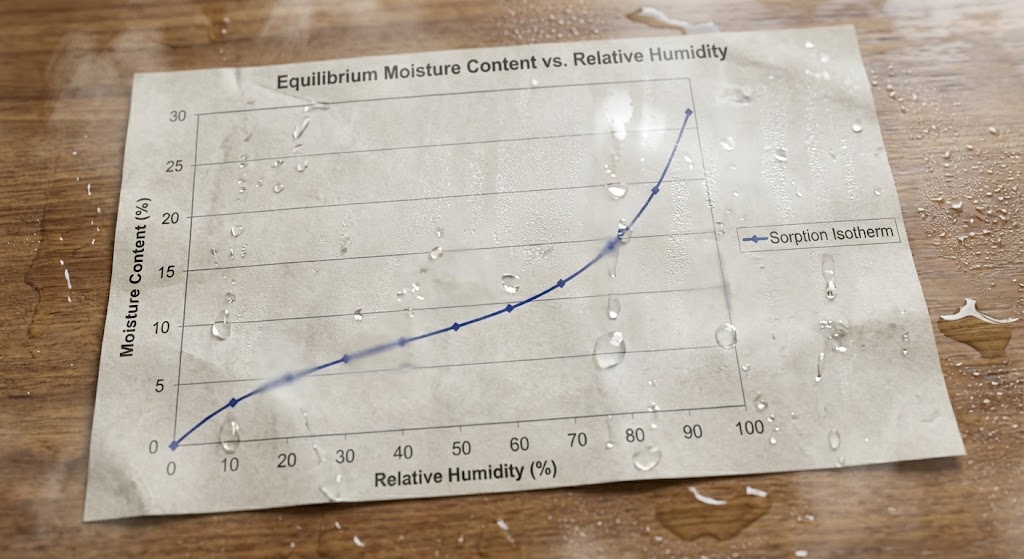
Freshly withered leaf enters the roller at 68–72 per cent moisture; by the time rolling finishes—twenty to forty minutes of pressure, shear and cell rupture—moisture content has dropped to 58–62 per cent, partly through mechanical expression of sap, partly through evaporative loss into the roller's micro-climate. That 60 per cent moisture by weight corresponds to a water activity of roughly 0.96–0.97, which in turn implies an equilibrium relative humidity just below saturation. If you spread the rolled leaf into a room held at exactly 96 per cent RH, net evaporation and condensation would theoretically balance; in practice you aim for 88–92 per cent RH to maintain a gentle outward vapour flux—enough to prevent condensation but slow enough that the leaf does not desiccate.
The physics of this exchange are governed by Fick's first law: the rate of water-vapour diffusion away from the leaf surface is proportional to the concentration gradient (which maps directly to the RH difference) and to the surface area exposed. A thinly spread oxidation bed maximises area and accelerates moisture loss, demanding higher room RH or frequent misting to compensate. A piled bed reduces surface area but risks localised anaerobic pockets; many factories compromise by spreading leaf 5–8 cm deep on woven trays, then stacking the trays in a humidified chamber where air circulates gently between layers without creating turbulent eddies that would strip moisture from the top tray.
This dynamic also explains why moisture equilibrium shifts as oxidation proceeds. Enzymatic polymerisation and the Maillard-adjacent reactions release small amounts of water as a by-product, and if the room is sealed that metabolic moisture nudges RH upward—sometimes by 2–4 percentage points over two hours in a small, well-insulated chamber. Conversely, any air exchange with drier outdoor air pulls RH down. Continuous monitoring with a data-logging hygrometer, combined with on-demand humidification or ventilation, is the only reliable way to hold the target through an entire oxidation cycle.
The Two-Hour Drift
Even in a sealed room, metabolic water release and heat can shift RH by 3–5 points during a full oxidation run. Check your hygrometer every thirty minutes and adjust humidifier output or ventilation accordingly.
4. How Dry Air Stalls Oxidation: The 75 Per Cent Threshold
When room RH falls to 70–75 per cent, evaporative loss from the rolled leaf accelerates. Water diffuses outward through stomata and the ruptured cuticle faster than the xylem remnants and turgor pressure can draw replacement moisture from the interior; within ten to fifteen minutes a visible dry zone forms on the leaf edges and tips—the same high-surface-area regions that naturally oxidise fastest. As that surface layer dries, local water activity drops below 0.90, the point at which polyphenol oxidase begins to lose catalytic efficiency. Measured in a laboratory setting, PPO from Camellia sinensis shows a steep activity decline when aw falls from 0.95 to 0.85, with near-total inactivation by 0.80.
The practical upshot is a two-speed oxidation: the still-moist leaf core continues browning while the desiccated edges arrest in a semi-green state. The finished tea exhibits uneven colour—brown centres, pale edges—and a flavour profile skewed toward residual catechin astringency rather than the rounded maltiness of theaflavin- and thearubigin-rich leaf. Aroma volatile formation also suffers; many of the enzymatic cleavage and rearrangement pathways that yield linalool oxides, geraniol and methyl salicylate require the same aqueous environment as the main oxidative cascade.
Factories in arid regions—parts of Yunnan's dry season, the Nilgiri plains in February and March—combat low ambient RH by enclosing oxidation beds in plastic-sheeted tents and running ultrasonic humidifiers or hanging wet burlap curtains. Some spray a fine mist directly onto the leaf at fifteen-minute intervals, though this carries the risk of over-wetting if droplets pool rather than evaporate. The key diagnostic is leaf-edge browning: if edges remain green or pale yellow while the midrib turns copper, suspect that room RH has dipped below 75 per cent and surface drying has outpaced enzymatic transformation.
5. How Saturated Air Stalls Oxidation: The 96 Per Cent Ceiling
At the opposite extreme, when room RH exceeds 96 per cent for more than twenty or thirty minutes, the vapour-pressure gradient reverses: air moisture condenses onto the cooler leaf surface, visible as a faint sheen or, in extreme cases, as discrete droplets. Those droplets wick into the stomatal cavities and the spongy mesophyll, displacing the air that normally occupies 20–30 per cent of leaf volume. Oxygen now must dissolve into the condensed water, diffuse in liquid phase to the cell walls, then cross into the cytoplasm—a pathway roughly 10 000 times slower than direct gas-phase diffusion through air-filled intercellular spaces.
Even if oxygen supply were unlimited, the flooding dilutes both enzyme and substrate. A typical oxidising leaf-sap concentration of epigallocatechin gallate might be 15–20 mg/mL; condensation can halve that to 7–10 mg/mL in the surface film, pushing the effective substrate concentration closer to the enzyme's Km and reducing reaction velocity. The result is slow, incomplete oxidation: after three hours at 98 per cent RH the leaf may show only moderate browning, the liquor remains pale amber rather than coppery red, and the flavour retains a heavy, soggy grassiness rather than the bright, brisk character of well-aerated oxidation.
A secondary risk is microbial proliferation. At 98–100 per cent RH and 25–28 °C, the leaf surface becomes a hospitable environment for Aspergillus, Penicillium and lactic-acid bacteria, which can establish visible colonies within twelve hours if oxidation is prolonged or if the leaf is left overnight without drying. Most commercial schedules finish oxidation and fire the leaf within four hours, sidestepping this hazard, but home experimenters who run overnight oxidations in sealed plastic boxes occasionally report off-flavours and mustiness traceable to incipient mould. The solution is to cap RH at 94–95 per cent—close enough to equilibrium to keep the leaf moist, far enough from saturation to prevent standing water and maintain aerobic conditions throughout the bed.
Watch for the Sheen
If rolled leaf looks wet or glossy rather than merely damp, you have crossed into condensation territory. Crack a window or dial back the humidifier to drop RH by 3–5 points and restore gas-phase oxygen diffusion.
6. Practical Techniques for Maintaining 85–95 Per Cent RH
Large-scale producers fit oxidation rooms with wall-mounted or ceiling-hung ultrasonic humidifiers feeding into the ventilation duct, paired with a proportional–integral–derivative controller that reads a capacitive RH sensor and modulates mist output to hold the set point ±2 per cent. Capital cost for a 50 m² room runs £1 200–2 000, but the system pays for itself within one season by eliminating batch-to-batch variability and reducing the need for extended oxidation times to compensate for arrested enzyme activity. In regions with naturally high ambient RH—Darjeeling during the monsoon, Assam's pre-monsoon weeks—the challenge reverses: factories install dehumidifiers or simply increase air-exchange rates, venting moist interior air and drawing in slightly drier outdoor air until RH settles at 90 per cent.
Smaller estates and home setups rely on lower-tech solutions. Hanging damp towels on a clotheshorse inside the oxidation tent raises RH by 10–15 percentage points within thirty minutes; rewetting the towels every hour maintains the buffer. Placing shallow trays of water on the floor adds a slow, steady moisture source, though alone it rarely lifts RH above 80 per cent unless the room is small and well sealed. Some cottage producers in Kangra and the Garhwal hills oxidise leaf in woven-bamboo baskets set inside larger plastic storage tubs with 2 cm of water in the bottom and a loose-fitting lid; the confined headspace equilibrates quickly to 92–95 per cent RH, and the basket elevation prevents direct contact between leaf and standing water.
For UK-based experimenters, outdoor RH becomes the starting variable. On a damp November morning when ambient RH reads 95 per cent, you need only enclose the oxidation tray in a clear-plastic propagator lid to hold moisture; on a breezy April afternoon at 60 per cent RH, even a sealed box with wet sponges may struggle to reach 85 per cent without an active humidifier. A £25 portable ultrasonic unit—the sort sold for bedroom or greenhouse use—can lift a 0.5 m³ enclosure from 65 to 90 per cent RH in fifteen minutes, and a simple plug-in hygrometer with min/max memory (£12–18) lets you verify that RH stayed within range for the entire run. The investment is modest, and the improvement in cup quality—cleaner aromatics, balanced astringency, reliable colour development—is immediately evident when you compare side-by-side infusions of leaf oxidised at controlled RH versus leaf left on the kitchen counter at ambient 55 per cent.
7. Temperature–RH Coupling and Metabolic Heat
Relative humidity and temperature are thermodynamically linked through the Clausius–Clapeyron relation: at constant absolute moisture content, raising temperature lowers RH, because warmer air can hold more water vapour before reaching saturation. A practical example: air at 22 °C and 90 per cent RH, when heated to 28 °C with no moisture added, drops to roughly 78 per cent RH. This coupling means that any heat source—radiators, sunlight through a window, or the metabolic heat released by oxidising leaf—will depress RH unless you compensate with humidification.
Metabolic heat is non-trivial. A 10 kg batch of freshly rolled leaf can release 80–120 W of heat during peak oxidation, enough to raise a small, insulated room by 2–3 °C over ninety minutes. That temperature rise, unchecked, would drop RH by 6–8 percentage points, pushing the environment out of the safe window and triggering surface drying. Many factories counteract this by spreading leaf thinly—maximising surface area for convective and evaporative cooling—and by introducing a gentle air flow (0.2–0.3 m/s) across the trays, which carries away both sensible and latent heat. The air flow must be humid itself; blowing dry outdoor air over the leaf would strip moisture faster than it removed heat, worsening the RH problem.
In climate-controlled rooms, the solution is to run humidification and gentle exhaust ventilation simultaneously, creating a dynamic equilibrium: the humidifier adds moisture to offset evaporative losses and the slight negative pressure from the exhaust fan draws in enough outdoor air—pre-humidified if necessary—to stabilise temperature without desiccating the leaf. Data from Taiwanese oolong producers, who manage partial oxidations at 10, 30 or 70 per cent by varying time and RH, show that tight temperature control (±1 °C) simplifies RH management and yields more repeatable oxidation levels batch to batch. For the home producer, the lesson is simpler: if your oxidation box feels warm to the touch, crack the lid slightly and check that your hygrometer has not drifted below 85 per cent.
Mind the Metabolic Spike
Oxidising leaf generates heat—enough to warm a small room by 2–3 °C and drop RH by 8 points. Pair your heater with active humidification, or time oxidation runs to cooler parts of the day.
8. Seasonal and Geographic Challenges in the UK
The British Isles offer a natural RH rollercoaster: coastal fog in Cornwall or the Western Highlands can deliver 98 per cent RH for days on end, while a February high-pressure system over the Midlands, combined with central heating, can pull indoor RH down to 45 per cent. Anyone attempting small-batch oxidation at home must either chase the weather—running batches on damp autumn mornings and skipping dry spring afternoons—or invest in the environmental-control toolkit described above.
Spring and early summer (April–June) typically see daytime outdoor RH in the 55–70 per cent range across much of England and Wales, rising to 80–85 per cent overnight. A strategy used by several UK hobby tea-makers is to start oxidation at dusk, when outdoor RH climbs naturally, enclosing the leaf in a plastic-tent setup with wet towels; by morning oxidation is complete and the leaf goes straight into a low oven or dehydrator for firing. Autumn and winter (October–March) bring higher baseline RH outdoors—often 85–95 per cent in maritime regions—but indoor heating collapses it; the solution is to oxidise in an unheated outbuilding (garden shed, garage) where indoor and outdoor RH stay coupled, adding only minimal humidification to fine-tune the environment.
Geographic microclimates matter, too. A flat in central London with double glazing and gas central heating may average 40 per cent indoor RH in January, demanding aggressive humidification. A stone cottage in the Lake District with solid walls and no heating in the spare room may sit at 80 per cent RH year-round, needing only a hygrometer and occasional dehumidification if RH creeps above 95 per cent. The key is to measure first: spend £15 on a min/max hygrometer, log your environment for a week across different times of day and weather conditions, then design your oxidation workflow around the RH envelope you can reliably achieve. Trying to force full oxidation at 60 per cent RH will yield disappointing tea every time; waiting for a naturally humid spell, or investing in a small humidifier, transforms outcomes with minimal extra effort.
Chase the Fog
In the UK, a damp October morning can deliver 90 per cent RH for free. Time your oxidation runs to match naturally humid weather and save the cost and hassle of artificial humidification.
Comments