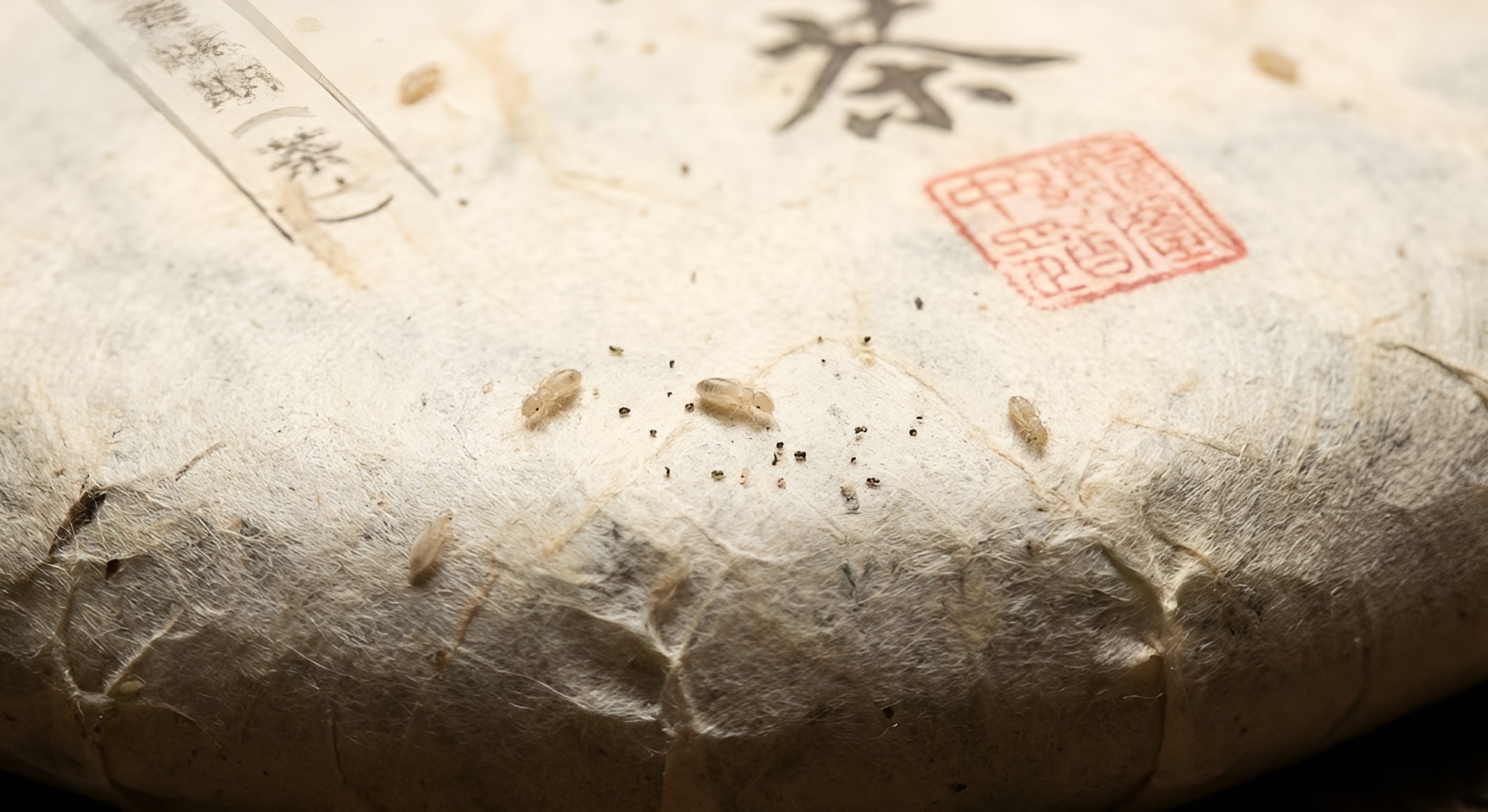
1. The "Good" Bugs: Paper Lice (Psocids)
These are the tiny white specks you see scurrying quickly when you disturb the wrapper. They are often mistakenly called "Tea Mites" or "Bamboo Mites."
What they eat: They feed on the bamboo paper wrapper and the microscopic fungi/mold that grows on the paper in humid conditions. They are generally uninterested in the tea leaves themselves.
Are they safe? Yes. They are non-toxic and do not bite. Many experienced collectors in Hong Kong and Taiwan view a small number of "paper bugs" as a sign that the tea is "alive" and chemical-free. You can simply brush them off before brewing. The boiling water will sterilize anything remaining.
Expert Tip: Check the Holes
If you see holes in the paper wrapper only, it's likely Paper Lice (Good). If you see tunnels bored into the actual tea cake, it's Beetles (Bad).
2. The "Bad" Bugs: Cigarette/Tobacco Beetles
These are the true enemy. Lasioderma serricorne is a small, brown, oval-shaped beetle. Unlike lice, they eat the tea leaves.
They bore tunnels into the compressed cake, turning your prized tea into dust. If you see a pile of fine tea dust underneath your cake, you have a beetle infestation. You must act immediately to prevent them from spreading to your other teas.
| Feature | Paper Lice (Safe) | Tobacco Beetle (Danger) |
|---|---|---|
| Color | White / Translucent Grey | Dark Brown / Black |
| Movement | Fast, scurrying | Slow, sluggish |
| Diet | Paper wrapper, fungi | Tea leaves (cellulose) |
| Damage | Tatty paper | Holes in cake, dust piles |
Expert Tip: The Freeze Treatment
If you find beetles, seal the affected tea in a ziplock bag and put it in the freezer for 3-7 days. This kills the beetles and eggs. Let it return to room temperature gradually before opening the bag to prevent condensation. This is not necessary for Paper Lice.
3. Prevention: Controlling the Pumidor
Bugs love humidity. If you have an infestation of Paper Lice, it usually means your storage is hovering around or above 70% RH (Relative Humidity).
- To Reduce Lice: Drop the humidity slightly (to 60-65%). Air out the cakes. Remove the affected wrappers if they are badly damaged.
- To Avoid Beetles: Inspect new cakes before adding them to your collection. Quarantine new purchases for a few weeks to ensure no eggs hatch.
Looking for clean, bug-free Pu-erh?
Starting a collection is daunting. We've reviewed the most reputable vendors who store their tea in controlled environments, ensuring you get clean cakes. See our Top 5 Pu-erh Teas for Beginners →
Comments