1. The Chemistry of Taste: Suppression vs. Masking
[Image of taste bud receptors]Most people add sugar or milk to tea to mitigate the bitterness caused by tannins (polyphenols). However, this is chemically inefficient. Sugar creates a "masking" effect—it stimulates sweet receptors to distract the brain from the bitter signal. The bitterness is still there; it's just being shouted over.
Salt works by suppression. Research published in Nature and Food Quality and Preference has demonstrated that sodium ions (Na+) interfere with the transduction mechanism of bitter taste receptors[1]. When salt is introduced, it creates a "selective filter," preventing the bitter compounds from binding effectively to the receptor sites.
The result: The bitterness isn't covered up; it is physically blocked from reaching your brain. This allows the tea's secondary notes—malty, floral, or fruity—to emerge without the astringent "bite."
2. The Physiology of Hydration: Creating a "Hypotonic" Drink
Tea is 99% water, but water alone isn't always the fastest way to hydrate. When you drink plain water, your body must work to balance the osmotic pressure to absorb it.
By adding a trace amount of sodium, you mimic the electrolyte balance of the body's fluids. This utilizes the Sodium-Glucose Cotransport System in the small intestine, accelerating fluid absorption into the bloodstream[2]. This is the exact principle behind medical oral rehydration salts and sports drinks.
For tea drinkers, this means:
- Better Retention: You pee less of the fluid out immediately (counteracting the diuretic effect of caffeine).
- Faster Recovery: Ideal for morning rehydration or post-workout recovery.
Choosing the Right Salt
Not all salt is equal. Avoid Table Salt, which contains iodine and anti-caking agents that add a metallic chemical taste.
Use: Maldon, Pink Himalayan, or Celtic Sea Salt. These contain trace minerals (Magnesium, Potassium) that soften the water and enhance the electrolyte profile.
3. Which Teas Benefit Most? (And Which Don't)
This hack is not universal. It works best on high-tannin teas that are prone to astringency.
| Tea Type | Effect of Salt | Verdict |
|---|---|---|
| Strong Black (Assam/English Breakfast) | Blocks harsh tannins, reveals maltiness. | Highly Recommended |
| Matcha | Reduces grassiness, brings out Umami (savory). | Recommended |
| Ripe Pu-erh | Enhances earthiness and mouthfeel. | Recommended |
| White / Green Tea | Can overpower delicate floral notes. | Use with Caution |
| Fruit / Herbal | Creates a jarring "salty juice" flavor. | Avoid |
4. The Protocol: How to Add Salt Without Ruining Your Cup
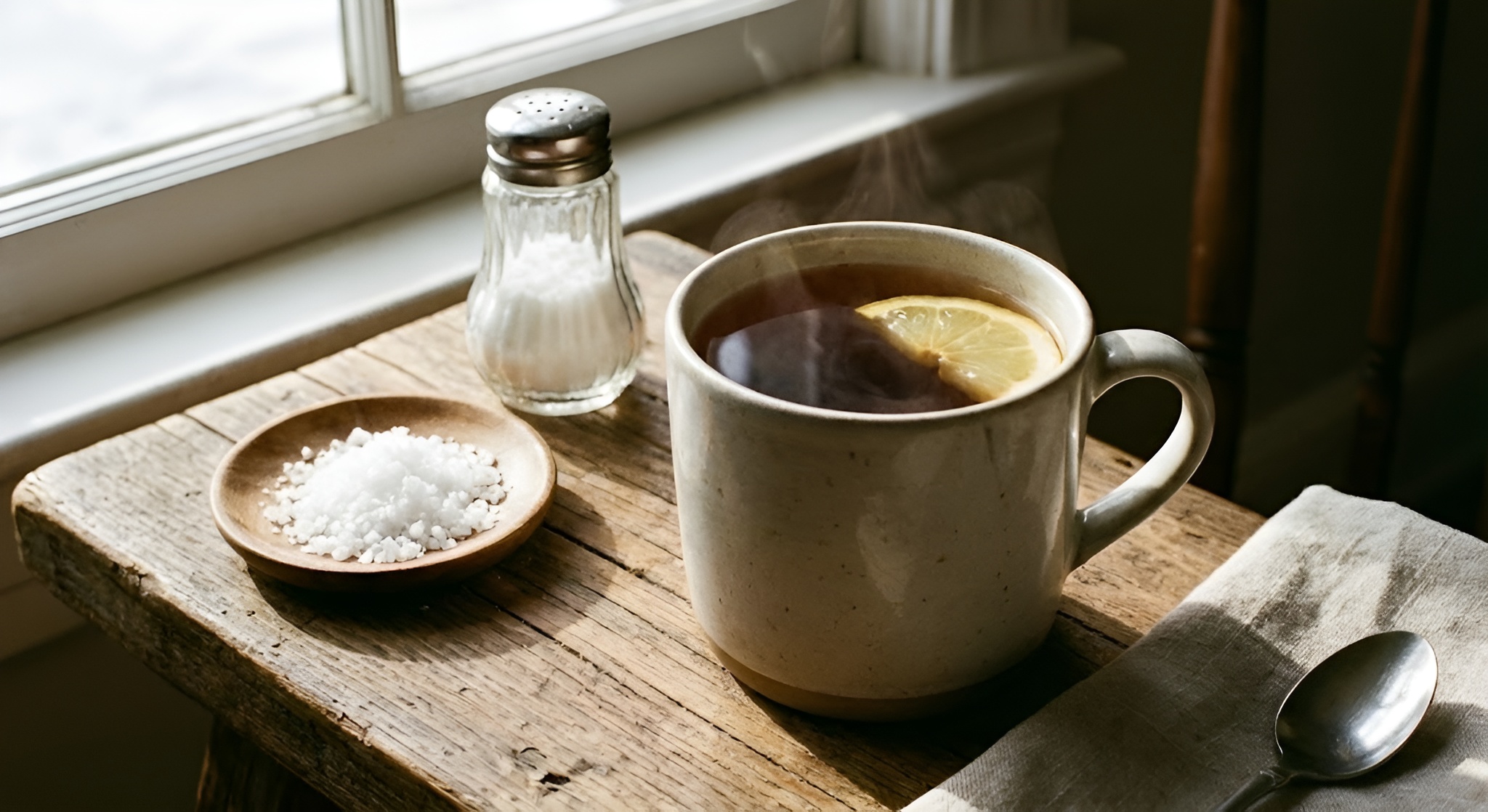
The aim is subliminal seasoning. If you can taste the salt, you have added too much.
The "Micro-Pinch" Protocol
Instructions:
- Brew Normally: Prepare your tea as usual. If you accidentally over-steeped it and it tastes like battery acid, don't pour it out.
- The Pinch: Take a pinch of high-quality salt between your thumb and forefinger. Drop 5 to 10 grains into the mug.
- Stir & Wait: Stir for 5 seconds to dissolve.
- Taste Test: Sip. The bitterness should be gone. If it's still sharp, add 5 more grains. Stop immediately if you detect salinity.
5. Cultural Context: Survival Nutrition
While this is a modern "bio-hack" for the West, it is ancient survival wisdom in the Himalayas. Po Cha (Butter Tea) is a staple in Tibet and Mongolia. It is a soup-like emulsion of:
- Fermented Dark Tea (Pu-erh): For caffeine and digestion.
- Yak Butter: For high-density caloric energy (fats).
- Salt: For electrolyte retention in the arid, high-altitude air.
By adding salt to your tea, you are tapping into a 1,000-year-old tradition designed to optimize human performance in extreme environments.
Scientific References
- Keast, R. S., & Breslin, P. A. (2002). An overview of binary taste-taste interactions. Food Quality and Preference, 14(2), 111-124. (Demonstrates sodium suppression of bitterness).
- Maughan, R. J. (1991). Fluid and electrolyte loss and replacement in exercise. Journal of Sports Sciences.
- Breslin, P. A., & Beauchamp, G. K. (1997). Salt enhances flavour by suppressing bitterness. Nature, 387(6633), 563.
Comments