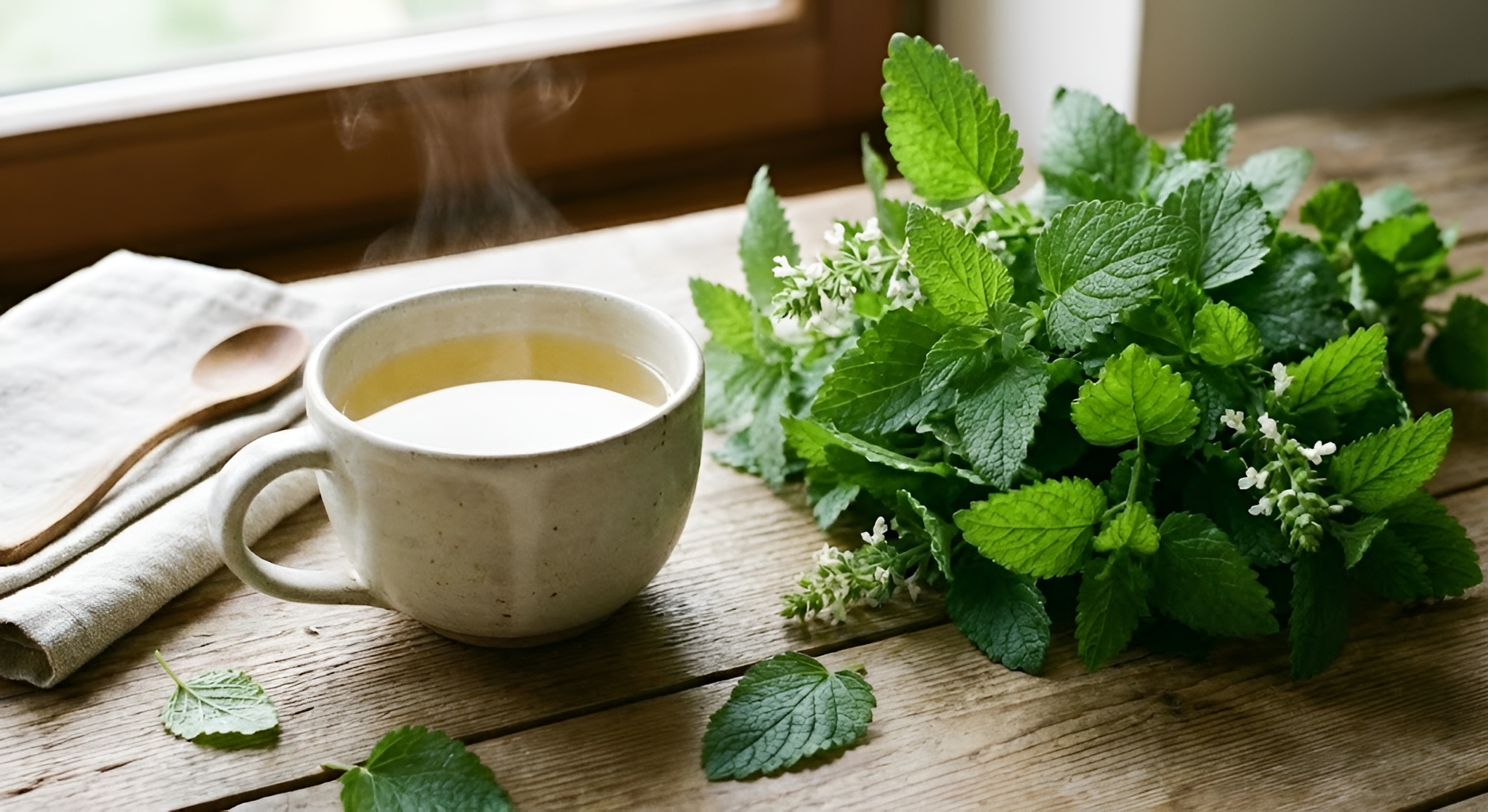
1. Why Shaded Beds Suit Tea Herbs—and Why That Matters for Flavour
Mint, lemon balm, and bee balm evolved in woodland margins and streamside habitats where canopy trees or taller neighbours provide midday shade and root competition limits the explosive growth that would otherwise see them smother slower colonisers. In full British sun—especially during a July heatwave—these plants divert metabolic energy into floral reproduction and structural lignification, hastening bolting and reducing the concentration of the very essential oils that deliver aroma and taste. Partial shade (defined here as 3–5 hours of direct morning or late-afternoon sun, or all-day dappled light through a tree canopy) slows that reproductive sprint, extends the vegetative window, and encourages the plant to invest in leaf production and secondary metabolites, including menthol, citral, citronellal, geraniol, and thymol.
Field trials in temperate European climates have repeatedly shown that mint grown in 40–60 per cent shade produces leaves with 15–25 per cent higher essential-oil yield by dry weight than plants in open sun, though absolute biomass is moderately lower. For the home gardener making iced tea, flavour density per leaf matters far more than total crop weight, and shade-grown herbs deliver precisely that trade-off. Moreover, shaded herbs stay greener later into August, resist powdery mildew better (because leaf surfaces remain cooler and morning dew evaporates more slowly, discouraging fungal spore germination during mid-morning humidity spikes), and require less frequent watering—a welcome benefit in regions under hosepipe bans.
The Morning-Shade Compromise
If you must choose, prioritise afternoon shade over morning sun. East-facing beds that receive gentle morning light and are shaded from 1 PM onward balance photosynthetic productivity with cooler leaf temperatures during peak UV hours, yielding high oil concentration without sacrificing vigour.
2. Month-by-Month UK Gardening Calendar for Mint, Lemon Balm, and Bee Balm
March to early April: Prepare beds by incorporating 3–5 cm of garden compost or well-rotted manure; these herbs tolerate a wide pH range (6.0–7.5) but appreciate organic matter for moisture retention. If planting from nursery pots, choose specimens that show vigorous new growth at the crown rather than tall, leggy stems—compact plants establish faster. Space mint 30 cm apart (or plant in sunken 25 cm pots to contain rhizomes), lemon balm 40 cm apart, and bee balm 45 cm apart to allow for mature spread. Water in well and mulch with 2 cm of composted bark to suppress weeds and moderate soil temperature swings during late frosts.
May: First significant harvest window opens once plants reach 20–25 cm height and show at least six pairs of true leaves. Pinch out the top 5–8 cm of each stem to encourage branching; these tip cuttings are also ideal propagation material (see Section 3). Feed lightly with a balanced liquid fertiliser (NPK 10-10-10 or similar) diluted to half strength; over-feeding, especially with high-nitrogen formulations, stimulates lush but flavourless foliage. Monitor for aphid colonies on lemon balm; a sharp water spray or introduction of ladybird larvae usually suffices.
June: Peak vegetative growth. Harvest every 10–14 days, cutting stems back by one-third to one-half to maintain bushiness and delay flowering. Take softwood cuttings from non-flowering shoots for propagation. Mulch may need topping up if spring rains have compacted it. Watch bee balm for early signs of powdery mildew (white dusty patches on leaves); increase air circulation by thinning overcrowded clumps and avoid overhead watering in the evening.
July (current month): The garden is at full production. Harvest mint and lemon balm every 7–10 days, ideally mid-morning after dew has dried but before midday heat volatilises essential oils. Bee balm begins flowering; for iced tea, pick leaves and unopened buds together, as buds contribute additional thymol and carvacrol. If any plant bolts to flower despite regular cutting, allow one or two stems to bloom for pollinators, but remove the rest to redirect energy into leaf growth. This is the month for the fresh-blend recipes in Section 7.
August: Growth slows as day length shortens. Continue light harvesting, but reduce frequency to every 14 days. Deadhead spent bee-balm flowers to encourage a second flush. Stop feeding by mid-month to allow plants to harden off before autumn.
September to October: Final harvests before first frosts. Cut mint and lemon balm back to 5 cm above soil level; mulch crowns with 5 cm of compost or leaf mould to insulate roots over winter. Bee balm stems can be left standing (they provide winter interest and habitat for overwintering insects) or cut back to ground level—both approaches work. Divide overcrowded clumps every three to four years in early autumn, replanting vigorous outer sections and composting woody centres.
3. Propagating from Cuttings: Free Plants in a Fortnight
Softwood cuttings taken in late May or June root with near-100 per cent success and cost nothing beyond a bag of multipurpose compost and a few minutes' labour. Select non-flowering side shoots 8–12 cm long with at least three sets of leaves. Use a clean, sharp knife or secateurs to make the cut just below a leaf node (the slight swelling where leaves emerge). Strip the lowest pair of leaves to expose the node, which is where adventitious roots will form, and pinch out any flower buds or the soft growing tip if the cutting is particularly vigorous.
Fill 9 cm pots with a 50:50 mix of multipurpose compost and horticultural grit or perlite; this ensures good drainage and prevents the stem base from rotting. Dibble a hole with a pencil, insert the cutting so that the stripped node is 1–2 cm below the surface, firm gently, and water with a fine rose. No rooting hormone is necessary for mint, lemon balm, or bee balm—all three root readily from nodal tissue alone. Place pots in a shaded cold frame, unheated greenhouse, or a sheltered spot outdoors away from direct sun; cover with a clear plastic bag supported on short canes if humidity is low, removing the bag once every two days to vent condensation.
Cuttings typically show new leaf growth within 10–14 days, signalling successful rooting. After three weeks, pot on into 12 cm pots or plant directly into prepared beds. By late July these new plants will be large enough to contribute to harvest; by the following spring they will match the original stock plant in size. This method allows a single nursery-bought mint or lemon balm to populate an entire border in one season, or to provide gifts for fellow gardeners interested in growing tea herbs indoors over winter.
The Node-Down Rule
Always bury at least one full leaf node below the compost surface. Roots emerge only from nodal tissue in mint and lemon balm; cuttings with the node left above soil will produce weak, slow-rooting plants or fail altogether.
4. Harvest Timing and the Chemistry of Volatile Oils
The concentration of essential oils in herb leaves follows a diurnal rhythm, peaking in mid-morning and declining through the afternoon as heat volatilises lighter monoterpenes and the plant transpires water. Research on Mentha species shows that menthol, menthone, and menthyl acetate—the dominant flavour compounds in peppermint and spearmint—reach maximum leaf concentration between 9 AM and 11 AM on dry, cool mornings, and can drop by 10–20 per cent by 3 PM on hot days. Lemon balm's citral (a mix of geranial and neral isomers) and citronellal follow a similar pattern, as does the thymol and carvacrol content of bee balm leaves.
For iced tea, harvest mid-morning after surface dew has evaporated but while leaves remain turgid. Use scissors or secateurs to cut whole stems rather than stripping individual leaves, which bruises tissue and triggers enzymatic breakdown of volatiles. Rinse stems briefly under cool running water to remove dust and any insect residents, then shake dry and strip leaves immediately before brewing; each hour of delay between harvest and steeping results in measurable aroma loss, even if stems are stored in water like cut flowers.
If you cannot brew immediately, store harvested stems upright in a jar of water in the refrigerator, covered loosely with a plastic bag. This slows respiration and volatile loss, preserving up to 90 per cent of fresh-harvest aroma for 24 hours. Beyond that window, enzymatic activity and oxidation degrade the bright, green top notes that distinguish fresh from dried herbs, leaving a flatter, more vegetal base. For long-term storage, drying or freezing (Section 8) are the only viable options, but neither matches the aromatic complexity of leaves used within an hour of cutting.
5. Fresh-Leaf Brewing Techniques: Hot Steep, Cold Brew, and Hybrid Methods
Fresh herbs contain higher moisture content than dried—typically 80–85 per cent water by weight—so recipes must adjust for the difference. A rough rule of thumb is to use three to four times the volume of fresh leaves compared to dried; for example, if a dried-herb recipe calls for 2 teaspoons, use 6–8 teaspoons of loosely packed fresh leaves (approximately 5–8 g). The cellular structure of fresh leaves also releases oils more readily, meaning shorter steep times and lower temperatures preserve the delicate aromatics that boiling water or prolonged contact would drive off or convert into bitter compounds.
For a hot-steep method, bring water to a full boil, then allow it to cool to 80–85 °C (achieved by leaving the kettle off heat for about three minutes after boiling). Add fresh herb leaves—torn or bruised slightly to rupture cell walls—and steep for 3–5 minutes. Strain, sweeten if desired, and pour over ice in a large jug filled with additional cold water or chilled tea (black, green, or white) to dilute and chill rapidly. This method suits blends where you want to extract a bold, immediate flavour—ideal for mint-forward recipes or when serving within the hour.
For a cold-brew approach, place fresh leaves in a jug or pitcher, cover with cold filtered water (approximately 15–20 g of leaves per litre), and refrigerate for 6–12 hours. This slow extraction pulls sweet, green, floral notes while leaving behind tannins and chlorophyll that contribute astringency and bitterness. Cold brew is particularly well suited to lemon balm, which can taste soapy or overly citronella-like when steeped hot, and to bee balm, whose thymol becomes medicinal and harsh at high temperatures. Strain before serving. The cold-brew versus iced tea comparison explores these extraction differences in detail.
A hybrid method combines the speed of hot extraction with the smoothness of cold dilution: steep fresh herbs in a small volume of 80 °C water for 3–4 minutes to create a concentrated infusion, strain, then pour the hot concentrate over ice and top up with cold water or chilled tea. This is the technique used in the recipes below, as it delivers bright aromatics, rapid chilling, and portion control suited to entertaining. For batch production—such as garden parties or weddings—refer to our concentrate batch-brewing guide and the concentrate makers review.
Bruise, Don't Shred
Lightly crush fresh leaves with your palm or tear them once or twice before steeping. This releases essential oils without pulverising cell walls, which would liberate bitter chlorophyll and create a murky, grassy brew.
6. Four July-Ready Fresh-Herb Iced Tea Recipes
Recipe 1: Black Peppermint and Strawberry Iced Tea. Steep 5 g of Assam or Ceylon black tea with 15 g of fresh black peppermint leaves (such as 'Chocolate Peppermint' or common Mentha × piperita) in 500 ml of 85 °C water for 4 minutes. Strain into a jug over 200 g of hulled, halved British strawberries and 500 ml of ice cubes. Stir gently, pressing the strawberries lightly to release juice, and allow to stand for 5 minutes. Sweeten with 2–3 teaspoons of caster sugar or honey if desired. The menthol in peppermint amplifies the berry sweetness while the black tea's tannins balance the fruit's acidity—a classic pairing detailed in our summer fruit pairing guide.
Recipe 2: Lemon Balm, White Tea, and Raspberry Iced Blend. Combine 4 g of white peony (Bai Mu Dan) or silver needle tea with 20 g of fresh lemon balm leaves in 600 ml of 80 °C water; steep for 5 minutes. Strain over 150 g of fresh raspberries and 400 ml of ice in a large pitcher. The citral in lemon balm mirrors the fruity esters in raspberries, and the white tea contributes a subtle floral backdrop without overpowering the herbs. This is an excellent candidate for overnight cold brewing if you prefer a mellower profile. For sourcing quality lemon balm tea blends, see our lemon balm tea review.
Recipe 3: Bee Balm, Green Tea, and Sour Cherry Iced Tea. Steep 5 g of Chinese Longjing or Japanese sencha with 12 g of fresh bee balm leaves and buds (ensure it is Monarda didyma, not ornamental hybrids) in 500 ml of 80 °C water for 3 minutes—any longer and the thymol turns harsh. Strain over 100 g of pitted sour cherries (Morello or similar) and 500 ml of ice. The resinous, slightly piney notes of bee balm complement the tartness of sour cherries, while the green tea's umami rounds out the blend. Bee balm's antimicrobial properties, chiefly from thymol and carvacrol, are explored in our bee balm chemistry guide.
Recipe 4: Spearmint, Lemon Balm, and Elderflower Cooler (no base tea). This is a pure herbal infusion suited to those avoiding caffeine or serving children. Steep 10 g of fresh spearmint (Mentha spicata) and 10 g of fresh lemon balm in 600 ml of 85 °C water for 4 minutes. Strain, stir in 50 ml of elderflower cordial (homemade or store-bought), and pour over 500 ml of ice. The floral sweetness of elderflower bridges the menthol coolness of spearmint and the lemony brightness of lemon balm. Serve in tall iced tea glasses with a sprig of fresh mint and a slice of lemon. This recipe echoes traditional British summer floral teas and pairs well with lighter fare at cream tea services.
The Ice-First Principle
Always pour hot concentrate over ice, not the reverse. Adding ice to hot liquid dilutes slowly and melts unevenly, leaving you with a lukewarm, watery brew; pouring hot over ice chills instantly and preserves clarity.
7. Extending the Harvest: Drying, Freezing, and Winter Propagation Indoors
Even a well-tended shaded bed will slow production by September, and outdoor herbs become dormant after the first hard frost. To bridge the gap until next May, preserve peak-season leaves by drying or freezing, or bring cuttings indoors to grow on a sunny windowsill over winter. For drying, harvest stems in mid-morning as usual, rinse and shake dry, then tie in small bundles (no more than six stems per bundle to ensure air circulation) and hang upside down in a warm, dark, well-ventilated space—an airing cupboard, spare bedroom, or garden shed works well. Leaves are ready when they crumble easily, typically 7–10 days; strip from stems, store in airtight glass jars away from light, and use within six months for best flavour.
Freezing preserves more of the volatile top notes than drying. Chop fresh leaves roughly, pack into ice-cube trays, top up with a little water, and freeze. Each cube then becomes a single-serve portion for hot tea or can be dropped directly into cold water for a quick infusion—an approach detailed in our tea ice-cubes guide. Alternatively, blanch whole leaves in boiling water for 10 seconds, plunge into ice water, pat dry, and freeze in labelled freezer bags; this method suits larger batches and preserves colour better.
For winter indoor cultivation, take cuttings in late August or early September and pot into 12 cm containers filled with multipurpose compost. Place on a south- or west-facing windowsill where they will receive at least four hours of direct light. Indoor growth will be slower and leaves smaller, but a single plant can still yield 10–15 g of fresh leaves per month—enough to keep a modest fresh-tea habit alive through the dark months. Water sparingly; overwatering is the most common cause of indoor herb failure. Pinch regularly to encourage bushiness and prevent leggy growth. Our indoor tea-growing guide covers container choice, compost blends, and supplementary lighting for year-round cultivation.
8. Buying Advice: Nursery Stock, Seed, and Variety Selection for the UK
Most British garden centres stock at least one variety of mint, lemon balm, and bee balm from April through June, typically in 9 cm or 1-litre pots priced between £2.50 and £5.00. For iced tea, prioritise flavour intensity over ornamental appeal. In mint, look for 'Black Peppermint' (Mentha × piperita f. rubescens), which has the highest menthol content of common varieties, or 'Moroccan Mint' (Mentha spicata 'Moroccan') if you prefer the sweeter, less cooling profile of spearmint—this is the variety used in traditional Maghrebi mint tea. Avoid purely ornamental mints such as ginger mint or pineapple mint unless you enjoy novelty; their essential-oil profiles are dominated by esters and aldehydes that read as soapy or synthetic in iced tea.
Lemon balm is usually sold as the species Melissa officinalis with no named cultivar; this is fine, as genetic variation within the species is modest and all forms deliver good citral levels provided they are grown in partial shade and harvested young. Reject any plant showing yellowing lower leaves, a sign of root-bound stress or nutrient deficiency. Bee balm for tea should be Monarda didyma (scarlet bee balm or Oswego tea) rather than ornamental hybrids like M. 'Cambridge Scarlet' or M. fistulosa, which have lower thymol and can taste dusty. Specialist herb nurseries and online suppliers often stock true M. didyma and will confirm the species on request; expect to pay £4–6 per plant.
Growing from seed is possible but slower—mint seed is notoriously variable (most garden mints are sterile hybrids propagated only vegetatively), lemon balm germinates erratically and takes 12–16 weeks to reach harvestable size, and bee balm seed requires stratification (a period of cold to break dormancy). For the modest investment of three nursery plants and an afternoon's propagation work, you can populate a border and begin harvesting within six weeks; seed is better reserved for keen experimenters or those with access to heirloom varieties unavailable as plants. Our seeds versus cuttings guide weighs the trade-offs in detail, and the zone 7–8 growing advice covers overwintering and frost protection relevant to most of lowland Britain.
Check the Label for Sterility
If a mint is labelled as a hybrid (×) or includes 'sterile' in the description, it will not come true from seed—buy the plant and propagate by division or cuttings. This applies to nearly all culinary mints sold in the UK.


Comments