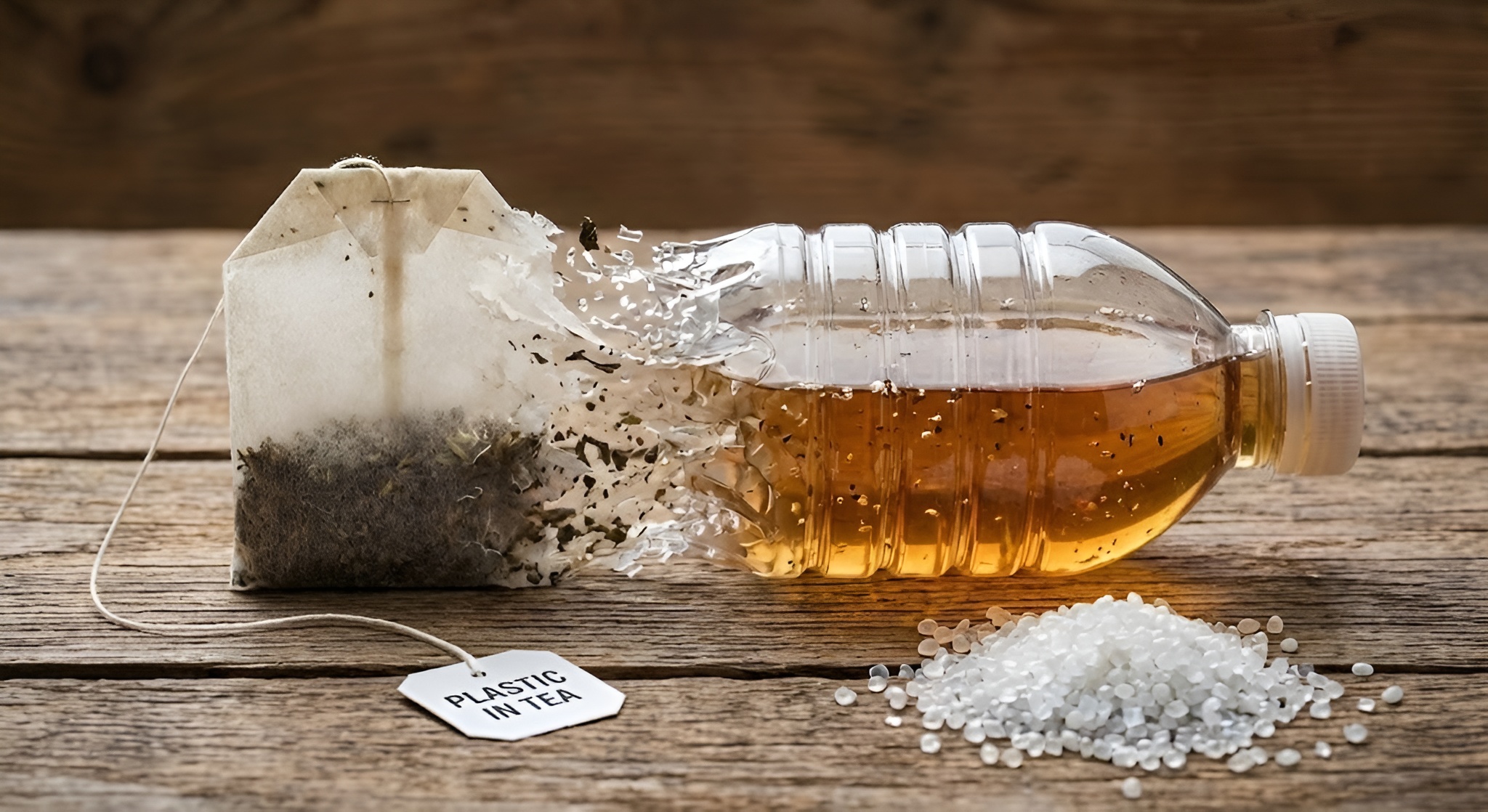
1. The Invisible Threat: 11.6 Billion Particles Per Cup
For decades, tea brands incorporated plastics for durability and shape retention—especially in the popular "pyramid" designs that allow whole leaves to expand. These materials include Nylon, PET, and Polypropylene (used as a sealant for paper bags).
The issue exploded into the spotlight with a landmark 2019 study from McGill University. Their findings were staggering: steeping a single plastic-based tea bag at brewing temperature (95°C) released approximately 11.6 billion microplastic particles and 3.1 billion nanoplastic particles into a single cup.
[Image of microscopic plastic particles]To put this in perspective, these levels are thousands of times higher than those reported in other contaminated foods like bottled water or sea salt. You aren't just drinking tea; you are drinking a plastic soup.
2. The 2024 Update: Genotoxicity and DNA Risks
While the 2019 study established the volume of plastic, a new study published in December 2024 by the Autonomous University of Barcelona (UAB) shed light on the biological impact.
Researchers tested Polypropylene (PP), Nylon-6, and Cellulose bags on human intestinal cells. The results, published in Chemosphere, were concerning:
- Massive Shedding: Polypropylene bags (the most common sealant) released approx 1.2 billion particles per milliliter.
- Cellular Penetration: Nanoplastics (particles smaller than 1 micron) didn't just touch the cells; they entered them. Specifically, they penetrated the cell nucleus, which houses human genetic material (DNA).
This ability to breach the nucleus raises significant questions regarding genotoxicity—the potential for these particles to damage DNA or cause mutations over time.
Is Your Bag "Silky"?
If a tea bag feels slippery, smooth, or has a woven mesh texture that doesn't tear easily, it is likely plastic (Nylon or PET). Paper bags tear easily. If you are unsure, try the "Burn Test" (safely!)—plastic melts, paper burns to ash.
3. The 'Green' Trap: Why "Biodegradable" PLA is Still Plastic
As consumer awareness grew, many brands switched to "plant-based" or "corn starch" bags, often made from Polylactic Acid (PLA). They label these as "Biodegradable" or "Eco-Friendly."
However, science suggests this may be a "regrettable substitution."
- It is Still a Polymer: PLA is a bioplastic. While it comes from plants, it behaves like plastic in hot water. Research indicates PLA bags also release nanoplastics when exposed to boiling temperatures.
- It Does Not Compost: A study by the University of Plymouth found that PLA tea bags remained completely intact after being buried in soil for seven months. They only degrade in high-heat industrial composting facilities (50°C+), which most home users do not have access to. If thrown in the garden, they persist just like conventional plastic and can be toxic to earthworms.
4. The Solution: A Purer Brew with Tea Trade UK
The scientific consensus is clear: the only way to ensure a cup of tea is 100% free of microplastic particles, glues, and chemical sealants is to eliminate the synthetic barrier entirely.
Option A: The Gold Standard (Loose Leaf)
Steeping loose leaf tea in a stainless steel infuser or ceramic pot eliminates the risk of polymer shedding entirely. It is also cheaper in the long run. Read our cost breakdown: Loose Leaf vs. Tea Bags: Is it Worth It? →
Option B: Certified Plastic-Free Bags
If you must use bags, look for brands explicitly stating they use unbleached paper fiber or natural Abacá (banana fiber), sealed via crimping or stitching (cotton thread) rather than heat-activated polypropylene glues.
Looking for Safe Tea Bags?
We have vetted the top brands. Companies like Teapigs (NatureFlex), Clipper (Unbleached), and Pukka (Stitched) use plastic-free materials. See our top safe picks here: The Best Plastic-Free Tea Bags →
References
- Hernandez, L. M., Xu, E. G., Larsson, H. C., Tahara, R., Maisuria, V. B., & Tufenkji, N. (2019). Plastic Teabags Release Billions of Microparticles and Nanoparticles into Tea. Environmental Science & Technology, 53(21), 12300-12310.
- Banaei, G., García-Rodríguez, A., Marcos, R., & Hernández, A. (2024). Teabag-derived micro/nanoplastics (true-to-life MNPLs) as a surrogate for real-life exposure scenarios. Chemosphere, 368, 143736.
- Courtene-Jones, W., et al. (2024). Deterioration of bio-based polylactic acid plastic teabags under environmental conditions and their associated effects on earthworms. Science of the Total Environment, 928, 172806.
Comments