← Back to Recipes

Sencha Green Tea Noodles

Jump to Recipe ↓

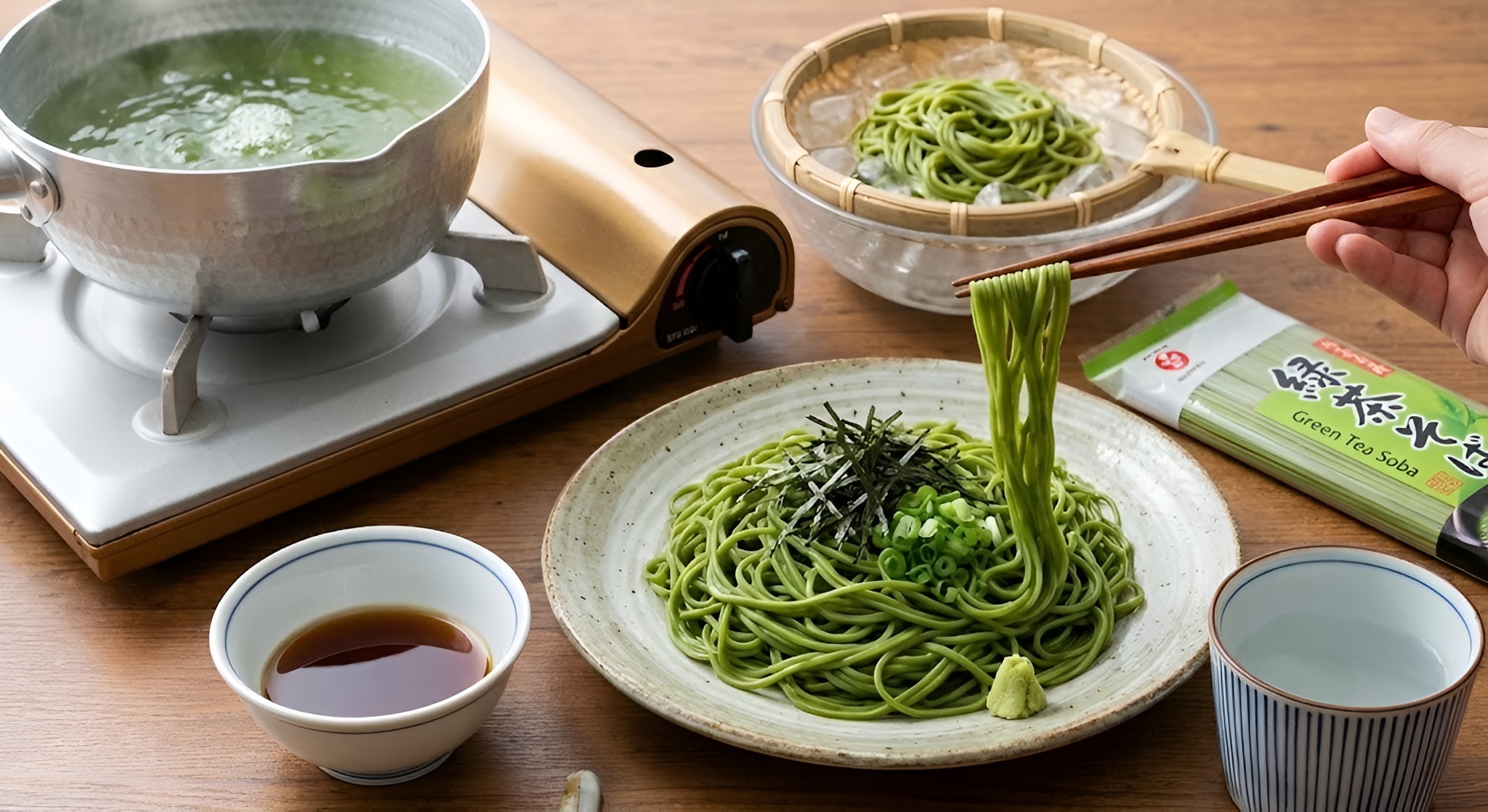
These sencha green tea noodles bring the grassy, umami notes of Japanese sencha into a fresh egg pasta dough. You'll grind high-quality sencha leaves to a fine powder, knead it into a soft dough, then roll it through a pasta machine until you have pale-green, silky ribbons with a delicate, savoury flavour. They're stunning tossed simply with butter and soy, or paired with seafood, miso broth, or in a chilled noodle salad.

A pasta machine is essential here: it gives you even, thin sheets and consistent noodles that sencha's subtle flavour deserves. Rolling by hand is possible, but you'll struggle to achieve the silky texture and uniform thickness that lets the tea shine. Use a good-quality sencha or even kabusecha for richer colour and flavour; avoid cheap, oxidised leaves that can turn bitter when worked into dough.

Sencha Green Tea Noodles
Prep Time45 mins
Cook Time3 mins
ServingsServes 2–3
DifficultyMedium

Ingredients

  • 200 g Type 00 flour (or strong white flour), plus extra for dusting
  • 2 large eggs (preferably free-range)
  • 2 tsp sencha green tea powder (finely ground; see tip below)
  • ½ tsp fine sea salt
  • 1–2 tsp water, if needed
Nutrition per serving:
Calories: 320 kcal
Fat: 6g
Sugar: 1g
Protein: 12g

Instructions

1
Grind sencha: If you don't have ready-ground sencha powder, grind 2 tsp high-quality sencha leaves in a spice grinder or mortar and pestle until very fine—similar to matcha texture. Sift to remove any coarse bits.
2
Make dough: Tip the flour, sencha powder and salt onto a clean work surface and form a well in the centre. Crack in the eggs, then use a fork to beat the eggs gently, gradually pulling in flour from the edges. Bring together into a shaggy dough with your hands, adding a few drops of water if it feels too dry. Knead for 8–10 minutes until smooth, elastic and flecked pale green. Wrap in cling film and rest for 30 minutes at room temperature.
3
Divide and flatten: Unwrap the dough and cut into three equal pieces. Flatten each piece into a rough rectangle about 1 cm thick. Keep the portions you're not using covered to prevent drying.
4
Roll with pasta machine: Set your pasta machine to its widest setting. Dust one piece of dough lightly with flour and pass it through the rollers. Fold the sheet in half, turn 90°, and pass through again. Repeat this folding and rolling twice more (this lamination helps build structure). Now begin narrowing the setting, one notch at a time, passing the sheet through once at each setting without folding. Stop at the second-thinnest setting—you should have a long, silky sheet you can almost see through.
5
Cut noodles: Attach your machine's fettuccine or tagliatelle cutter (or use a sharp knife to cut by hand into 5–6 mm ribbons). Feed the sheet through the cutter, catching the noodles as they emerge. Dust lightly with flour, curl into loose nests and set aside on a floured tray. Repeat with the remaining dough.
6
Cook: Bring a large pan of salted water to a rolling boil. Drop in the noodles and cook for 2–3 minutes until tender but still with a slight bite. Fresh pasta cooks fast, so taste after 2 minutes. Drain, reserving a cupful of pasta water.
7
Serve: Toss the noodles immediately with your choice of sauce—melted butter, a splash of soy and sesame oil, or a light miso-ginger broth. Add a little pasta water to loosen if needed. Garnish with toasted sesame seeds, spring onions or nori strips.

🫖 Equipment You'll Need

A pasta machine (manual or electric roller) is the heart of this recipe. It not only speeds up the process but delivers the consistent, thin sheets and uniform noodles that let sencha's subtle, grassy flavour come through without heaviness. Hand-rolling can leave thick, uneven patches that cook unevenly and mask the tea's delicate notes. If you're serious about fresh pasta—especially tea-infused varieties—a good machine is essential.

See our pasta machine picks →

Expert Tip: Grinding Your Own Sencha Powder

Ready-ground sencha powder can be hard to find in the UK. Instead, buy whole-leaf sencha or shincha, grind it fresh in a clean spice grinder, and sift. The colour will be brighter and the flavour cleaner than with stale pre-ground powder.


Affiliate disclosure: TeaTrade is a participant in the Amazon EU Associates Programme, an affiliate advertising programme designed to provide a means for sites to earn commission by linking to Amazon.co.uk. We may earn a small commission if you buy through links on this page, at no extra cost to you. Prices and availability shown on Amazon are current at the time of click.

Comments