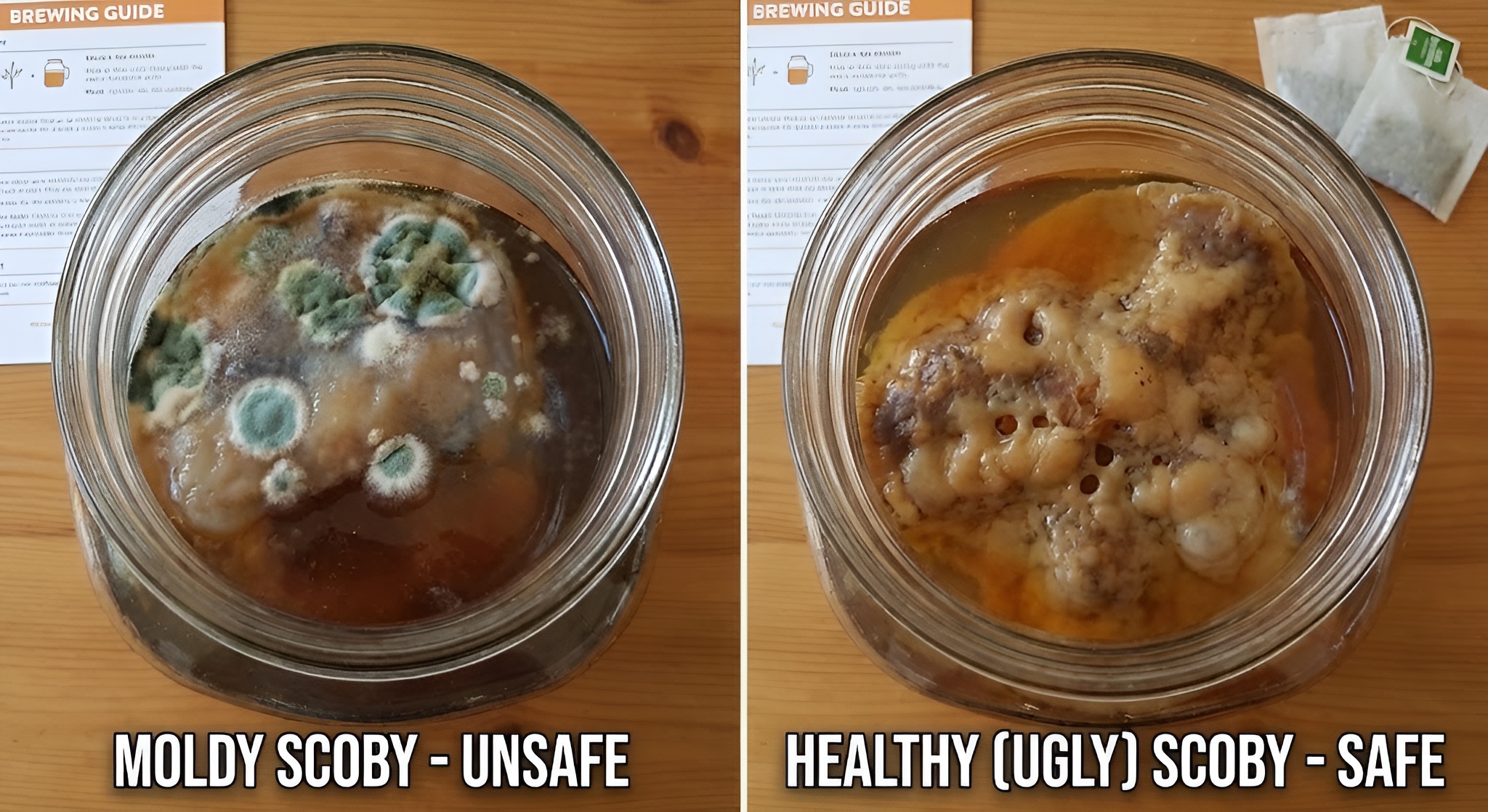
1. The "Fuzzy" Rule: Identifying True Mold
Mold on Kombucha is biologically identical to mold on bread or cheese. It is a fungus that requires oxygen to reproduce. Therefore, the first rule of identification is location and texture.
- Texture: DRY and FUZZY. If you shine a light on it, it should look like velvet or tiny hairs. If it looks wet, gelatinous, or shiny, it is almost certainly SCOBY growth (cellulose).
- Color: Mold can be Blue, Green (Penicillium), Black (Aspergillus niger), or bright White circles. While SCOBYs are generally cream/tan, mold comes in "unnatural" colors.
- Shape: Mold grows in distinct circular "islands" or colonies that sit on top of the pellicle. It does not grow under the water.
The Verdict: If It's Mold, Toss It
If you confirm mold, the batch is dead. Do not try to scrape it off. The visible fuzz is just the "flower" of the mold; the microscopic roots (mycelium) have already penetrated the liquid and contaminated it with toxins. Compost the SCOBY, pour the tea down the drain, and sterilize your jar.
Need a new Jar? See our Review2. The Imposter: Kahm Yeast
Often, brewers see a white film forming on the surface and panic. But if it isn't fuzzy, it might be Kahm Yeast. Kahm is an aerobic yeast that forms a structure often described as looking like a "wrinkly brain," a geometric web, or a white chalky dust.
Is it dangerous? No. Kahm yeast is generally harmless to humans. However, it is bad for your brew. It smells yeasty or like dirty socks (not the clean sour smell of kombucha) and can ruin the flavor. It often occurs when the pH hasn't dropped fast enough or the temperature is too high.
The Fix: If you catch it early, you can sometimes skim it off. However, if it returns, it's best to restart with more starter liquid to lower the pH faster next time.
Expert Tip #1: The pH Safety Net
Mold spores are everywhere in the air. They land in your jar constantly. The only thing stopping them from growing is Acidity. If your brew starts at a pH below 4.5, mold cannot grow. This is why we always recommend using at least 10-15% starter liquid (acidic kombucha from a previous batch) when starting a new brew.
3. The "Ugly But Good" List
Kombucha is not a beauty contest. A healthy SCOBY can look terrifying to the uninitiated. Here are things that are perfectly normal:
| Observation | Diagnosis | Action |
|---|---|---|
| Brown Dangly Bits | Yeast Strands. Healthy by-product. | Ignore. Strain out before drinking. |
| Dark Patches / Veins | Yeast trapped under layers of cellulose. | Ignore. |
| Holes / Bubbles | CO2 gas escaping from fermentation. | Ignore. Shows active yeast. |
| SCOBY Sinking | Normal. It doesn't have to float. | Ignore. A new one will grow on top. |
4. Why Did My SCOBY Get Moldy?
If you have mold, it means your defense system failed. The bacteria (Acetobacter) went dormant, or the acid level was too low. Here are the main culprits:
- Temperature (The #1 Killer): In the UK winter, house temperatures often drop below 20°C. At 18°C, your SCOBY goes to sleep, but mold thrives. Cold = Mold.
- Weak Starter: Not using enough starter liquid means the pH stays neutral too long, giving mold a head start.
- Contamination: Using Earl Grey tea (oils killing bacteria) or antibacterial soap residue in the jar. Read our guide on Earl Grey dangers.
- Location: Brewing near a fruit bowl (fruit flies/mold spores) or a trash can.
Expert Tip #2: The Heating Mat Solution
If you are brewing in a UK winter, you cannot rely on ambient temperature. Wrapping a towel around the jar isn't enough; towels insulate, they don't generate heat. You need a dedicated heating mat to keep the liquid at a constant 24°C-26°C. This keeps the bacteria active and acidifying the tea, which is your #1 defense against mold.
5. Prevention Protocol
To ensure you never see fuzz again, follow this checklist for every batch:
- Acidify Early: Use plenty of strong starter liquid. If you don't have enough, add a tablespoon of distilled white vinegar (pasteurized) to drop the pH.
- Keep it Warm: Maintain 24°C. Buy a heating belt. Read our Heating Mat Review.
- Cover Correctly: Use a tight-weave cotton cloth (like an old t-shirt or coffee filter). Cheesecloth is too loose; fruit flies and mold spores can walk right through it.
- Don't Peek: Every time you lift the cloth to check, you invite spores in. Leave it alone for 7 days.
Expert Tip #3: The Jun Difference
If you are brewing Jun Tea (Green tea and Honey), be aware that it ferments faster and at cooler temperatures. While Jun is more resistant to cold, the raw honey adds wild yeasts that can sometimes look like Kahm. Learning to read your specific culture takes time.
Comments