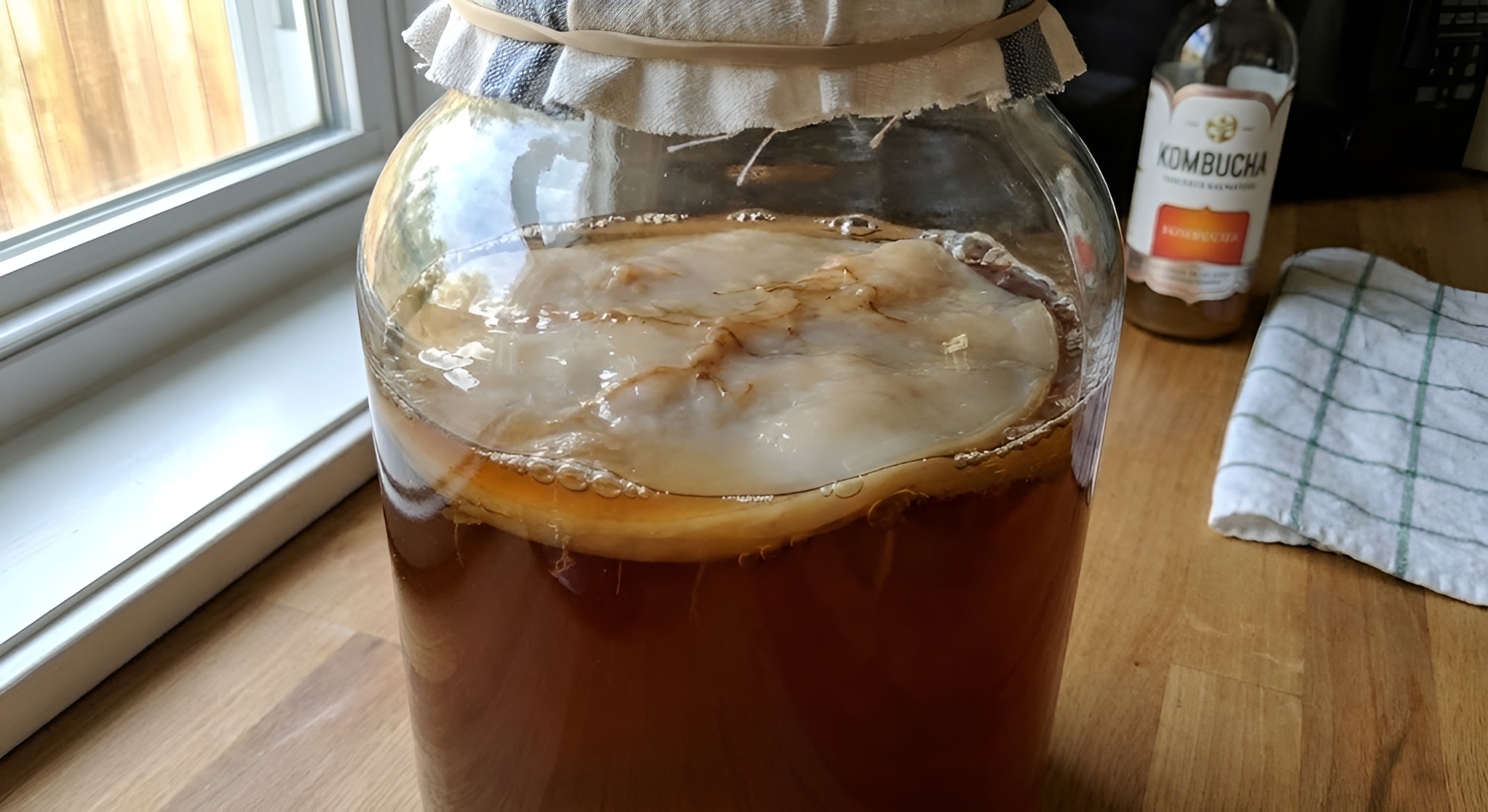
1. The Biology: It's Not a Mushroom
Let's kill the first myth: Kombucha is not a mushroom. The floating rubbery disk is a SCOBY (Symbiotic Culture Of Bacteria and Yeast). It is a pellicle of cellulose created by the bacteria to seal the liquid off from the air, protecting the ferment from competitors like mold.
The Symbiosis Engine: Kombucha is a two-step chemical process happening simultaneously in the jar:
- Step 1 (The Yeast): Yeast cells (often Saccharomyces or Brettanomyces) consume sucrose (sugar) and convert it into Ethanol (Alcohol) and Carbon Dioxide (fizz).
- Step 2 (The Bacteria): Bacteria (specifically Gluconacetobacter xylinus) consume the Ethanol produced by the yeast and oxidize it into Acetic Acid (Vinegar) and Gluconic Acid.
This biological dance is why Kombucha isn't alcoholic. The bacteria are constantly cleaning up the alcohol mess made by the yeast. If you starve the bacteria of oxygen (by sealing the jar too tight or submerging the SCOBY too deep), they die, the yeast takes over, and you accidentally make hard cider.
Expert Tip #1: The Oxygen Balance
Unlike beer brewing (which is anaerobic), Kombucha is Aerobic. The acetobacter bacteria need oxygen to convert alcohol into acid. Never use an airlock for primary fermentation. Cover your jar with a breathable cloth (like high-thread-count cotton) to keep fruit flies out but let oxygen in. If your brew tastes boozy but flat, your cloth is likely too thick.
2. The Nitrogen Requirement: Why Tea Matters
Why can't you make Kombucha with just sugar water? Because sugar only provides carbon. The SCOBY needs Nitrogen, caffeine, and Theanine to build its cellular structure and reproduce. The tea leaf provides these crucial nutrients.
This is why "Tea Quality" directly correlates to "SCOBY Health." High-quality loose leaf tea is richer in nitrogen and minerals than fannings (dust). A SCOBY fed on premium Assam will grow thick, creamy, and robust. A SCOBY fed on cheap tea bags will often grow thin, ragged, and susceptible to infections. Without the purines found in Camellia sinensis (caffeine and theobromine), the cellular walls of the bacteria weaken over generations.
Choosing Your Leaf
Not all tea is created equal for fermentation. We have categorized the main types below.
| Tea Type | Nitrogen Level | Flavor Profile | Suitability |
|---|---|---|---|
| Black (Assam) | High | Classic, cidery, robust. | Best for long-term health. |
| Green (Sencha) | Medium | Light, tart, apple-like. | Good, ferments faster. |
| Oolong | Medium-High | Complex, floral, stone fruit. | Excellent for flavor depth. |
| Herbal | None | Various. | Poor. Starves the SCOBY. |
Expert Tip #2: The Earl Grey Danger
Thinking of using that fancy Earl Grey? Stop. The oil of bergamot in Earl Grey is antimicrobial. It doesn't know the difference between "bad" bacteria and your "good" SCOBY bacteria. It can kill your culture over time. Learn more in our guide: Can You Use Earl Grey for Kombucha?
3. The Sugar Panic: It's Food for the Culture, Not You
We often hear complaints: "I don't want to drink that much sugar." The crucial thing to understand is: You aren't drinking it. The SCOBY is.
You start with sweet tea, but over 7-14 days, the symbiotic culture consumes approximately 90% of that sugar to fuel its reproduction and acid production. The final product is low-sugar (and low-carb). If you reduce the sugar at the start, you starve the culture, leading to weak acid production and a high risk of pathogens surviving in the liquid.
Sucrose is the easiest fuel source for the yeast to break down into glucose and fructose. While you can use honey (for Jun Tea) or maple syrup, standard white cane sugar is the gold standard for consistent, healthy acidity. We break down exactly how much sugar is left in our deep dive on sugar metabolism.
4. The Environment: Temperature is Everything
In California, you can brew on the counter year-round. In the UK? Not a chance. The ideal fermentation temperature for Kombucha is 24°C - 27°C (75°F - 80°F). Most British homes sit at 18°C-20°C in winter, dropping lower at night.
Temperature dictates the balance of power. At lower temperatures (below 20°C), the bacteria go dormant, but the yeast remains somewhat active. This creates a yeasty, boozy brew that doesn't acidify properly. Worse, mold spores thrive at 18°C. This is why 90% of mold infections happen in winter.
If you are brewing in the UK between October and April, a heating mat isn't a luxury; it's a necessity to keep the Acetobacter active enough to produce the acid shield that protects your brew.
Read Review: Best Heating Mats for UK Brewers
Expert Tip #3: Don't Use the Airing Cupboard
Many UK brewers try the airing cupboard (hot water tank). This is dangerous. It is dark, often dusty (mold spores), and the temperature fluctuates wildly when the heating cycles. A consistent £20 mat is safer than a ruined batch.
5. The Premium Upgrade: Jun Tea
Once you master Black Tea Kombucha, you graduate to Jun. This is the "Champagne of Ferments," made exclusively with Green Tea and Raw Honey. It creates a fizzy, floral, beverage that ferments at lower temperatures.
It is the ultimate test of a tea brewer's skill, requiring a specific culture adapted to digest the complex sugars in honey. Regular Kombucha cultures struggle with the antimicrobial enzymes in raw honey, but Jun thrives on them. It produces a lighter, more delicate effervescence that pairs beautifully with herbs like lavender or thyme.
Discover Jun: The Champagne of Ferments →
6. Equipment Safety: Avoid Metal Leaching
Kombucha is Acetic Acid. It is a solvent. If you ferment in a vessel with cheap plastic, crystal (lead), or low-grade metal spigots, the kombucha will leach those toxins into your drink. We have seen cheap "dispenser jars" from home goods stores corrode in weeks, turning the spigot green.
You need food-grade glass and 304 Stainless Steel. Nothing less. Read our guide on Safe Brewing Jars to see the damage a bad spigot can do.
Comments