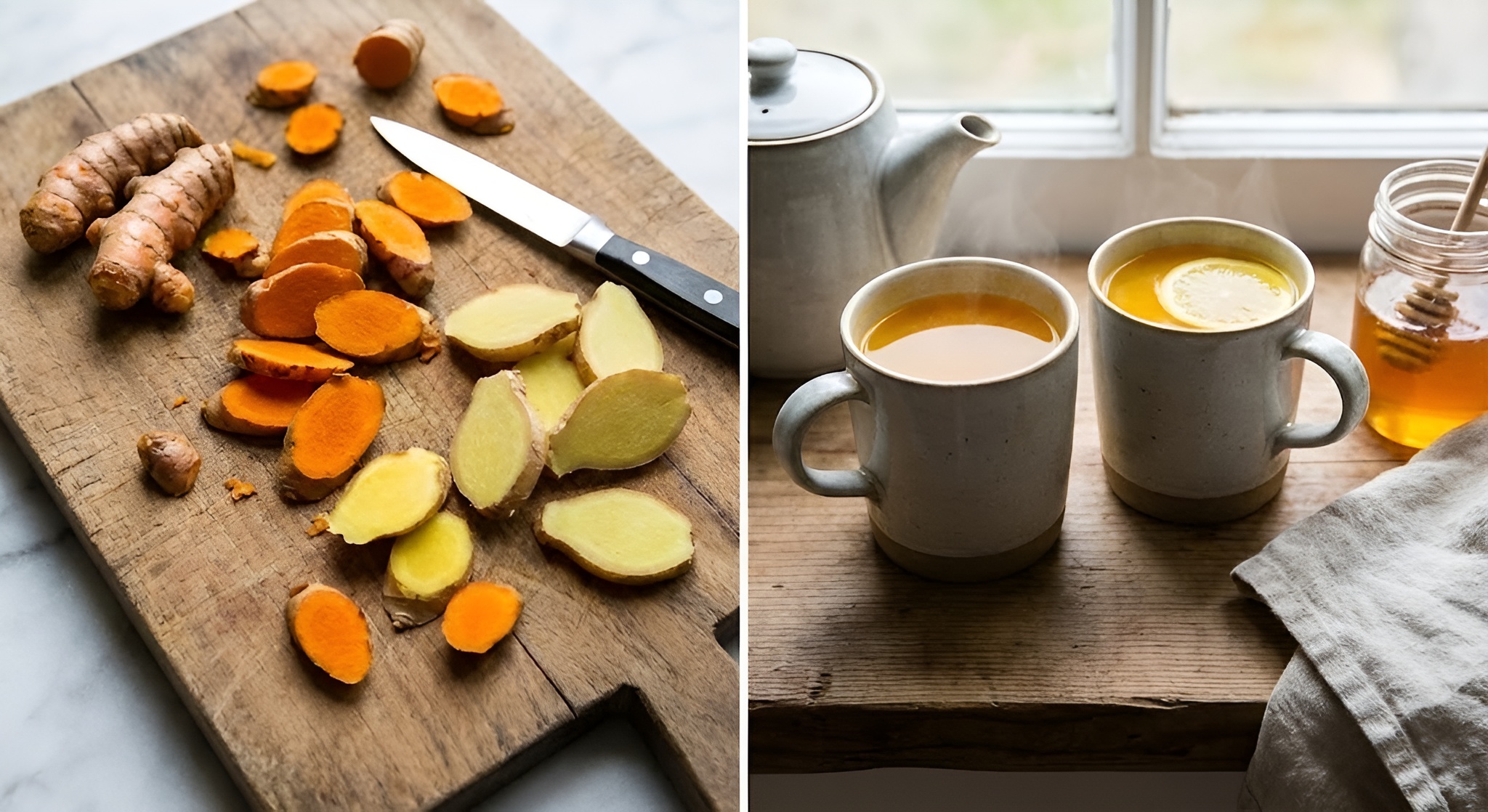
1. Turmeric: The "Long Game" (Chronic Pain)
Turmeric is the king of managing chronic inflammation. Its active compound, Curcumin, works by blocking NF-kB, a molecule that travels into the nuclei of your cells and turns on genes related to inflammation.
It is essentially turning off the "fire" at the genetic source. However, it takes time. You likely won't feel relief after one cup. It requires consistent daily consumption to build up in the tissues.
Expert Tip: The 2000% Boost
Without help, your liver flushes curcumin out almost instantly. Adding just a pinch of Black Pepper increases absorption by 2000%. Adding a fat (like coconut milk or ghee) increases it further. Never drink watery turmeric tea without pepper!
2. Ginger: The "First Aid" (Acute Relief)
Ginger is your rapid response team. Gingerol acts primarily on the gastrointestinal tract and inhibits COX-2 enzymes (the same mechanism as aspirin/ibuprofen).
This makes it incredibly effective for acute issues: morning sickness, motion sickness, or the sudden onset of a cold. Unlike Turmeric, you will likely feel the benefits (especially regarding nausea) within 30 minutes of drinking a strong cup.
Expert Tip: Fresh vs. Dried
For nausea, fresh ginger root is best (it contains more gingerol). For pain relief and warming the body, dried ginger powder is superior (it contains shogaols, which are more potent heat-generators).
3. The Showdown: Which is Better?
| Goal | Winner | Why? |
|---|---|---|
| Arthritis / Joint Pain | Turmeric | Targets chronic systemic inflammation. |
| Nausea / Bloating | Ginger | Accelerates gastric emptying (moves food along). |
| Menstrual Cramps | Ginger | Studies show it rivals ibuprofen for period pain. |
| Brain Health | Turmeric | Curcumin boosts BDNF (Brain-Derived Neurotrophic Factor). |
4. The Ultimate Solution: "Golden Ginger" Tea
Why choose? The most effective anti-inflammatory tea combines both. Ginger improves digestion, which helps the body absorb the Turmeric.
Recipe:
1 tsp Turmeric Powder
1 tsp Grated Fresh Ginger
1 pinch Black Pepper
1 cup Hot Water (or Milk for a latte)
Honey to taste
Don't want to make it from scratch?
We've reviewed the best pre-blended teas that combine Turmeric, Ginger, and Black Pepper in the correct ratios for maximum health benefits. See our Top 5 Anti-Inflammatory Blends →
Comments