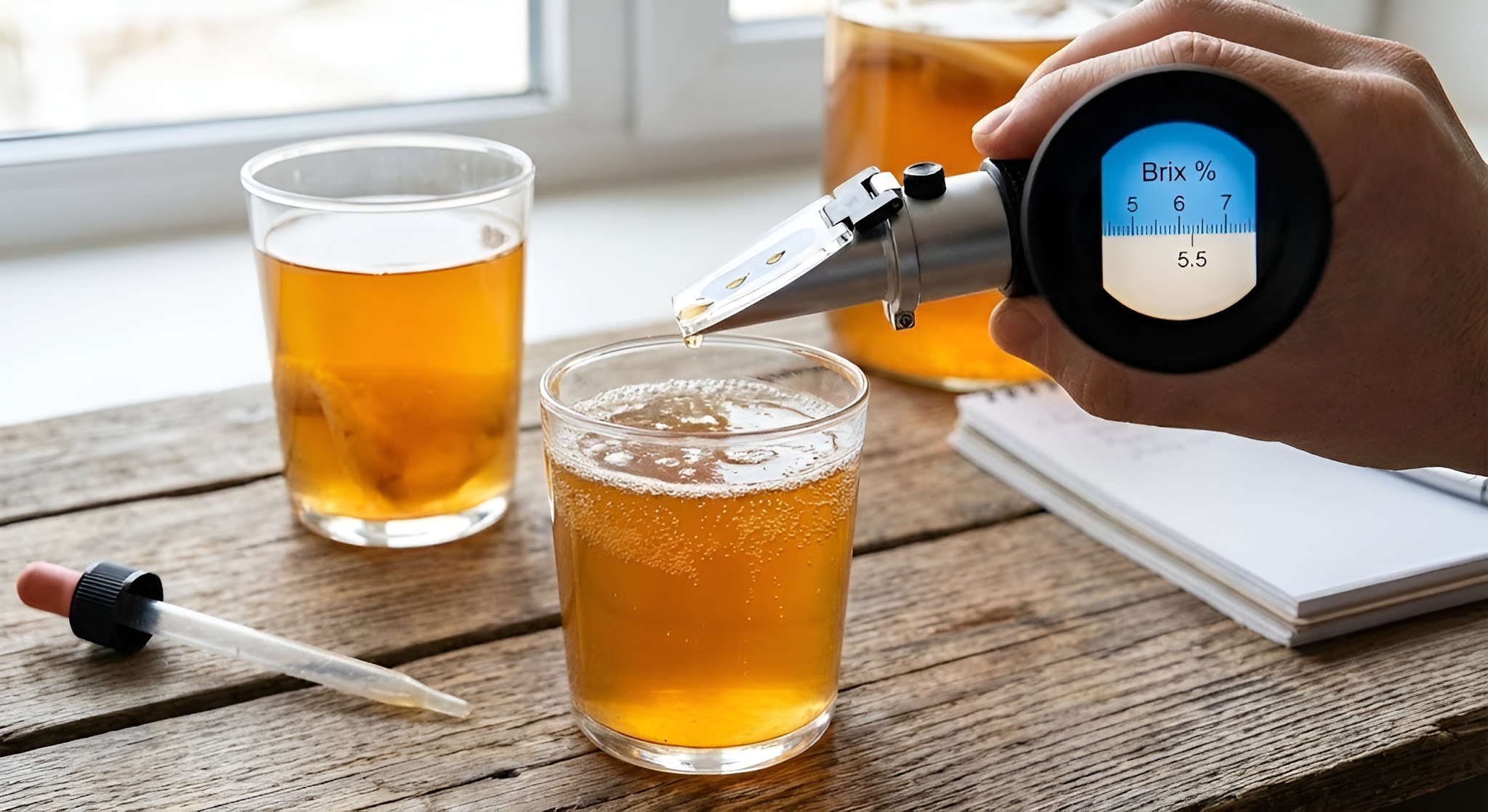
1. The Biochemistry of "Eating" Sugar
To understand why sweet tea turns sour, we need to look at the microscopic assembly line inside your jar. You start with Sucrose (White Table Sugar). Sucrose is a disaccharide—a complex sugar molecule made of one part glucose and one part fructose linked together. The yeast cannot eat sucrose directly.
Step 1: Invertase Production. The yeast cells secrete an enzyme called Invertase. This enzyme cleaves the bond between the glucose and fructose, separating them into simple monosaccharides. This is why kombucha doesn't taste like table sugar; it tastes like fruit sugar.
Step 2: Ethanol fermentation. The yeast preferentially consumes the Glucose to create Ethanol (alcohol) and CO2 (bubbles). This depletes the total sugar load significantly.
Step 3: Oxidative Fermentation. The bacteria (Acetobacter) then consume the Ethanol and the remaining Glucose to create Acetic Acid. This is the final step that removes the calories from the liquid.
Expert Tip #1: Why "Less Sugar" Recipes Fail
Beginners often try to make "Healthy" kombucha by putting in half the required sugar (e.g., 1/2 cup per gallon). This is dangerous. The SCOBY needs that sugar concentration to produce enough acid to lower the pH quickly. If you starve it, the pH stays neutral (above 4.5), which is the danger zone where Botulism and mold can grow. Always brew with full sugar, and let the time remove it for you.
2. The Brix Curve: Tracking Sugar Over Time
Scientists measure sugar content in "Brix." We can track the life of a brew to see exactly when it becomes low-carb. Note: These figures assume a standard brew at 24°C (75°F).
| Timeframe | Sugar Status | Flavor Profile | Carb Count (Estimate per 8oz) |
|---|---|---|---|
| Day 0 | 100% (Sweet Tea) | Sugary, Flat. | ~24g |
| Day 7 | ~50% Remaining | Sweet-Tart balance. | ~12g |
| Day 14 | ~20% Remaining | Tart, Vinegary. | ~4g - 6g |
| Day 21+ | <10% Remaining | Mouth-puckering Sour. | ~2g (Low Carb) |
3. The "Dry Brew" Method for Keto/Diabetics
If you need to strictly limit sugar intake, you can brew "Dry Kombucha." This borrows a term from wine making (Dry vs. Sweet wine). The goal is to ferment until almost all residual sugar is consumed.
The Protocol:
1. Use the full amount of sugar in the recipe (do not reduce).
2. Use a Heating Mat to maintain a higher temperature (26°C / 79°F). Heat increases metabolic rate.
3. Extend fermentation to 21-25 days. Taste daily.
4. Stop when your mouth puckers. At this stage, it is essentially vinegar.
How to drink it? Dilute it! Mix 1 part Dry Kombucha with 3 parts sparkling water. You get the probiotic benefits and the acidity without the sugar spike. It drinks like a sophisticated shrub or apple cider vinegar tonic.
Expert Tip #2: The Second Ferment Trap
You can brew a perfectly low-sugar kombucha and ruin it in the bottling stage. If you add 20% apple juice or sweet berries for carbonation, you are re-introducing 10-15g of sugar. For a true low-carb drink, flavor with herbs (mint, rosemary), lemon zest, or ginger, which add flavor without spiking the Brix.
4. Alternative Sugars: Do They Work?
We are often asked if you can use stevia, xylitol, or erythritol to brew kombucha. The answer is No.
These are non-fermentable sweeteners. The yeast cannot metabolize them. If yeast cannot eat, it produces no ethanol. If there is no ethanol, the bacteria cannot produce acetic acid. If there is no acid, mold grows. Using artificial sweeteners will starve and kill your SCOBY in one batch.
What about Honey? Honey works, but only for a specific type of culture called Jun Tea. Standard Kombucha struggles with the antimicrobial enzymes in raw honey. Maple syrup and Molasses can be used, but they add minerals that can over-stimulate the yeast, leading to a sour, yeasty brew. White Cane Sugar remains the cleanest, most efficient fuel source for the SCOBY.
Control the Temperature, Control the Sugar
If your house is cold, the yeast slows down and sugar stays high. A heating mat ensures the metabolism keeps running to burn off those carbs.
See Best Heating Mats
Comments