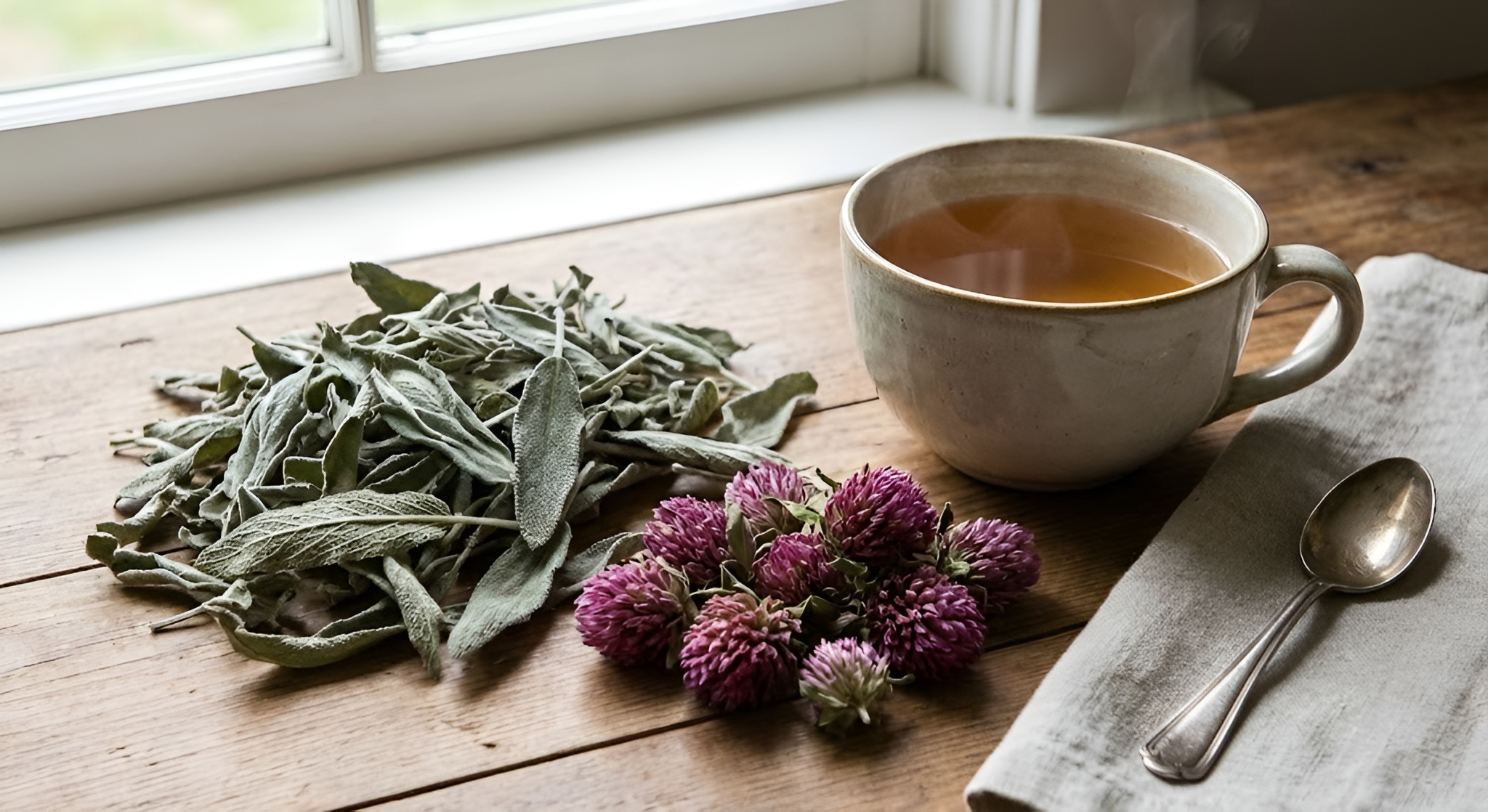
1. The Science of Estrogen Decline
During menopause, ovaries produce less estrogen. This drop confuses the hypothalamus—the part of the brain that regulates body temperature. It falsely detects that the body is overheating and triggers a "Hot Flash" to cool it down (sweating, dilated blood vessels).
Herbal teas aim to either soothe this thermostat (Sage) or provide a weak substitute for the missing estrogen (Red Clover).
2. Sage: The "Sweat Stopper"
Common culinary sage is a powerful medicinal herb. In a 2011 study published in Advances in Therapy, women taking fresh sage preparations saw a 50% reduction in hot flashes within 4 weeks and 64% within 8 weeks.
Mechanism: Sage contains compounds that bind to neurotransmitter receptors in the brain, helping to calm the overactive temperature regulation system. It is also an astringent, physically tightening tissues to reduce perspiration.
Expert Tip: The "Cold Sage" Protocol
Brew a strong pot of sage tea in the morning (use 1 tbsp dried leaf per cup). Let it cool and keep it in the fridge. Sip it cold throughout the day. Drinking it cold helps cool the body core while the herbs work on the brain.
3. Red Clover: The "Estrogen Mimic"
Red Clover belongs to the legume family (like soy). It is rich in isoflavones, a type of phytoestrogen. These plant compounds are structurally similar to human estrogen and can bind to estrogen receptors in the body.
Why drink it? While the effect is weaker than human estrogen, it may help "top up" levels enough to reduce bone loss and improve cardiovascular health during menopause. It is often used for the long-term systemic effects rather than instant relief.
Expert Tip: Fermented is Better
Some studies suggest that fermented red clover (often found in supplements or specialized teas) is more bioavailable. However, traditional Red Clover tea steeped for at least 10-15 minutes extracts a good amount of isoflavones.
4. Which One Should You Choose?
| Symptom | Recommended Tea | Why? |
|---|---|---|
| Night Sweats | Sage | Directly reduces perspiration. |
| Mood Swings | Red Clover | Hormonal balancing effect. |
| Bone Health | Red Clover | Isoflavones support bone density. |
| Anxiety | Lemon Balm | Calms the nervous system (can be blended with Sage). |
Ready to find relief?
We've reviewed the most effective herbal blends for menopause, checking the ingredient lists to ensure they contain therapeutic doses of herbs, not just flavor. The 5 Best Teas for Menopause Relief (2025 Guide) →
Comments