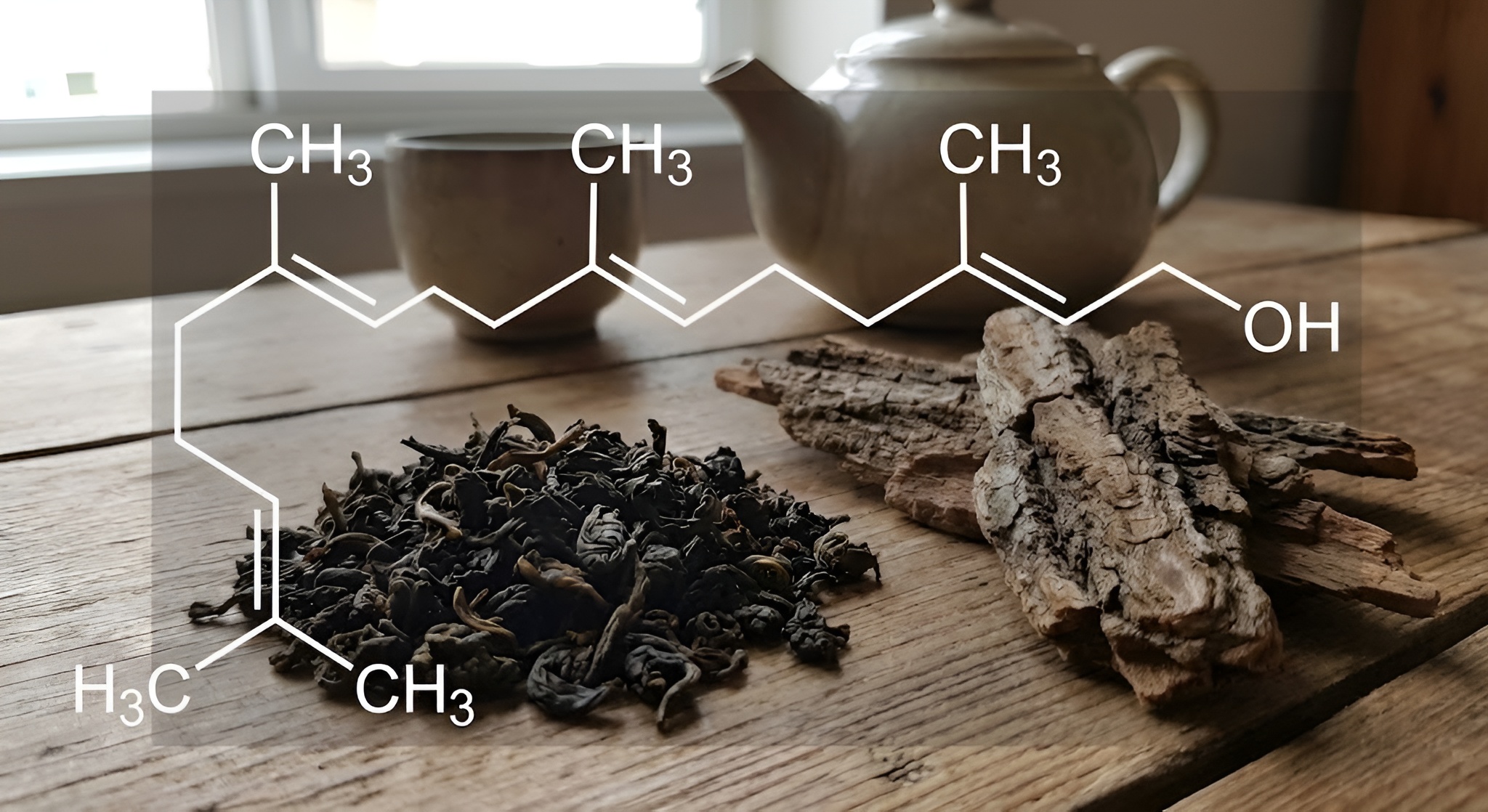
1. Biosynthesis: The MVA Pathway
Unlike the lighter terpenes (Linalool, Geraniol) which are made in the plastids via the MEP pathway, Sesquiterpenes like Nerolidol are synthesized in the Cytosol (cell fluid) via the Mevalonic Acid (MVA) Pathway.
This is a deeper metabolic process. The plant uses Acetyl-CoA to build Farnesyl Diphosphate (FPP), the precursor to all sesquiterpenes.
Because it requires significant metabolic energy to produce, high levels of Nerolidol are usually a sign of a mature, healthy tea bush that has endured environmental stress (like high altitude or winter chills).
2. The "Base Note" Effect: Why It Lingers
In perfumery, scents are divided into Top, Middle, and Base notes based on volatility.
Linalool (Top Note): Hits your nose instantly but fades fast.
Nerolidol (Base Note): Has a boiling point of 276°C. It is "sticky."
This physical property is what creates Hui Gan (Returning Sweetness). When you swallow the tea, the lighter molecules vanish. But the heavy Nerolidol molecules coat the back of the throat and the tongue. As you breathe out, your warm breath slowly volatilizes them, creating a sensation of sweetness and aroma that rises from the throat after you drink.
Expert Tip: The "Mug Cover" Test
To detect Nerolidol, brew your tea and pour it out. Then, wait 1 minute and smell the empty, cooling mug. The "Cold Cup Scent" (Leng Xiang) is almost entirely driven by heavy sesquiterpenes like Nerolidol. If the empty cup smells like creamy wood or flowers, it's a high-quality Oolong.
3. The Cultivar Connection
If you want to train your palate to find Nerolidol, drink these teas side-by-side.
| Tea / Cultivar | Profile | Nerolidol Level | Notes |
|---|---|---|---|
| Tie Guan Yin | Creamy, Metallic | Very High | The benchmark for "Woody Floral" balance. |
| Si Ji Chun | Gardenia, Lilac | High | Known as "Four Seasons" because it produces strong aroma year-round. |
| Pouchong | Green, Melon | Medium | The bridge between Green Tea and Oolong. |
| Shui Xian | Narcissus, Watery | Medium-High | Provides the "backbone" to Wuyi Rock Teas. |
4. Brewing Physics: Heat and Patience
Because Nerolidol is heavy and oil-soluble, it resists extraction.
The Temperature: You must use 95°C - 100°C water. Cooler water will extract the surface notes (Linalool) but leave the Nerolidol trapped in the leaf structure.
The Steeping Time: This molecule often shines in the 3rd, 4th, and 5th infusions of a Gongfu session. The first brew washes off the lighter notes. The later brews allow the hot water to penetrate deep into the cellular matrix to release the heavy sesquiterpenes. This is why Oolong drinkers say the "real taste" starts at cup 3.
Find the "Base Note"
The best way to understand Nerolidol is to drink a high-grade Tie Guan Yin. We have selected the most authentic, traditionally processed Anxi Oolongs.
Best Oolong Teas
Comments