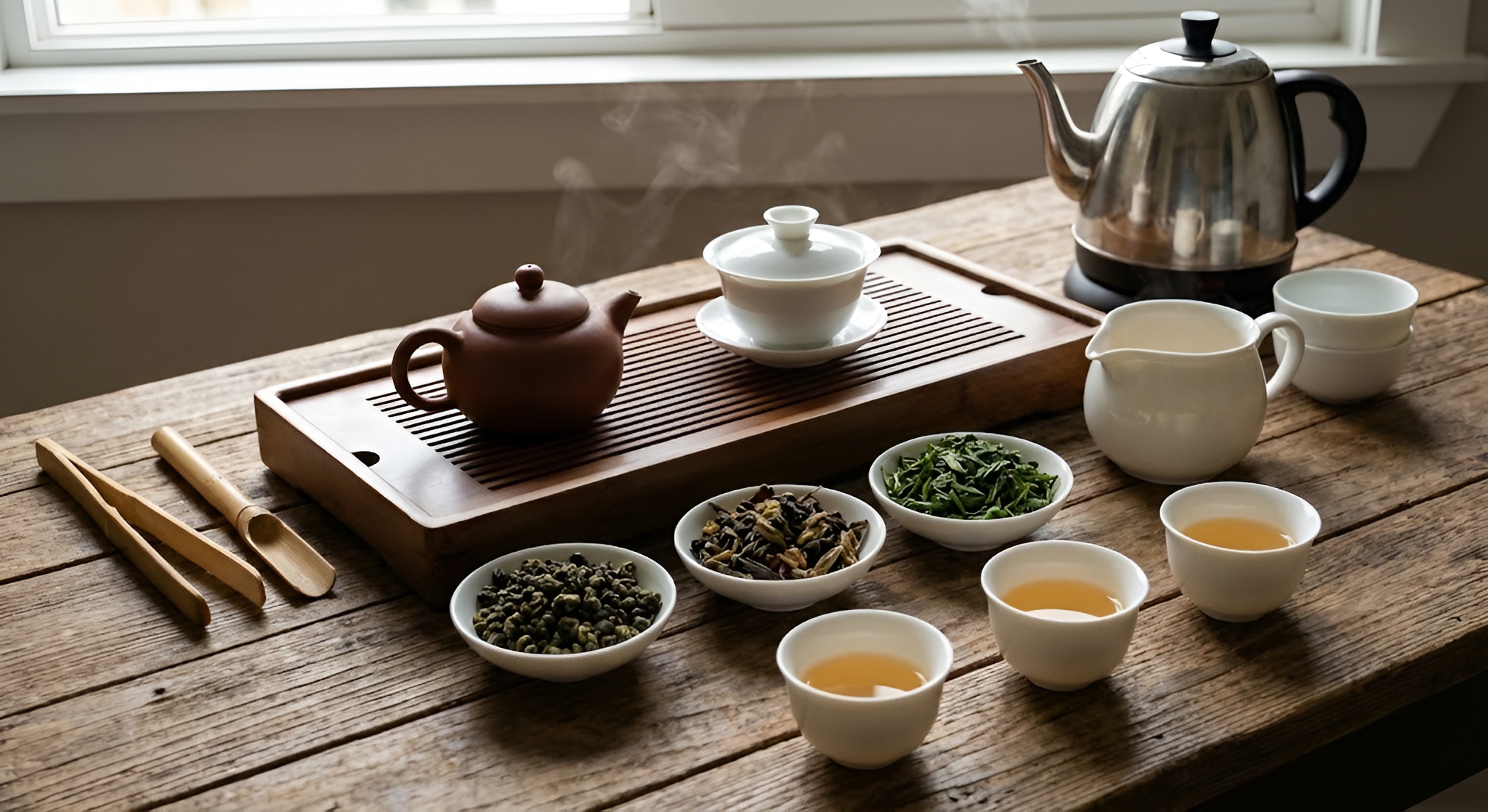

1. Floating Leaves: Alishan High Mountain
This is the textbook definition of Qing Xin. Grown at 1400m in Alishan, it has the signature "orchid and cream" aroma driven by Linalool. The texture is thick and oily (high pectin), with a "Hui Gan" (returning sweetness) that lasts for minutes.
- Incredible floral aroma (Orchid/Lilac)
- Thick, oily mouthfeel
- Authentic Single-Estate sourcing
- Pricey (but fair for the quality)
- Requires Gongfu brewing to shine

2. Eco-Cha: Alishan Jin Xuan
Most "Milk Oolongs" are fake. This is the real deal. Sourced from the Meishan township, this is pure Jin Xuan (TRES #12) cultivar. It has distinct notes of sweet corn and butter, created entirely by the plant's natural lactones, not by added flavoring.
- Zero artificial flavoring
- Classic "Buttered Corn" profile
- Directly supports small farmers
- Lighter body than flavored versions
- Aroma is subtle, not explosive
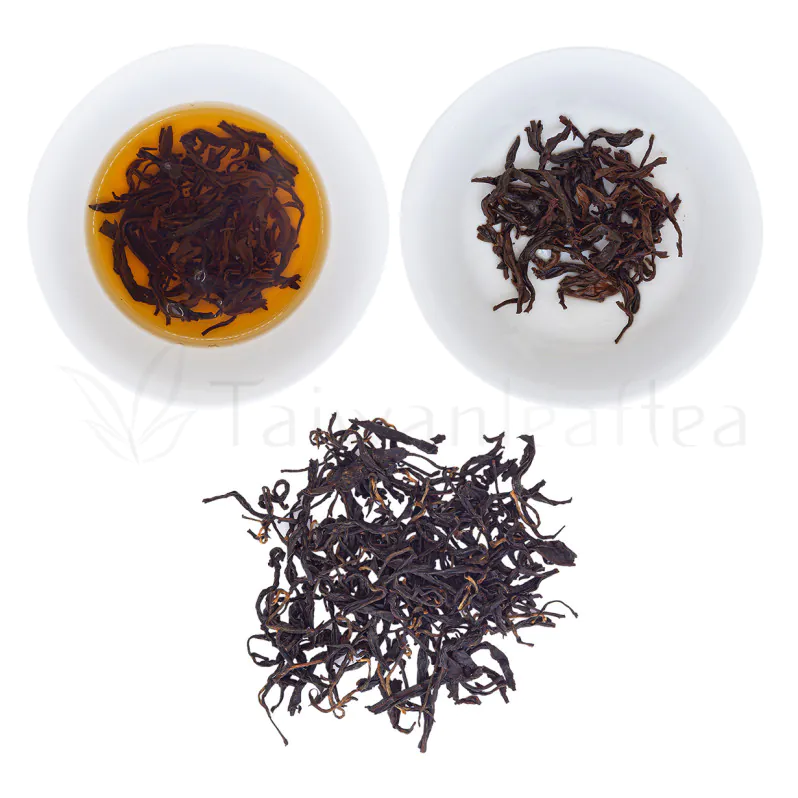
3. Taiwan Sourcing: Ruby #18 (Red Jade)
If you like root beer, you will love this. This Ruby #18 from Sun Moon Lake is bursting with natural wintergreen and cinnamon notes, thanks to its high Methyl Salicylate content. It is bold, cooling, and utterly unique to Taiwan.
- Strong "Menthol" cooling sensation
- Complex notes of spice and malt
- Certified organic farming
- Can be astringent if over-brewed
- Expensive for a black tea
Buyer's Guide: How to Spot Fake Taiwanese Tea
1. The "High Mountain" Lie
True Gao Shan Cha must be grown above 1000m. Many vendors sell low-altitude tea from Mingjian (400m) as "Alishan."
The Test: Look for the Qing Xin cultivar. It is small, thick, and has a serrated edge. If the leaf is large and round, it is likely the cheaper Jin Xuan or Si Ji Chun masquerading as High Mountain tea.
2. The Milk Oolong Trap
If your Milk Oolong smells like condensed milk the moment you open the bag, it is flavored.
Authentic Jin Xuan: Has a subtle, vegetative sweetness that only turns milky after brewing.
Fake: Smells overwhelming and loses flavor after 2 steeps. Read our full guide on Real vs. Fake Jin Xuan.
3. Oriental Beauty: Look for the Colors
Top-grade Oriental Beauty must have five colors (White, Green, Yellow, Red, Brown). If the leaves are uniformly dark, it wasn't bitten by the Green Leafhopper, meaning it won't have that signature honey-spice flavor.
TeaTrade participates in affiliate programs. We may earn a commission if you buy via these links.
Comments