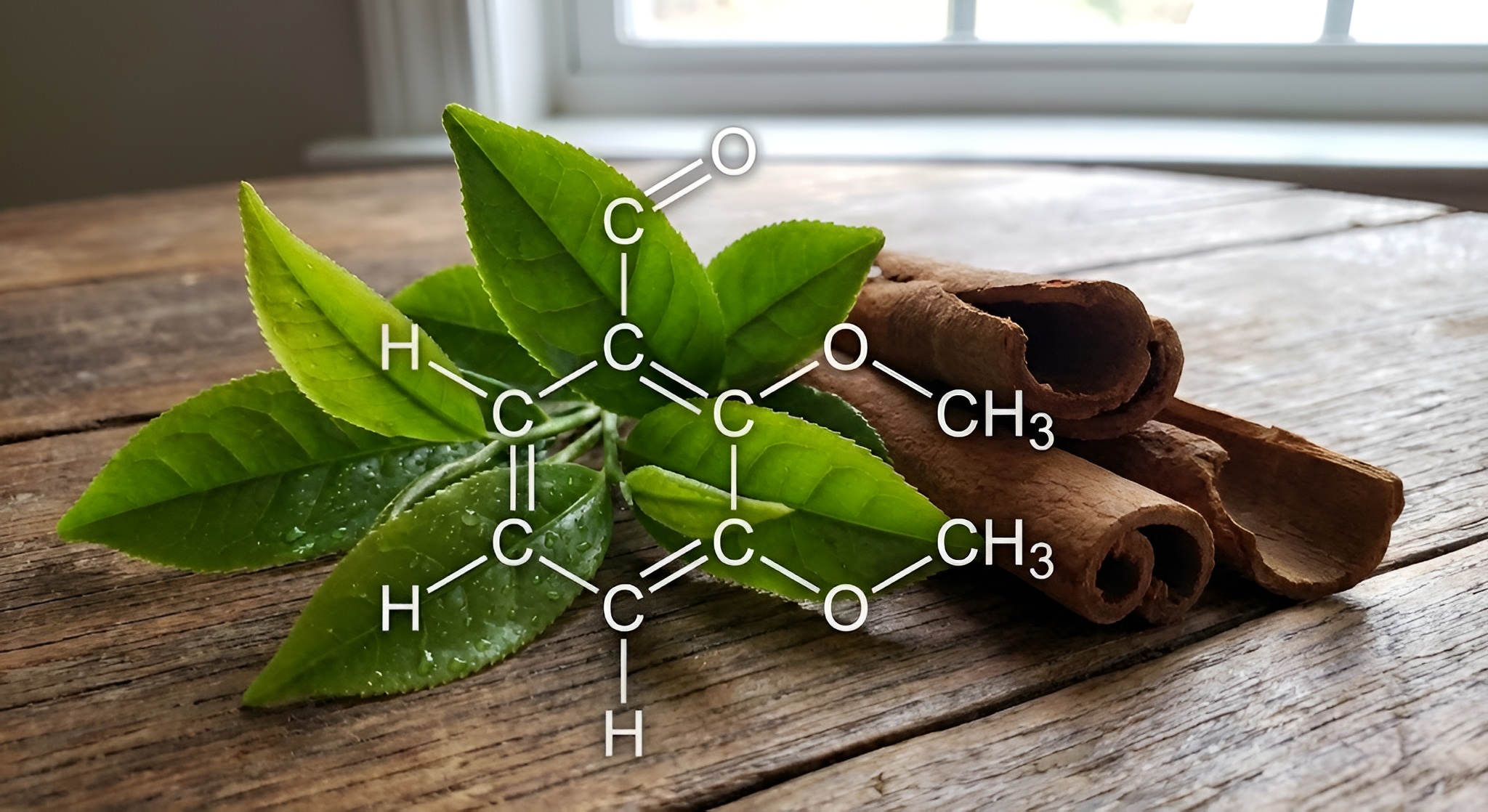
1. The Chemistry: Nature's Aspirin
Methyl Salicylate is chemically related to Acetylsalicylic Acid (Aspirin). In the plant world, it functions as a phytohormone involved in systemic acquired resistance (SAR).
When a plant is damaged, it synthesizes Methyl Salicylate to signal other parts of the plant (and even neighboring plants) to strengthen their cell walls against attack.
The "Root Beer" Note: To the human nose, this ester is incredibly distinct. It registers as medicinal, sweet, and cooling. In Western culture, we associate it with Root Beer (Sarsaparilla) and Wintergreen gum. In high concentrations, it provides the "camphor" note found in Eucalyptus.
2. The Cultivar Connection: Ruby #18
The vast majority of tea plants (Assamica or Sinensis) produce negligible amounts of Methyl Salicylate.
However, in Taiwan, the TRES (Tea Research and Extension Station) created a hybrid:
Mother: Burma Assam (Rich, Malty)
Father: Camellia formosensis (Wild Mountain Tea)
The father is the key. This wild indigenous strain naturally produces massive amounts of Methyl Salicylate. The resulting child, Ruby #18 (Red Jade), inherited the malty body of the mother and the wild "minty" aroma of the father. This genetic combination makes it unique in the world of Black Tea.
Expert Tip: The Trigeminal Effect
Why does Ruby #18 feel cold? Methyl Salicylate stimulates the Trigeminal Nerve, which is responsible for sensations like heat (chili), cold (mint), and pain. Even if you drink the tea boiling hot, your brain receives a "cool" signal alongside the heat. This paradoxical sensation is highly prized by connoisseurs.
3. The Bug Bite Connection
Just like with Linalool and Beta-Damascenone, insect attacks play a role here.
When the Tea Green Leafhopper attacks Oriental Beauty, the plant releases Methyl Salicylate alongside the honey-scented terpenes. While Oriental Beauty is famous for honey, a top-tier harvest will also have a "Spicy/Menthol" backbone.
However, unlike Oriental Beauty (which requires bugs), Ruby #18 produces this molecule genetically. It doesn't need to be bitten to taste like mint, although bug bites will intensify the effect.
| Tea | Dominant Note | Methyl Salicylate Level | Origin |
|---|---|---|---|
| Ruby #18 | Wintergreen / Menthol | Extremely High | Sun Moon Lake, Taiwan |
| Oriental Beauty | Honey / Spice | Medium | Hsinchu, Taiwan |
| Assam (Traditional) | Malt / Earth | Very Low | India |
4. Brewing Physics: Extracting the Oil
Methyl Salicylate is an oil-soluble ester. To fully extract it and experience the "cooling" sensation, you need heat.
The Temperature: Use 90°C - 95°C water. If the water is too cool, you will get the sweetness but miss the minty top notes.
The Vessel: Porcelain is best for Ruby #18. Porous clay (like Yixing) can sometimes mute the sharp, high-pitched wintergreen notes. A Gaiwan is ideal for short, punchy infusions that highlight the aroma.
Taste the Wintergreen
There is no substitute for authentic Ruby #18 from Sun Moon Lake. We have vetted the top producers to find the mintiest, most aromatic batches.
Best Ruby #18 Teas
Comments