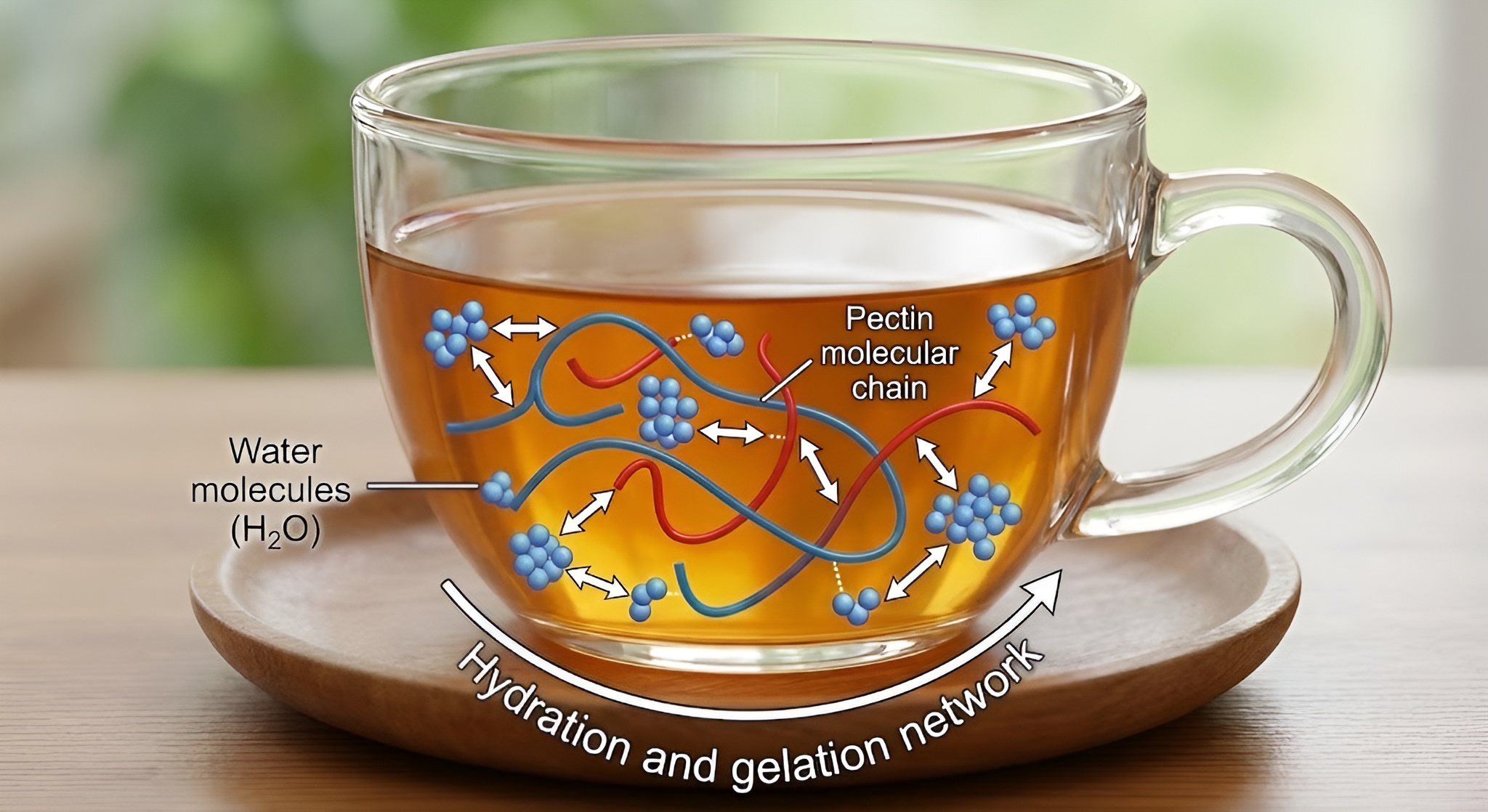
1. The Chemistry: Colloidal Suspension
Tea is not just colored water; it is a Colloidal Suspension.
Pectins are long chains of sugar molecules (galacturonic acid) that form a gel-like network. In the plant, they provide structural integrity. In the cup, they trap water molecules, increasing the viscosity of the liquid.
The Lubricant Effect: High levels of pectin coat the mucous membranes of the mouth. This physical layer reduces friction and masks the sensation of Astringency (dryness). This is why a high-pectin tea feels "smooth" even if it is strong.
2. The Gushu (Ancient Tree) Connection
Why do collectors pay thousands for Gushu (Ancient Tree) Pu-erh? It's not just rarity; it's texture.
Plantation Bushes (Taidi): Harvested frequently and fertilized heavily with Nitrogen to promote rapid leaf growth. These leaves are thin and watery.
Ancient Trees (Gushu): Grow slowly. They have massive root systems that absorb varied minerals. Because they grow slower, the leaves develop thicker cell walls packed with Pectin and Cellulose to protect against the environment. When brewed, this structural density translates directly into "thick soup."
Expert Tip: The Bubble Test
When you pour a high-quality tea, look at the bubbles (foam) that form on the surface. If the bubbles dissipate instantly, the tea is likely thin. If the bubbles are small, creamy, and persist for a long time (like the head on a beer), it indicates high levels of Saponins and Pectin—signs of a rich, textural tea.
3. Cultivars & Material
Texture is also genetic. Certain cultivars are bred or selected specifically for their mouthfeel.
| Cultivar / Type | Texture Profile | Why? |
|---|---|---|
| Shui Xian | "The Bones" (Heavy) | Known for its thick, watery sensation rather than high aroma. |
| Fuding Da Bai | Silky, Oily | The trichomes (hairs) on Silver Needle release amino acids and lipids that add smoothness. |
| Gushu Pu-erh | Viscous, Coating | Slow growth concentrates polysaccharides. |
| Stems (Kuki) | Sweet, Thick | Stems are transport vessels rich in sugars and structural pectin. |
4. The Role of Aging: Why Old Tea is Thicker
Fresh tea can be sharp. Aged tea is round.
During the aging process of Pu-erh or Aged White Tea, enzymes and oxidation slowly break down the insoluble cellulose and large pectin chains into shorter, soluble polysaccharides and sugars.
This increases the total amount of dissolved solids in the water, making a 10-year-old tea feel physically heavier on the tongue than a fresh one. This transformation is why we build Pumidors to control the humidity and speed of this breakdown.
Feel the Texture
The best way to understand Pectin is to drink a tea that is famous for it. We recommend a high-grade Shui Xian (Wuyi Rock Tea) or an aged Shou Pu-erh.
Best Textural Teas
Comments