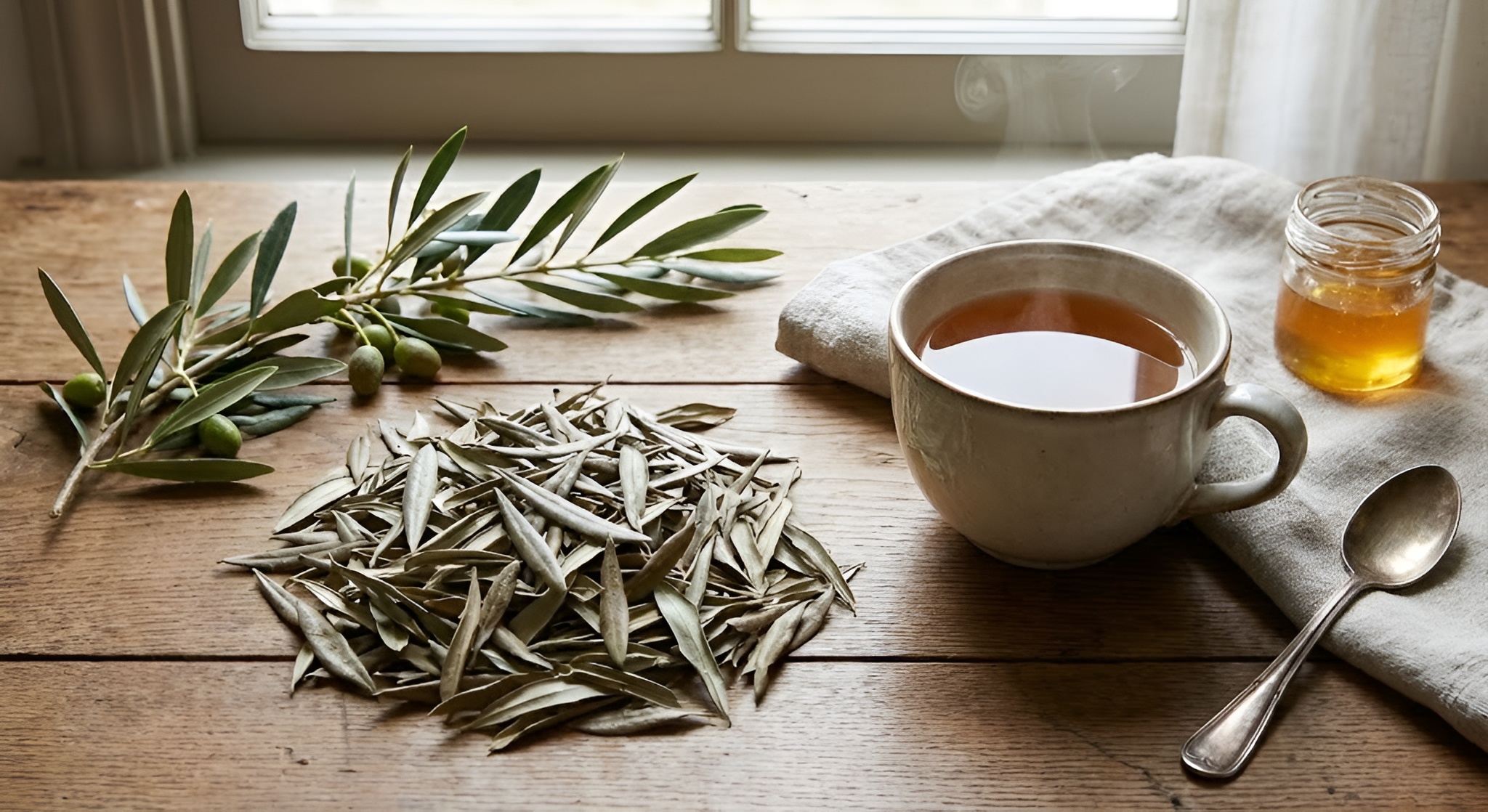
1. The Science: Oleuropein and Hydroxytyrosol
Olive leaves are the primary source of Oleuropein. When you drink the tea, your body metabolizes this into Hydroxytyrosol, one of the most powerful antioxidants found in nature (ORAC value higher than Vitamin C).
This compound protects cells from oxidative stress and inflammation. This is why the tea is often touted as an "Immunity Booster" during cold and flu season—it doesn't just soothe; it actively helps the body fight off pathogens.
Expert Tip: The "Herx" Reaction
Because olive leaf is so potent against bacteria, drinking too much too fast can cause a "Herxheimer reaction" (detox symptoms like headache or fatigue) as pathogens die off. Start with 1 cup a day and work your way up.
2. Olive Leaf vs. Green Tea
They look similar and taste similar, but they serve different purposes.
| Feature | Green Tea (Camellia Sinensis) | Olive Leaf (Olea Europaea) |
|---|---|---|
| Main Antioxidant | EGCG (Catechins) | Oleuropein |
| caffeine | 35-50mg per cup | Zero |
| Best For | Focus, Metabolism | Blood Pressure, Immunity |
| Flavor | Grassy, Sweet, Seaweed | Earthy, Bitter, Savory |
3. How to Brew (Without the Bitterness)
Olive leaves are tough. Unlike delicate tea leaves, they need heat and time to release their medicine.
Temperature: 95°C - 100°C (Boiling is fine).
Time: Steep for 5-10 minutes.
The Trick: Because long steeping releases bitterness, add a slice of lemon or a sprig of fresh mint. The citric acid cuts through the savory, oily notes perfectly.
Ready to boost your immunity?
We've reviewed the best olive leaf teas on the market, from potent loose leaf for serious health benefits to delicious mint blends for daily sipping. See our Top 5 Olive Leaf Teas of 2025 →
Comments