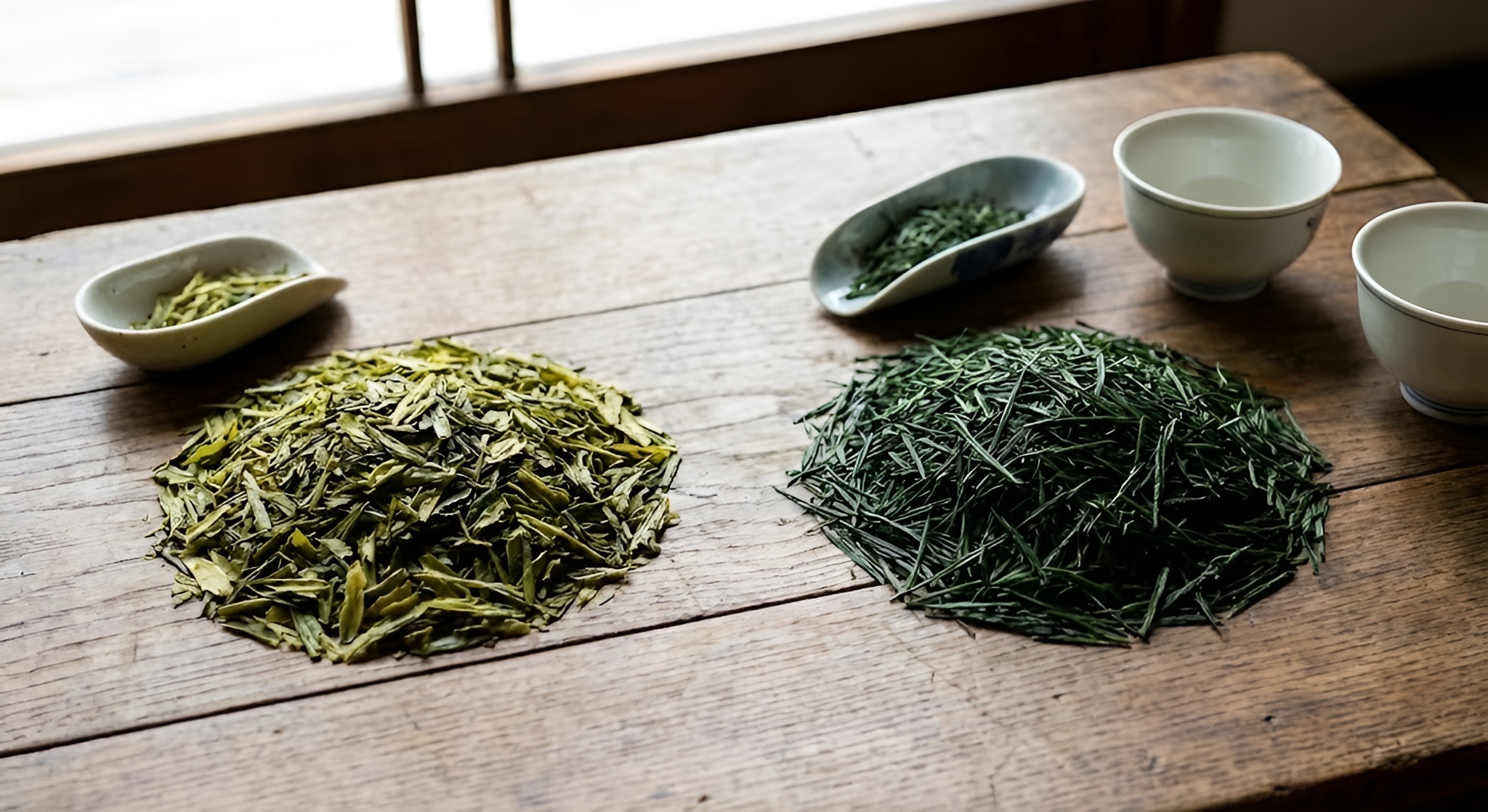
1. What Defines Sencha, Kabusecha and Gyokuro—and Why Shade Changes Everything
All three teas begin as fresh leaves from Camellia sinensis var. sinensis, typically cultivars bred for the Japanese climate—Yabukita, Saemidori, Asatsuyu, Okumidori. All undergo steaming (to halt oxidation), rolling and drying. The sole structural difference in the field is shade duration and intensity in the final weeks before harvest. Sencha is grown in full sun or given minimal shade (0–7 days, sometimes none); kabusecha (literally 'covered tea') spends roughly 7–14 days under nets or reed screens that block 50–70 % of sunlight; gyokuro ('jade dew') is shaded for 20–30 days under progressively denser cover, sometimes reaching 90–95 % shade by harvest.
When a tea plant is deprived of light, it responds by ramping up chlorophyll production (to capture every available photon) and by accumulating theanine and other amino acids while reducing the synthesis of catechins, the polyphenols responsible for astringency and bitterness. The longer the shade period, the more pronounced this shift: theanine content can double or triple, chlorophyll deepens the leaf colour to near-black when dry, and the liquor becomes viscous, sweet and savoury. This is not marketing—it is measurable biochemistry, and it is why a 30-day-shaded gyokuro from Yame or Uji tastes fundamentally different from even the finest full-sun sencha.
In the UK market, labelling can be inconsistent. Some retailers list any lightly shaded sencha as 'kabusecha' to justify a higher price; others use 'kabusecha' only for the 10–14-day sweet spot. True gyokuro will always specify the region (Yame, Uji, occasionally Shizuoka) and often the cultivar and harvest date. If a 'gyokuro' costs under £25 per 100 g in 2026, scrutinise the provenance—it may be a relabelled kabusecha or a lower-grade second flush.
Check the Shade Window on the Label
Reputable UK importers now state shade duration (e.g. '14-day kabusecha' or '21-day gyokuro'). If the listing omits this, ask—it's the single best predictor of flavour and fair pricing.
2. Flavour Profiles in Practice: What You'll Taste in the Cup
Sencha brewed at 70–80 °C for 60–90 seconds yields a bright, vegetal liquor—grassy, sometimes marine or seaweed-like, with a clean astringent finish. High-grade sencha (first flush, single-origin) adds floral or citrus notes and a hint of sweetness, but bitterness and briskness are always present. It is refreshing, palate-cleansing and pairs well with food. Quality sencha is the workhorse of Japanese tea: reliable, invigorating, forgiving of small brewing errors.
Kabusecha sits in the middle. Brewed at 60–70 °C for 90–120 seconds, it offers creamy umami sweetness—like steamed edamame or fresh peas—with much less astringency than sencha but more brightness than gyokuro. The mouthfeel is rounder, almost buttery, and the finish lingers without bitterness. Kabusecha is the gateway to shade tea: it rewards careful brewing but does not punish a few degrees of error the way gyokuro can. In blind tastings, many drinkers find kabusecha the most immediately satisfying, balancing richness with enough vegetal character to remain recognisably 'green tea.'
Gyokuro demands precision. Brewed at 50–60 °C for two to three minutes (sometimes longer for subsequent infusions), it produces a dense, almost syrupy liquor with profound umami—seaweed, dashi, butter, cooked greens—and near-zero bitterness. The sweetness is not sugary but savoury-sweet, akin to slow-cooked onions or miso. The experience is intense, meditative and polarising: some find it transcendent, others too heavy or 'fishy.' Gyokuro is not a thirst-quencher; it is a sensory event, best consumed slowly in small cups. If you rush it or brew too hot, you lose the umami and amplify a flat, vegetal blandness that does not justify the cost.
Start with Kabusecha to Calibrate Your Palate
If you've only drunk sencha, jumping straight to expensive gyokuro risks disappointment—your palate may not yet crave deep umami. A good kabusecha teaches you what shade does, at half the price.
3. Chemistry and Processing: How Shade Alters the Leaf at Harvest
Shading is a controlled stress. As the canopy darkens, the plant prioritises light-capture over defence. Chlorophyll concentration rises to maximise photosynthesis under low light, which is why gyokuro leaves appear almost black and brew a vivid, jade-green liquor. Simultaneously, the plant diverts resources away from catechin synthesis—catechins normally protect leaves from UV and herbivores—and instead accumulates theanine, an amino acid that contributes umami flavour and a calming, focused mental state when consumed.
Theanine levels in full-sun sencha typically measure 1–2 % of dry weight; in kabusecha this rises to 2–3 %, and in top gyokuro it can reach 4–5 % or higher. Catechin content drops correspondingly, cutting astringency by half or more. The result is a tea that tastes sweet and savoury without added sugar, and that brews with less bitterness even when slightly over-infused. This chemistry is stable: shade-grown leaves retain their amino-acid advantage through steaming, rolling and drying, provided they are stored away from light and heat.
Processing after harvest is identical across all three types—steaming (usually 30–60 seconds for fukamushi or deep-steamed styles, less for asamushi light-steamed), rolling to break cell walls and shape the needle, and drying. The shade difference is baked in at the field, not the factory. However, cultivar and terroir interact with shade: Saemidori responds to shade with heightened floral aromatics, while Yabukita yields a more robust, marine umami. Yame's river-basin microclimate and Shizuoka's ocean fog both modulate nitrogen availability, further shaping the final flavour even when shade duration is identical.
4. UK Retail Pricing in 2026: What You'll Pay and Why
As of August 2026, currency fluctuations, shipping costs and Japanese domestic demand all influence UK prices. Expect to pay £8–15 per 100 g for reputable, single-origin sencha (first flush, organic or estate-specific); mass-market blends may start at £5–6 but often lack provenance. Premium sencha from Shizuoka or Kagoshima, especially early-harvest shincha, can reach £18–22.
Kabusecha ranges from £15 to £30 per 100 g. The lower end covers 7–10-day shade from less-famous regions; the upper end buys 12–14-day Saemidori or Okumidori from Uji or Yame, often sold in small, dated batches. Kabusecha represents the sweet spot for many UK buyers: double the richness of sencha for roughly double the price, without the leap to gyokuro's £40–80 territory.
Gyokuro pricing starts around £30 per 100 g for entry-level or second-flush lots and climbs to £60–80 for first-flush, single-cultivar, 25–30-day shade from Yame or Uji. Rare or competition-grade gyokuro occasionally exceeds £100. At these prices, provenance and transparency matter critically. Look for listings that specify harvest date (ideally April–May), cultivar, shade duration and producer. Many UK specialists now import directly from Yame co-operatives or Uji estates, which ensures traceability and fair pricing. Generic 'gyokuro' from blenders or wholesalers is often older stock or lower-grade leaf sold at a premium; independent reviews can guide you to the best value.
Calculate Cost per Session, Not per 100 g
Gyokuro yields 3–5 infusions from 5 g of leaf; sencha typically 2–3. Per cup, the gap narrows—often £1–1.50 for gyokuro vs 40–60p for sencha, making the premium less daunting for occasional use.
5. When Each Tea Is Worth the Premium—and When to Save
Choose sencha for daily drinking, morning energy, pairing with meals, or cold-brew experiments. Its brightness and astringency make it versatile, food-friendly and forgiving. Premium sencha (£12–18) is worth it if you drink it daily and appreciate varietal or terroir nuance—first-flush shincha offers a fleeting sweetness and aroma that justify the seasonal splurge, but standard sencha at £8–10 from a reputable source will satisfy most palates year-round.
Choose kabusecha when you want more depth without the ceremony. It suits weekend mornings, hosting guests who appreciate good tea, or moments when you want umami richness but lack the time or temperament for gyokuro's exacting brew parameters. Kabusecha tolerates a wider temperature range (60–75 °C) and still delivers sweetness and body. In 2026's inflationary climate, kabusecha at £18–25 offers the best flavour-per-pound ratio for UK buyers exploring shade tea. It also works beautifully as a thoughtful gift, bridging the gap between everyday and luxury.
Choose gyokuro sparingly, for focused, meditative sessions or when you specifically crave that marine, umami intensity. It is not a casual tea. If you multitask, drink it hot and fast, or brew carelessly, gyokuro will disappoint and feel overpriced. But brewed with patience—50–60 °C, small pot, multiple slow infusions—it delivers an experience unmatched by any other tea. Reserve it for quiet mornings, tea-ceremony practice, or sharing with someone who will notice and appreciate the difference. At £50–70 per 100 g, gyokuro is a luxury, not a staple; treat it as such and you will never regret the cost.
6. Cultivars, Regions and Terroir: Which Origins Deliver the Best Shade Expression
Not all sencha, kabusecha or gyokuro are equal. Cultivar and region shape how shade translates into flavour. Yabukita, Japan's workhorse cultivar (accounting for ~75 % of plantings), produces reliable, balanced sencha and solid kabusecha, but its gyokuro can taste one-dimensional unless grown in exceptional terroir. Saemidori, favoured in Kyushu, responds beautifully to shade: kabusecha and gyokuro from Saemidori are often sweeter, more floral and less astringent than Yabukita equivalents. Okumidori and Asatsuyu are rarer, high-umami cultivars used for premium gyokuro; Asatsuyu in particular offers a creamy, almost dairy-like sweetness.
Regionally, Yame (Fukuoka) is Japan's gyokuro capital, producing ~40 % of the nation's output and consistently winning top awards. The Yame basin's cool nights, river mist and rich alluvial soil favour amino-acid accumulation. Uji (Kyoto) is the historic birthplace of shade tea and tea ceremony, still commanding prestige and premium prices; Uji gyokuro tends toward elegant, refined umami with less overt sweetness than Yame. Shizuoka, Japan's largest tea region, produces excellent sencha and respectable kabusecha, but its gyokuro is rarer and often less celebrated—though ocean fog and coastal nitrogen dynamics can yield distinctive marine notes.
For UK buyers, seek out single-origin, single-cultivar lots whenever budget allows. Blends smooth out peaks and troughs but erase terroir. A 14-day kabusecha made from Saemidori in Yame will taste markedly different—and often better—than a generic '14-day kabusecha' blend from unknown origins. Many specialist UK retailers now label cultivar, region and harvest date as standard; if they don't, ask.
Saemidori Kabusecha Punches Above Its Weight
For £18–22 per 100 g, a Yame or Kagoshima Saemidori kabusecha often rivals entry-level gyokuro in sweetness and umami, making it the insider's pick for everyday luxury.
7. Brewing to Unlock (or Waste) the Premium: Temperature, Time and Technique
No amount of money will buy you great gyokuro if you brew it at 80 °C for 60 seconds. Shade tea's value is locked behind technique. Sencha tolerates 70–80 °C and 60–90-second infusions; hotter and faster extracts more catechins (astringency), which is fine when you want brightness. Kabusecha benefits from 60–70 °C and 90–120 seconds, which draws out amino acids while leaving much of the catechin behind. Gyokuro demands 50–60 °C and two to four minutes for the first infusion, often longer for the second and third. At these low temperatures, theanine and umami compounds dissolve readily, but catechins stay in the leaf—you get sweetness and body with negligible bitterness.
Water quality and vessel matter. Hard water (high in calcium and magnesium) can dull gyokuro's delicate umami; if your tap water is hard, use filtered or bottled spring water with ~50–100 mg/L total dissolved solids. A small Japanese kyusu teapot (150–250 ml) with a fine mesh is ideal for kabusecha and gyokuro: the mesh traps fine particles (common in deep-steamed styles), and the small volume concentrates flavour. For sencha, a larger kyusu or even a simple infuser mug works well.
Leaf quantity: sencha uses ~3 g per 150 ml; kabusecha 4–5 g; gyokuro 5–7 g per 100 ml (or even less water for ultra-concentrated gyokuro-style service). Multiple infusions are standard—sencha yields 2–3, kabusecha 3–4, gyokuro 4–5 or more, each subtly different. The second infusion of gyokuro, in particular, is often the sweetest and most prized. If you discard the leaves after one steep, you are wasting half the tea's potential and most of the premium you paid.
Cool Your Water in Stages
Boil, pour into your kyusu (cooling ~10 °C), then into cups (~10 °C more), then back into the pot over the leaves. This ritual cools water to 50–60 °C and pre-warms everything—essential for gyokuro.
8. How to Buy Shade Tea in the UK: Retailers, Red Flags and Smart Strategies for 2026
The UK market for Japanese tea has matured significantly. Specialist online retailers now import directly, publish harvest dates and offer traceable, small-batch sencha, kabusecha and gyokuro. Look for transparency: region, cultivar, harvest month, shade duration and producer name (or co-op). Avoid generic 'Japanese green tea' or 'gyokuro' listings with no provenance—these are often stale blends or mislabelled kabusecha. Price is a reasonable (though imperfect) signal: if 'gyokuro' costs £15 per 100 g, it is almost certainly not true 20+-day shade.
Freshness is critical. Japanese green tea—especially shade tea—degrades noticeably after six to twelve months even when well stored. Buy from retailers who state harvest date and turn stock quickly. Spring-harvest tea (April–May) is peak quality; summer and autumn harvests (June–October) are cheaper but rarely match first-flush complexity. First-flush shincha arrives in the UK in late May or June; kabusecha and gyokuro from first flush command the highest prices but offer the most vibrant flavour.
In 2026, many UK buyers are also weighing value against inflation. Kabusecha at £18–25 often delivers more incremental pleasure per pound than jumping to £60 gyokuro, especially if you drink it regularly. Conversely, buying cheap 'gyokuro' at £20 per 100 g wastes money—it will taste like mediocre sencha and disappoint. Curated reviews and value-focused buyer's guides can help you identify which premiums are justified by measurable quality and which are brand markup. Finally, consider sample packs: many retailers offer 20–30 g tasters of kabusecha or gyokuro, letting you calibrate your palate and preferences before committing to a full bag.
Buy Gyokuro in Small Quantities, Fresh
A 50 g bag of top gyokuro costs £25–40 but stays fresh for weeks and offers 10–15 sessions. Buying 100 g and hoarding it for months defeats the point—shade tea fades fast.



Comments