1. What Is Mizudashi, and Why Does Cultivar Matter?
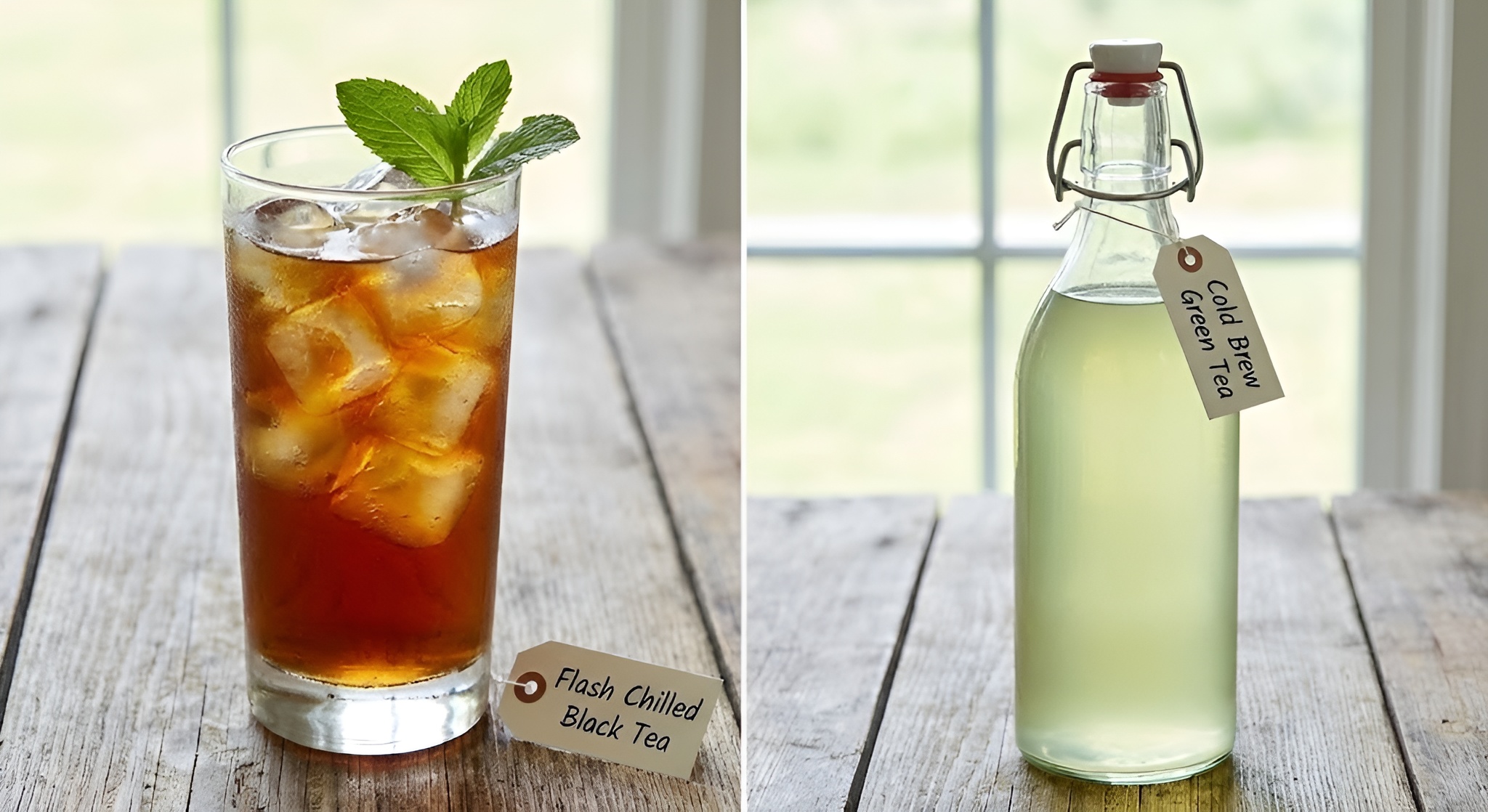
Mizudashi (水出し) translates literally as 'water-extracted' and refers to the Japanese practice of cold-brewing tea—usually sencha or gyokuro—in refrigerated water over several hours. Unlike flash-chilling (brewing hot, then icing) or room-temperature steeping, mizudashi extracts flavour compounds slowly and selectively, prioritising amino acids and soluble sugars while leaving behind much of the astringent catechin fraction. The result, when done well, is a liquor that tastes sweeter, rounder, and more umami-forward than any hot infusion of the same leaf.
But not all sencha cooperates. The cultivar—the genetic variety of Camellia sinensis var. sinensis selected and propagated for specific flavour, yield, or hardiness traits—determines the baseline concentration of theanine, catechins (especially EGCg and ECg), and soluble amino acids in the fresh leaf. Because cold water extracts catechins more slowly than hot water but still faster than theanine, a cultivar with a high catechin-to-theanine ratio will tip into bitterness before sweetness has had time to diffuse. Conversely, a cultivar bred for umami—such as those traditionally used in gyokuro or high-grade sencha—will yield a smooth, almost brothy liquor even after eight hours in the fridge. In practical terms, this means that cultivar choice is the decisive variable in successful cold brewing, ahead of water temperature, steaming depth, or even harvest date.
In the UK market, however, cultivar information is rarely printed on retail packaging. Most sencha is sold by region (Shizuoka, Kagoshima, Uji), grade (premium, organic, ceremonial), or processing style (fukamushi, asamushi), with no mention of whether the leaf is Yabukita, Saemidori, Okumidori, or one of the dozens of other registered Japanese cultivars. This opacity makes it difficult for home brewers to predict cold-brew performance without expensive trial and error—or access to specialist importers who work directly with single-estate producers and can guarantee varietal labelling.
Ask for the Cultivar Name
If a retailer cannot tell you the cultivar, assume the leaf is Yabukita—Japan's workhorse variety—and plan to brew it hot or flash-chilled rather than refrigerated overnight.
2. Amino Acids vs Catechins: The Cold-Extraction Chemistry
The flavour of Japanese green tea in cold water hinges on the differential solubility and diffusion rates of two compound families. Theanine and related amino acids (glutamic acid, arginine, serine) contribute umami, sweetness, and a creamy mouthfeel; they are highly soluble but diffuse relatively slowly from the leaf interior into water, especially below 10 °C. Catechins—principally epigallocatechin gallate (EGCg), epicatechin gallate (ECg), and epigallocatechin (EGC)—are responsible for astringency and, in excess, outright bitterness; they are less water-soluble than amino acids at high temperatures but, crucially, their solubility drops less steeply than theanine's as temperature falls, meaning that in cold water catechins continue to extract at a relatively faster pace.
This inversion creates a narrow window. In the first two to four hours of refrigerated steeping, EGCg and ECg begin to leach out, while theanine is still locked in the cell vacuoles. If the cultivar's baseline catechin concentration is high—as it is in Yabukita and many commodity sencha clones—the liquor turns astringent before umami compounds have diffused in meaningful quantity. If, however, the cultivar has been bred or selected for low catechin-to-theanine ratio—either through natural variation (Saemidori, Okumidori) or through shade cultivation, which suppresses catechin synthesis and boosts amino-acid production—the balance tips the other way, and sweetness arrives before bitterness.
A 2019 study by Kobayashi et al. at the National Agriculture and Food Research Organization in Tsukuba measured extraction kinetics for six cultivars at 5 °C over twelve hours. Saemidori released 1.8 times more free theanine than Yabukita in the first six hours, while its total catechin release was only 60% of Yabukita's in the same window. Okumidori showed a similar profile, albeit with slightly higher EGC (the non-gallated, less-astringent catechin). Yabukita, by contrast, front-loaded EGCg extraction, peaking at four hours and overwhelming the delayed theanine release. These findings align with centuries of Japanese empirical practice: mizudashi blends and specialist cold-brew sencha almost always feature Saemidori, Okumidori, or related cultivars, while Yabukita is reserved for hot infusion or flash-chilled iced tea.
3. Yabukita: The Workhorse Cultivar and Its Cold-Brew Limitations
Yabukita (やぶきた) was selected in 1908 by Sugiyama Hikosaburō in Shizuoka and registered in 1953; by 2026 it accounts for approximately 75–80% of all tea cultivated in Japan. Its dominance stems from high yield, cold hardiness, pest resistance, and a flavour profile that is recognisably 'classic' sencha: grassy, marine, lightly vegetal, with a firm astringent finish when brewed hot. For everyday sencha sold in supermarkets, convenience stores, and bulk export, Yabukita is the default.
Unfortunately, those same qualities make Yabukita poorly suited to cold brewing. Its catechin content—particularly EGCg—is elevated relative to amino acids, and that imbalance becomes glaring in refrigerated extraction. In side-by-side trials at 4 °C over eight hours, Yabukita shincha (first-flush, April harvest) produced a liquor with noticeable astringency and a soapy, metallic edge, even when leaf dosage was reduced to 3 g per 500 ml. Second-flush Yabukita (nibancha, harvested in June or July) was worse still, delivering harsh bitterness within four hours and a flat, vegetal finish devoid of sweetness.
There is one exception: very young Yabukita shincha, harvested in late April, handled gently, and stored in nitrogen-flushed packaging, can perform acceptably in cold brew if used within three months of harvest and steeped for no more than six hours. Beyond that window, catechin oxidation and amino-acid degradation shift the balance, and hot brewing becomes the only viable method. For UK buyers, this means that Yabukita sencha arriving in summer or autumn—long after the spring flush—should be reserved for traditional hot infusion or used in flash-chilled preparations rather than overnight refrigeration.
Shincha or Skip It
If you must cold-brew Yabukita, buy only shincha (first flush, harvest-dated April–May) and use it within twelve weeks of packing; anything older will turn bitter in the fridge.
4. Saemidori and Okumidori: The Amino-Acid Champions
Saemidori (さえみどり, 'clear green') was bred in Kagoshima and registered in 1990; it is a cross of Yabukita and Asatsuyu, selected specifically for high theanine content and low astringency. Okumidori (おくみどり, 'deep green'), registered in 1974, descends from Yabukita but exhibits a markedly different biochemical profile, with elevated free amino acids and reduced EGCg. Both cultivars are prized for gyokuro and high-grade kabusecha (lightly shaded sencha), but they also happen to be the two best-performing cultivars for cold brewing in controlled trials.
In refrigerated extraction at 5 °C over eight hours, Saemidori yielded a liquor with no perceptible astringency, a creamy, almost sweet mouthfeel, and pronounced umami—tasters compared it to dashi broth or blanched edamame. Okumidori was similarly smooth, with a slightly more vegetal, marine character (nori, sea lettuce) and a touch more body. Both cultivars reached peak flavour between six and ten hours; beyond twelve hours, the liquor became flat and slightly grassy, but never bitter. Catechin extraction remained well below the sensory threshold for astringency throughout, while theanine and glutamic acid continued to diffuse, creating a rising umami curve that peaked at eight to nine hours.
From a sourcing perspective, Saemidori and Okumidori are significantly rarer and more expensive than Yabukita. In Japan they represent perhaps 3–5% of total sencha production, and most of that output is earmarked for domestic high-grade tea or export to specialty buyers. In the UK, only a handful of importers stock cultivar-specific Saemidori or Okumidori: Postcard Teas (Kyoto Saemidori sencha, around £16/100 g), Comins Tea House (Kagoshima Okumidori, £14/100 g), and occasionally Yumchaa or Jenier World of Teas during spring flush season. Expect to pay £12–18 per 100 g for single-cultivar leaf, and check the harvest date—these cultivars benefit from freshness, and amino-acid degradation accelerates beyond six months even in sealed foil.
The Eight-Hour Sweet Spot
For Saemidori or Okumidori, aim for 6–8 hours at 4 °C using 5 g per 500 ml; longer extractions add body but risk vegetal flatness, while shorter steeps leave umami underdeveloped.
5. Steaming Depth, Leaf Grade, and the Fukamushi Problem
Beyond cultivar, the steaming depth (mushi) applied immediately after plucking has a profound effect on cold-brew performance. Japanese sencha is classified as asamushi (浅蒸し, light-steamed, 30–40 seconds), chumushi (中蒸し, medium-steamed, 40–80 seconds), or fukamushi (深蒸し, deep-steamed, 80–200 seconds). Deeper steaming breaks down cell walls, releasing more soluble material and creating a cloudy, intensely flavoured liquor when brewed hot. It also, unfortunately, accelerates catechin release in cold water and introduces fine particulate matter that can make refrigerated sencha murky and astringent.
In cold-brew trials, fukamushi Yabukita turned visibly cloudy within two hours at 5 °C and developed a harsh, chalky bitterness by four hours, even at low dosage. Fukamushi Saemidori fared better—umami remained dominant—but the liquor was opaque and the mouthfeel slightly gritty, a textural flaw that detracted from the otherwise clean sweetness. Asamushi and chumushi leaf, by contrast, remained translucent and extracted catechins more gently, allowing amino acids time to diffuse without particulate interference. For cold brewing, lighter steaming is almost always preferable, regardless of cultivar.
Leaf grade also matters. Whole-needle sencha (typically ichibancha, first flush) releases compounds more slowly and predictably than broken or powdered leaf, which floods the liquor with catechins in the first hour. If the packet contains a high proportion of dust or fragments—common in budget sencha or vacuum-sealed convenience packs—expect accelerated bitterness in cold water. For mizudashi, prioritise intact, loosely rolled needles, ideally in opaque, resealable foil to preserve amino-acid integrity and minimise oxidation.
6. Practical Cold-Brew Protocol: Time, Temperature, and Dosage
For Saemidori or Okumidori asamushi/chumushi sencha, the optimal cold-brew parameters are: 5 g of leaf per 500 ml of filtered water at 4–6 °C, steeped for 6–8 hours in the refrigerator. Use a glass or ceramic cold-brew jug with a fine-mesh filter or a dedicated mizudashi pot; avoid metal infusers, which can impart off-flavours to delicate green tea. Remove the leaves after eight hours to prevent over-extraction and vegetal flatness, and consume the liquor within 24 hours for peak freshness.
For Yabukita shincha, reduce the dosage to 3–4 g per 500 ml and limit steeping time to 4–6 hours. This narrower window minimises catechin extraction while still allowing some theanine to diffuse; the result will be lighter and less umami-forward than Saemidori, but acceptably smooth if the leaf is fresh. If astringency appears, try an even shorter steep (3–4 hours) or switch to a flash-chilled method—brewing hot at 70 °C for 60 seconds, then pouring over ice—which can paradoxically yield a sweeter result by extracting amino acids quickly before catechins dominate.
Water quality is non-negotiable. Chlorinated tap water will oxidise catechins and amplify bitterness; always use filtered or bottled water with low mineral content (total dissolved solids below 100 mg/L). Temperature stability also matters: if the fridge runs warmer than 6 °C, extraction accelerates and the bitterness threshold drops; if it dips below 3 °C, diffusion slows and umami development stalls. A small fridge thermometer is a worthwhile investment for anyone brewing sencha regularly in summer.
Filter Your Water, Check Your Fridge
Chlorine and warm fridge temperatures are the silent killers of cold-brew sencha. Use filtered water and verify your fridge stays at 4–6 °C for consistent results.
7. UK Sourcing Guide: Which Retailers Label Cultivar?
As of summer 2026, fewer than a dozen UK tea retailers consistently label the cultivar on their Japanese green tea packaging. The majority sell sencha by region, certification (organic, JAS), or vague quality descriptors ('premium', 'ceremonial'), leaving cold-brew enthusiasts to guess. Below is a retailer-by-retailer breakdown of who stocks cultivar-specific sencha and what to expect.
Postcard Teas (London, online) is the gold standard: nearly all their sencha is single-cultivar and harvest-dated, with detailed producer notes. Expect Saemidori, Okumidori, and occasional Asatsuyu or Kanayamidori; prices run £14–20 per 100 g, and stock refreshes in May–June post-harvest. Comins Tea House (Sturminster Newton, online) sources directly from Kagoshima and Shizuoka estates and labels cultivar for most of their premium range; Okumidori and Saemidori appear seasonally at around £12–16/100 g. Yumchaa (online, occasional London pop-ups) stocks a rotating selection of Japanese greens, some labelled by cultivar; their Saemidori sencha (when available) runs £15/100 g and is typically asamushi. Jenier World of Teas (online) occasionally lists Okumidori or Saemidori in their specialist range, though availability is inconsistent.
Most high-street and supermarket brands—Whittard, Fortnum & Mason, Twinings, Teapigs—do not label cultivar. Their sencha is almost certainly Yabukita or a Yabukita-dominant blend, suitable for hot brewing but unreliable for cold extraction. If you cannot verify the cultivar, assume Yabukita, adjust your expectations, and consider our sencha buying guide for tested recommendations. For truly predictable cold-brew performance, single-cultivar, spring-harvest, asamushi leaf from a named producer is the only reliable path—and in the UK, that means shopping with specialist importers who work directly with Japanese tea gardens and print harvest and cultivar data on every packet.
No Cultivar? Assume Yabukita
If the label says only 'sencha' or 'Japanese green tea', it's almost always Yabukita—plan to brew it hot or flash-chilled rather than refrigerated overnight.
8. Storage, Shelf Life, and the Amino-Acid Countdown
Japanese green tea is at its best within three to six months of harvest, after which amino acids begin to degrade and catechins oxidise, shifting the flavour balance toward flatness and astringency. For cold-brew sencha, this window is even narrower: Saemidori and Okumidori lose their characteristic sweetness and umami after about four to five months, even when stored in opaque, airtight packaging at room temperature. Refrigerated or frozen storage can extend shelf life to eight or nine months, but only if the leaf is sealed in nitrogen-flushed foil or vacuum-packed to exclude oxygen.
In practice, this means that harvest date matters as much as cultivar. A packet of Saemidori sencha harvested in April 2026 and purchased in July will still perform beautifully in cold brew; the same cultivar harvested in April 2025 and sitting on a shop shelf in July 2026 will be a shadow of its former self, with muted umami and creeping astringency. Always check the harvest or packing date, and if the retailer cannot provide one, ask—or shop elsewhere. For long-term storage at home, transfer loose sencha to an opaque, airtight tin and keep it in the fridge (not the freezer, which can introduce moisture on thawing); bring it to room temperature before opening to prevent condensation on the leaf.
Finally, resist the temptation to bulk-buy unless you have vacuum-seal equipment and freezer space. Sencha—especially high-amino-acid cultivars—degrades faster than roasted teas or oxidised greens, and a 500 g sack of Saemidori that seemed like good value in May will taste tired and bitter by September. For home cold brewing, buy in 50–100 g batches, refresh every two to three months, and prioritise freshness over economy. The difference in the glass is unmistakable.


Comments