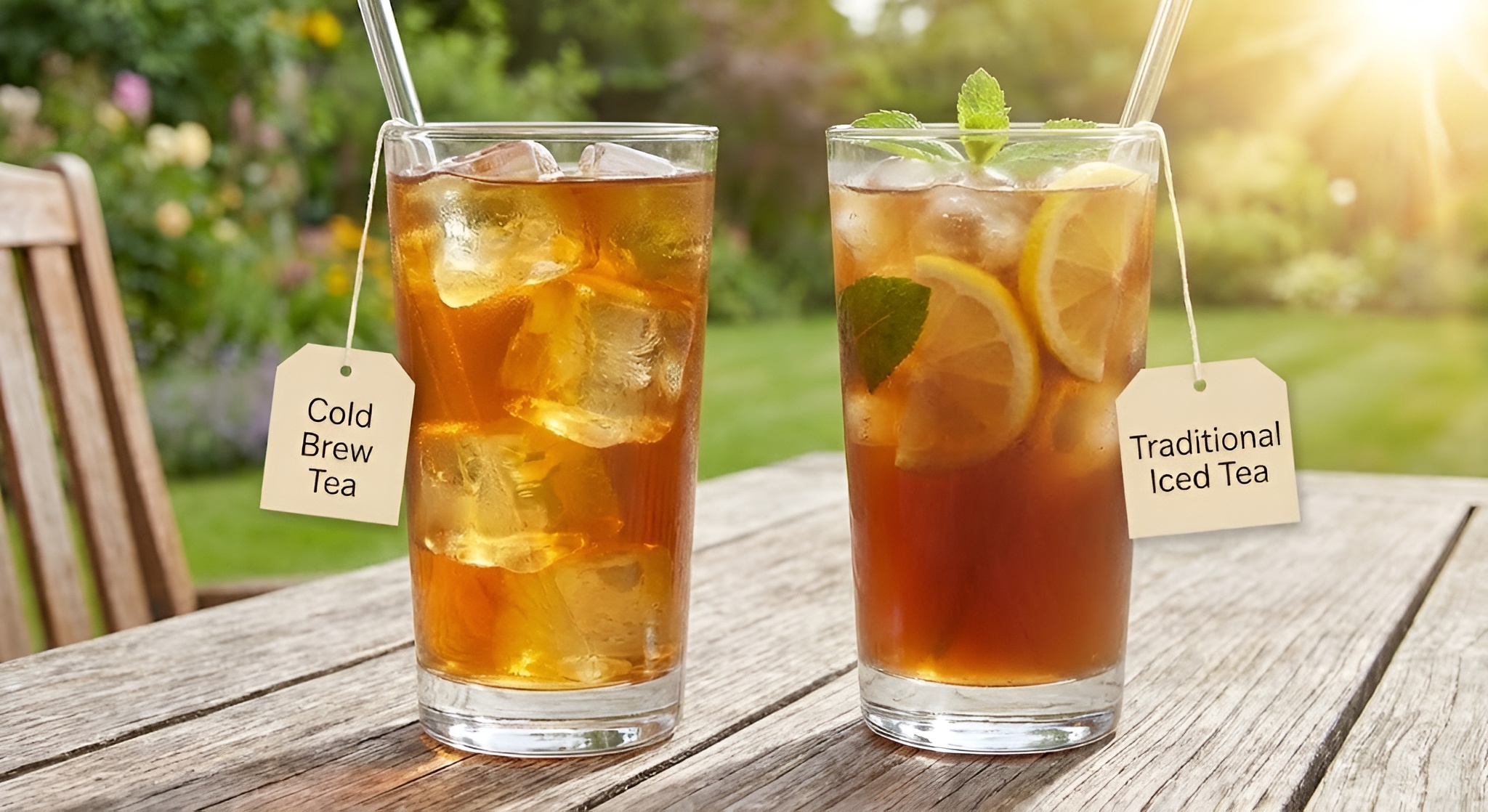
1. What Counts as an Iced Tea Maker—and Why the Category Is Poorly Defined
An iced tea maker is any vessel or appliance designed to brew tea that will be served cold, either by steeping at low temperature over several hours or by brewing hot and cooling rapidly. Unlike purpose-built coffee cold brewers—which have standardised around immersion pitchers and slow-drip towers—iced tea equipment borrows from multiple traditions: Japanese mizudashi carafes, American sun-tea jars, European fruit-infusion pitchers, and coffee-market hybrids. This lack of a single lineage means the category includes everything from a £10 glass jug with a screw-top lid to a £120 programmable brewer with built-in refrigeration.
The confusion deepens because most manual pitchers marketed for iced tea work identically to those sold for fruit-infused water, and many so-called 'iced tea machines' are rebranded drip-coffee makers with a chill function tacked on. For the purposes of this guide, we define four core types based on how they extract and cool: manual cold-brew pitchers (passive immersion in the fridge), electric cold brewers (powered agitation or temperature control at cold or ambient temps), flash-chill systems (hot brew followed by immediate ice dilution or chilling), and hybrids that offer multiple modes. Each operates on different extraction principles, and each suits different teas, schedules and household priorities.
In the UK market, the manual pitcher remains dominant by volume, accounting for the majority of sales in 2026, while electric and flash-chill models are gaining traction among households already familiar with pod coffee machines or sous-vide appliances. Dedicated iced tea makers remain a niche compared to the broader cold-brew category, but the lines are blurring as manufacturers design dual-use coffee and tea systems.
Check the Infuser Mesh First
Most 'iced tea' pitchers ship with coarse infuser baskets suited to fruit or large-leaf tea. If you brew rooibos, CTC black tea or broken-leaf blends, fine particles will escape and cloud your drink; swap the basket for a finer mesh or muslin bag before your first brew.
2. Manual Cold-Brew Pitchers: How They Work, What They Do Well, and Their Limits
Manual cold-brew pitchers are simply lidded carafes—typically borosilicate glass, Tritan plastic or stainless steel—fitted with a removable infuser basket. You add loose-leaf tea or bags to the basket, fill the jug with cold or room-temperature filtered water, refrigerate for 4–12 hours, then remove the infuser and pour. No power, no programming, no moving parts. The method relies entirely on time and low temperature to coax flavour compounds and caffeine from the leaf without the astringency that heat can drive.
This passive immersion favours teas with delicate, easily soluble aromatics—Japanese sencha, white tea, lightly oxidised oolongs—and produces a smooth, naturally sweet liquor with lower tannin extraction than hot-then-chilled brews. Because water at 4–8 °C (fridge temperature) has roughly one-fifth the extraction rate of water at 80 °C, you compensate by extending contact time or increasing leaf load. A typical ratio is 10–15 g of leaf per litre, steeped for 6–8 hours; denser, rolled leaves may need 10–12 hours, while flat, tender buds extract faster.
The advantages are simplicity, zero energy cost, quiet operation, and a flavour profile many drinkers prefer for green and white teas. The downsides are advance planning—you must start the evening before—and the risk of over-extraction if you forget the jug in the fridge. Tannins continue to leach slowly even at low temperature; after 16 hours, many greens turn vegetal or bitter, and blacks can develop a metallic edge. Manual pitchers also lack agitation, so leaves at the bottom of the basket steep in a higher-concentration micro-environment than those at the top, occasionally producing uneven extraction in very large batches.
The Overnight Window
Set a phone reminder for 8 hours after you start the brew. If you're asleep, pull the infuser first thing in the morning; most teas tolerate 6–10 hours gracefully, but beyond 12 you risk bitterness, especially with Chinese greens and lightly withered whites.
3. Electric Cold Brewers: Automation, Agitation, and When the Extra Cost Makes Sense
Electric cold brewers introduce a heating element, refrigeration coil, or motorised stirrer to control and accelerate extraction. The simplest models use gentle warming (15–25 °C) and periodic agitation to shorten brew time to 1–3 hours without crossing into hot-brew territory; mid-range units add programmable timers and auto-shutoff; premium machines integrate a Peltier chiller to hold the brew at a set temperature and prevent over-extraction, then alert you or transfer the finished tea to a carafe. All require mains power, and most use 20–60 watts during operation.
The core advantage is consistency and convenience. You load the tea, set the timer, and walk away; the machine agitates at intervals to ensure even extraction, then stops or chills when the programme ends. This reduces the risk of forgotten batches and allows shorter brew windows—useful if you want iced tea for lunch but didn't start a manual pitcher the night before. Electric brewers also suit higher-volume households: many models hold 1.5–2 litres and can run back-to-back cycles, whereas manual pitchers tie up fridge space for hours.
The trade-offs are upfront cost (£40–120 in 2026), energy consumption, noise from pumps or stirrers, and maintenance complexity. Any appliance that heats or chills water will accumulate limescale in hard-water areas; manufacturers recommend descaling every 20–40 cycles with citric acid or proprietary solutions, and failure to do so degrades heating efficiency and can impart off-flavours. Electric models also add embodied carbon and e‑waste risk: a well-made manual pitcher may last 15 years; an electric brewer's electronics, seals and motors typically have a 3–7 year lifespan. For a household that brews iced tea once a week, the convenience may not justify the environmental and financial overhead; for daily, high-volume use, automation can be worthwhile.
4. Flash-Chill Systems: Hot Brew + Rapid Cooling, and Why Aromatics Matter
Flash-chill systems invert the cold-brew logic: they brew tea hot—often at a precise, lower temperature than a rolling boil—then cool it immediately by pouring over a measured volume of ice or passing it through an internal chilling coil. The result is ready-to-drink iced tea in under ten minutes, with a flavour profile closer to traditional hot tea than to slow cold brew. The technique is borrowed from specialty coffee ('Japanese iced coffee') and from competition tea service, where judges want to evaluate a tea's full aromatic range without waiting overnight.
The science rests on volatile aromatics—light, fragrant compounds such as linalool, geraniol and various esters—that are more soluble at higher temperatures and evaporate quickly if tea cools slowly in open air. Flash chilling locks these volatiles in by dropping the temperature so fast that they remain dissolved in the liquor rather than escaping as steam. The method particularly benefits oolongs, Darjeeling first-flush, and other teas prized for floral or fruity top notes that can taste muted or flat in overnight cold brew.
Manual flash-chill is straightforward: brew a concentrated batch at the recommended temperature (often 70–85 °C depending on the tea), then pour directly into a pitcher half-filled with ice, diluting to the target volume. Electric flash-chill machines automate this by brewing in one chamber and pumping the hot liquor through a refrigerated spiral or over an ice reservoir in a second chamber, collecting the chilled tea in a carafe. They cost £50–150, occupy more counter space than a simple pitcher, and still require ice (or an integrated ice-maker, found only in commercial models). The payoff is speed and aromatic intensity—if you value the bright, complex notes of a high-mountain oolong or a single-estate black, flash chill often delivers a more expressive cup than passive cold steep.
Double the Leaf, Halve the Water
When flash-chilling manually, brew at twice your usual leaf-to-water ratio, then pour over ice equal in weight to your brew volume. This prevents dilution killing the flavour and ensures the finished tea hits the concentration you want.
5. Hybrid Models: Versatility vs. Complexity, and Whether One Machine Can Do It All
Hybrid iced tea makers offer multiple brewing modes—typically cold brew, flash chill, and sometimes hot tea—in a single appliance. A common design includes a heated brew chamber with programmable temperature (60–100 °C), a timer, and either an ice basket or a Peltier module for rapid cooling. You select the mode, load tea and water (and ice, if flash-chilling), press start, and the machine executes the sequence. The appeal is obvious: one device replaces a cold-brew pitcher, a variable-temperature kettle, and a flash-chill setup, saving cupboard space and offering flexibility for different teas and moods.
In practice, hybrids face the classic jack-of-all-trades problem. Cold-brew mode may lack the fine temperature stability of a dedicated electric brewer; flash-chill mode may use a smaller ice reservoir than a manual setup, limiting batch size; hot-brew mode may not reach true rolling boil for robust blacks. Build quality varies widely: well-engineered models (often £100+) use separate heating and cooling elements, food-grade stainless internals, and replaceable filters; budget hybrids (£40–60) often share a single heating element across modes, use thinner plastics that retain odours, and suffer higher failure rates within two years.
Hybrids make most sense for households that brew diverse teas daily—perhaps cold sencha in summer, hot Assam in winter, and flash-chilled oolong for guests—and who value counter space enough to accept modest compromises in each mode. If you drink only one or two tea types, or if you already own a good kettle and a simple pitcher, a dedicated single-purpose tool will likely outperform a hybrid at the same price point. Before buying, check whether the machine allows manual override of temperature and time; preset programmes are convenient, but different cultivars and leaf grades demand different parameters, and a locked programme can under- or over-brew premium teas.
6. What to Prioritise When Choosing: Volume, Material, Infuser Design, and UK-Specific Factors
Start with volume. Single-person households or office desks are well served by 500–700 ml infuser bottles; families or frequent entertainers need 1.5–2 litre pitchers or electric brewers. Beware marketing photos that make a 1-litre jug look enormous; check the stated capacity and subtract the volume occupied by ice if you plan to serve immediately. If you brew concentrate and dilute later—common with flash-chill methods—a smaller brewer and a separate serving pitcher may suit better than one large all-in-one unit.
Material affects durability, taste neutrality, thermal performance and sustainability. Borosilicate glass is inert, dishwasher-safe, and lets you monitor brew colour, but it's fragile and a poor insulator; if you plan to take your pitcher from fridge to table frequently, a sleeve or carrier helps. BPA-free Tritan copolyester is shatterproof, light, and retains cold well, but can absorb odours from strongly flavoured teas (smoked lapsang, bergamot Earl Grey) and may discolour over time. Stainless steel is robust, long-lasting and excellent for insulated designs, but you cannot see the brew's progress and cheaper grades sometimes impart a metallic note to delicate teas. For sustainability, glass and stainless win; both are fully recyclable and, if well made, outlast plastic by a decade or more.
Infuser design is critical and often overlooked. Look for a basket with fine stainless-steel mesh (300–400 microns) if you brew rooibos, South Indian CTC, or any broken-leaf tea; coarser nylon or perforated plastic allows sediment through. The basket should be tall enough that leaves have room to expand—compressed, densely packed leaves in a shallow basket extract unevenly—and easy to remove without spilling. Some pitchers use a central rod infuser; these offer less leaf volume and can restrict water flow. A removable, top-loading basket is more versatile and simpler to clean.
UK-specific considerations include water hardness. In London, Birmingham, and much of the South East, limescale buildup is inevitable in electric brewers; choose models with accessible heating elements and clear descaling instructions, and factor citric acid or descaler into your running costs. Fridge space is another constraint: British fridges are typically smaller than North American models, so measure shelf height and depth before buying a tall pitcher. Finally, consider energy tariffs: an electric brewer running for two hours at 50 watts costs roughly 2p per brew at October 2026 rates, trivial for occasional use but meaningful if you brew twice daily.
Test-Fit Your Fridge First
Measure the tallest shelf space in your fridge door and main compartment before you buy. Many 2-litre pitchers are 30+ cm tall and won't fit upright on standard shelves; you'll need to remove or rearrange internal racks, or choose a wider, shorter jug.
7. Maintenance, Descaling, and Longevity: Keeping Your System Running and When to Replace
Manual pitchers require minimal maintenance: rinse after each use, wash the infuser basket in warm soapy water or the dishwasher (check manufacturer guidance), and occasionally soak glass carafes in dilute white vinegar to remove tea stains and mineral deposits. Stainless-steel pitchers benefit from a monthly wipe with a microfibre cloth and a drop of olive oil to prevent water spots. Inspect silicone or rubber seals on lids every few months; if they crack or lose elasticity, replace them to maintain an airtight seal and prevent fridge odours tainting your tea.
Electric brewers and hybrids demand more active care. Descaling frequency depends on your water hardness and brew volume; in moderately hard water (200–300 mg/l calcium carbonate, typical of much of England), descale every 25–30 brews. Use food-grade citric acid (1 tablespoon per litre of water, run a brew cycle, then rinse thoroughly) or the manufacturer's descaling solution. Neglecting this causes scale to insulate heating elements, slowing brew times, increasing energy use, and eventually burning out the element. Clean any removable filters, brew baskets and drip trays weekly to prevent mould and off-flavours; most are dishwasher-safe, but hand-washing extends their life.
Flash-chill machines with internal coils or Peltier modules need both descaling and condenser cleaning. Dust on external cooling fins reduces efficiency; vacuum or wipe them every month. If your model uses an ice basket, wash it after each use and dry completely to prevent mildew. For all electric systems, follow the manufacturer's recommended service intervals; many advise a deep clean or seal replacement every 12 months.
Longevity varies dramatically. A well-made borosilicate pitcher from a reputable glassware brand can last 15–20 years if not dropped; budget plastic pitchers often crack at the handle or lid hinge within two years. Electric brewers typically see 3–5 years of daily use before seals, pumps or electronics fail; higher-end models with modular, user-replaceable parts can stretch to 7–10 years if maintained. When an appliance fails, check whether spares are available; many brands offer replacement carafes, infusers and seals, but proprietary heating elements or circuit boards are rarely sold to consumers. If repair isn't viable, recycle responsibly—WEEE regulations require UK retailers to accept old electricals free when you buy a replacement, and many councils collect small appliances at household waste sites.
Mark Your Descaling Calendar
Track brew cycles with a tally mark on masking tape stuck to the base, or set a recurring phone reminder. Descaling every 25 brews is far easier than salvaging a machine after scale has fused to the element—and cheaper than buying a new one.
8. Sustainability and Value: Energy, Waste, and Whether a £100 Machine Pays for Itself
From a sustainability standpoint, manual pitchers are the clear winner. A borosilicate glass jug with a stainless-steel infuser has low embodied carbon, uses no electricity, requires no consumables beyond replacement seals (which may last a decade), and is fully recyclable at end of life. A typical electric brewer, by contrast, contains mixed materials—plastics, circuit boards, heating coils, rubber seals—that are difficult to separate and recycle, and its operational energy footprint, though small per brew, accumulates over thousands of cycles. A 50-watt brewer running for 90 minutes per day over five years consumes roughly 137 kWh, equivalent to about £27 at October 2026 domestic rates and approximately 30 kg CO₂ on the UK grid mix.
That said, electric automation can reduce waste if it prevents you discarding over-brewed, bitter batches. If you currently forget manual pitchers in the fridge and pour half down the sink twice a month, the leaf and water waste may outweigh an electric model's carbon cost. Similarly, flash-chill systems that let you brew on demand can reduce the need for large-batch brewing and leftover tea going stale in the fridge. The key is honest self-assessment: do you value the ritual and simplicity of manual brewing, or does your schedule and forgetfulness argue for automation?
Value for money depends on usage. A £15 glass pitcher that lasts ten years and brews three times a week costs about 1p per brew; a £90 electric brewer used daily for four years works out to roughly 6p per brew, plus energy and descaler. If the electric model saves you 20 minutes of active time per brew and prevents two wasted batches a month, many users will find that worthwhile. If you already brew methodically and enjoy the low-tech simplicity, the extra £75 buys you little beyond counter clutter.
Finally, consider repairability and second-hand options. Manual pitchers are widely available secondhand (charity shops, online marketplaces) and trivial to inspect for cracks or damage; a £5 thrift-shop borosilate jug can outperform a new £30 plastic pitcher. Electric models are riskier secondhand—unknown descaling history, no warranty, potential hidden faults—but some premium brands offer certified refurbished units at 30–40% off retail. Whatever you choose, prioritise durability and spare-part availability over the latest gadget features; the most sustainable iced tea maker is the one you'll still be using in 2031.
The True Cost-Per-Brew Calculation
Divide the purchase price by realistic brew frequency over the product's likely lifespan, then add energy and descaler. A £100 brewer used 200 times a year for four years is 12.5p per brew; if it prevents even one wasted premium-tea batch a month, it pays for itself in saved leaf.


Comments