1. History: From Scraps to Soulmates
The history of the Tea Pet is inextricably linked to the history of the Yixing Teapot. While tea culture dates back millennia, the specific tradition of Tea Pets emerged during the Yuan Dynasty (1271–1368). Potters in Yixing began using the unique local Zisha (Purple Sand) clay to make teapots. However, molding a perfect pot requires trimming excess clay.
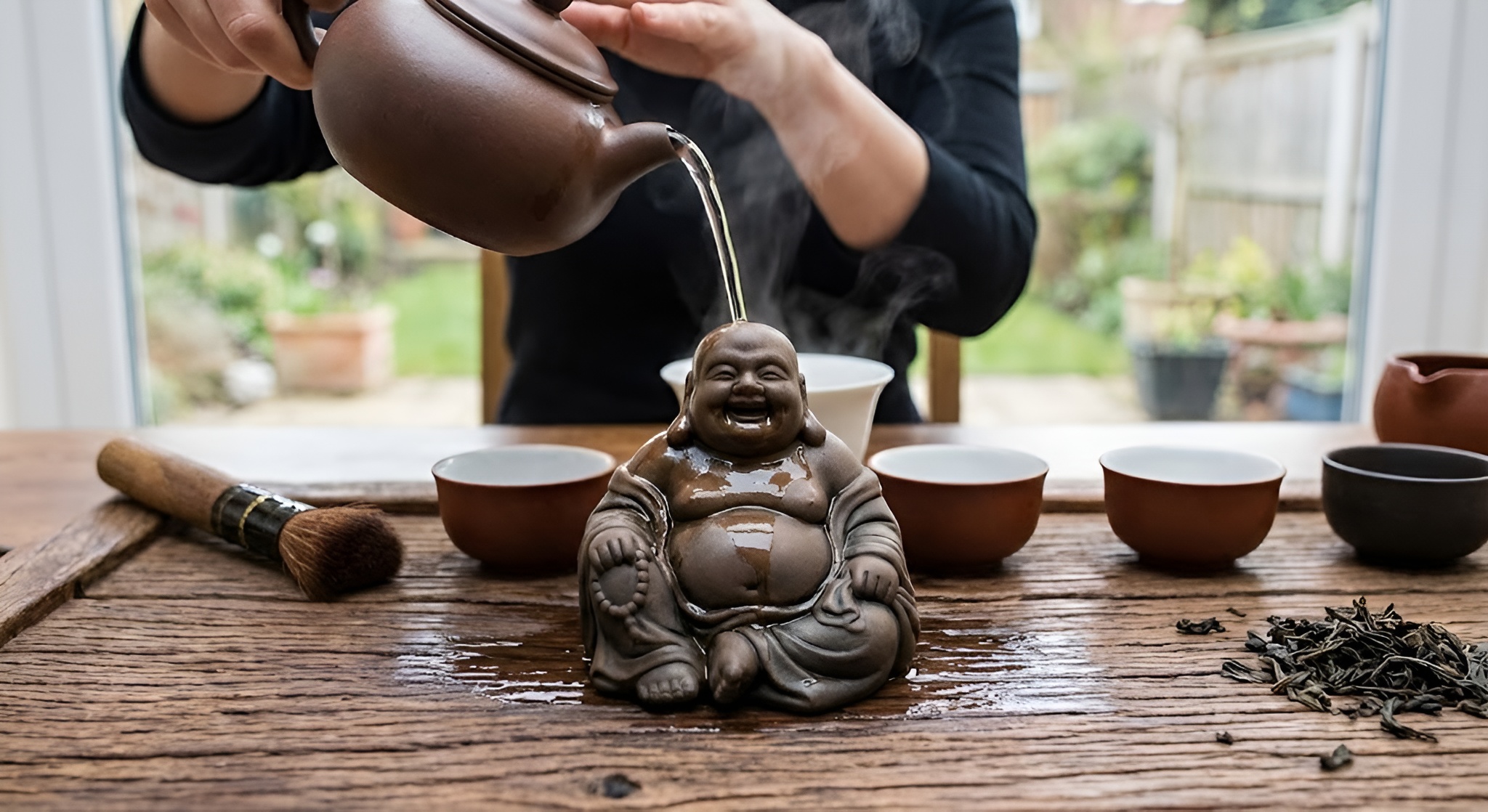
Rather than discarding these precious scraps of Zisha—which was already considered valuable—potters would shape them into small, whimsical animals: pigs, toads, dragons, or mythical beasts. They would fire these figurines alongside the teapots in the kiln. Initially, they were just kiln testers or toys. But tea drinkers soon realized that because they were made of the same absorbent clay as the pots, they responded to tea in the same way. Pouring leftover tea over them became a way to test the water temperature (if the water evaporates instantly, it's hot enough) and a way to avoid wasting the "Rinse" water.
2. The Ritual of "Raising" a Pet (Yang Hu)
In the West, we "own" objects. In Chinese tea culture, you "raise" (Yang) them. Raising a tea pet is a long-term commitment, similar to seasoning a cast-iron skillet. The process is meditative and creates a bond between the drinker and the object.
The Feeding Process
1. The Rinse: When brewing Gongfu Style, the first infusion is often discarded to "wake up" the leaves and remove dust. Instead of pouring this into the drain, you pour it over the head of your tea pet.
2. The Brush: Many tea masters keep a special soft brush (tea pen) on the tray. They gently brush the tea over the pet to ensure even coating and prevent staining in crevices. This "fondling" with the brush helps distribute the oils.
3. The Patina: Over months and years, the tea oils oxidize on the surface of the clay. The pet transforms from a dull, matte finish to a deep, glossy, translucent shine. A well-raised tea pet smells sweet like tea even when dry.
One Tea Type Only?
Unlike Yixing teapots, which should strictly be used for one type of tea (e.g., only Ripe Pu-erh) to prevent flavor muddling, tea pets are less fussy. You can pour different teas over them. However, for the most beautiful, uniform color, many enthusiasts dedicate a pet to a specific tea family. Black Tea and Shou Pu-erh create a reddish-brown patina fastest; Green Tea effects are slower.
3. Common Creatures and Their Meanings
Choosing a tea pet is personal, but understanding the Feng Shui symbolism helps ensure you invite the right energy onto your tea tray.
The Three-Legged Toad (Jin Chan)
The most famous tea pet. Legend says this toad lives on the moon. In Feng Shui, it attracts wealth. It is often depicted sitting on a pile of coins with a coin in its mouth.
The Placement Rule: If the toad has a coin in its mouth, face it towards you (bringing money in). If its mouth is empty, face it towards the door (going out to fetch money).
The Pi Xiu (Mythical Beast)
A dragon-like creature with a lion's face and wings. It is the ninth son of the dragon. Legend says it violated a law of heaven and was punished by having a restricted diet of gold and silver, but no anus. Thus, money goes in and never comes out. It is the ultimate guardian of wealth preservation.
The Pig
A symbol of good luck, honesty, and general happiness. A fat pig represents abundance and having plenty to eat. These are often chosen simply because they look cute and jovial on the tea tray, adding a sense of lightness to the ceremony.
The "Pee-Pee Boy"
A humorous, functional figure. The boy is hollow with a tiny hole. Before the ceremony, you soak him in cold water. When you pour boiling water over him during the session, the air inside expands rapidly, forcing the water out in a strong jet. It was originally used as a thermometer—if the stream was strong, the water was hot enough for tea.
4. Material Matters: Yixing Clay vs. Resin
Not all tea pets are created equal. The market is flooded with cheap knock-offs.
- Authentic Zisha Clay: This is unglazed, porous, and usually reddish-brown or purple. It is the only material that will develop a patina and "grow" over time.
- Resin / Color-Changing: You will often see tea pets that change color (e.g., from brown to gold or jade green) when hot water hits them. These are made of resin painted with thermochromic pigment. While fun, they are non-porous. They will never absorb tea or develop a shine. They are toys, not heirlooms.
The Salt Myth
Never clean a Yixing tea pet with soap or detergent. The clay will absorb the soap chemicals and ruin the scent forever. If your pet gets dusty or moldy, boil it in plain water. Do not scrub it with abrasive pads, or you will scrub off the years of hard-earned patina.
5. Cleaning and Maintenance
Like real pets, tea pets need care. If neglected, they can develop mold or lose their luster.
1. Daily: Rinse with hot water after use. Do not let tea leaves rot on top of them.
2. Weekly: Allow the pet to dry completely in an airy spot. This prevents mold growth in the porous clay.
3. Deep Clean: If you notice white spots or mold, boil the pet in a pot of clean water for 10-15 minutes. This kills bacteria without using chemicals.
Start Your Collection
Ready to adopt a tea companion? We have curated a list of the best starter tea pets, from authentic Yixing clay to fun color-changing novelties.
Review: Best Tea Pets of 2025
Comments