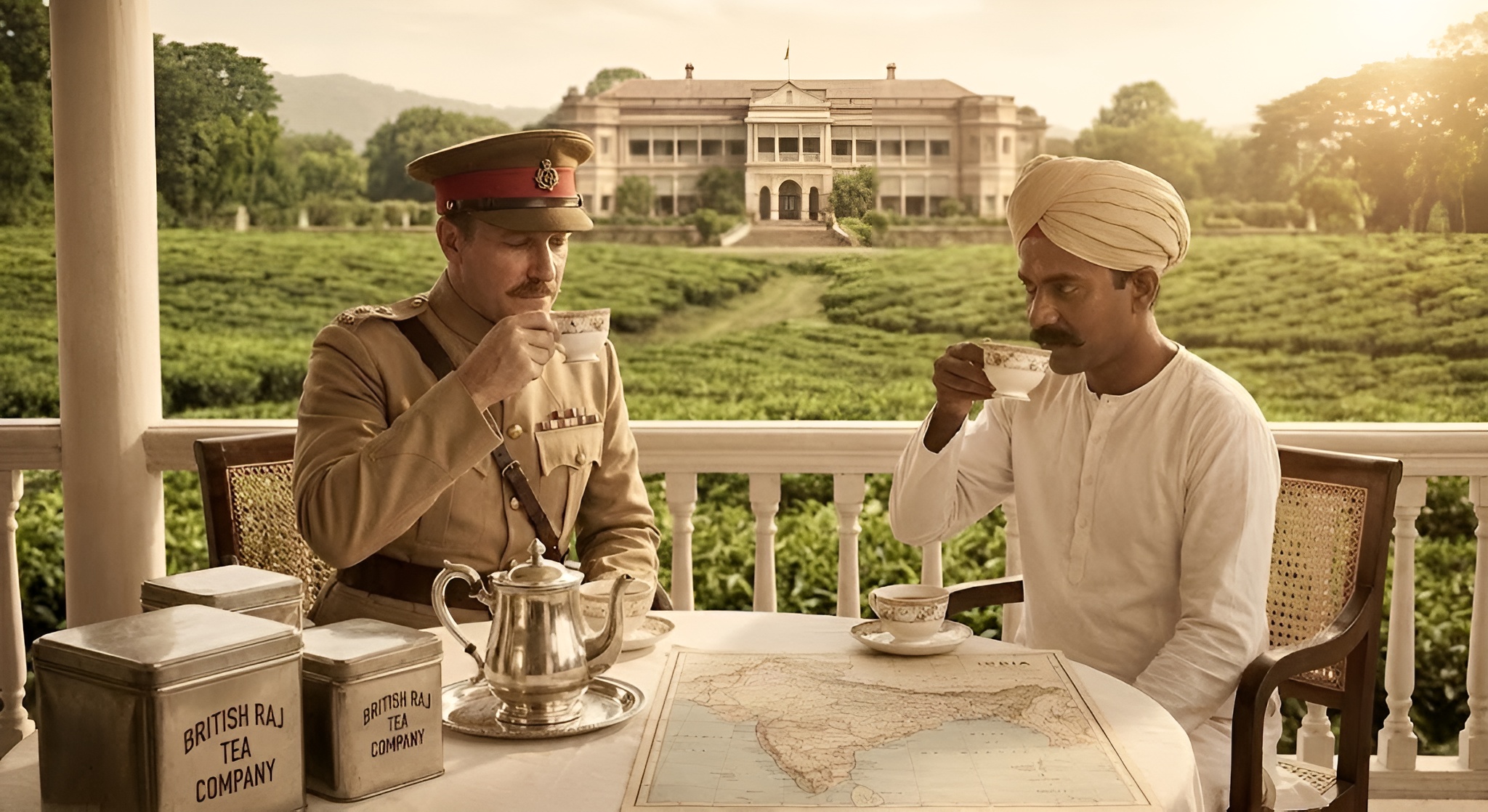
The Crisis: Opium, Silver, and Empty Cups
In the early 1800s, the British Empire had a problem. The British public had developed an insatiable addiction to tea, which could only be bought from China. The Chinese Emperor, however, had little interest in British goods. He demanded payment in silver bullion.
This trade imbalance was draining the British treasury. To fix it, the East India Company began smuggling opium (grown in India) into China to trade for tea. This led to the Opium Wars and geopolitical chaos. The British realized they had a strategic vulnerability: they were entirely dependent on a hostile nation for their favorite beverage. They needed to grow their own tea, on soil they controlled.
The Great Botanical Heist
The East India Company knew that the foothills of the Himalayas in India had a climate similar to the tea-growing regions of China. But they lacked the plants and the processing knowledge.
In 1848, they hired Robert Fortune, a Scottish botanist, for a mission that would rival any James Bond film. Disguising himself as a Chinese merchant—shaving his head and wearing a mandarin robe—Fortune traveled deep into the forbidden interior of China.
His mission was twofold: steal the seeds and steal the talent. Fortune successfully smuggled over 20,000 tea plants and seedlings out of China in Wardian cases (early terrariums). Crucially, he also recruited 80 Chinese tea manufacturers to travel to India and teach the British how to process the leaf. Without them, the plants would have been useless.
Expert Tip: The Irony of Assam
While Fortune was risking his life in China, a British Major named Robert Bruce had made an embarrassing discovery. Tea was already growing wild in India. The indigenous Singpho tribe in Assam had been drinking it for centuries. The British initially ignored this native plant (Camellia sinensis var. assamica) in favor of the Chinese variety, only to realize later that the native Indian bush was actually far superior for the hot Indian climate.
The Timeline of an Empire
Once the British accepted the native Assam bush and combined it with Chinese processing techniques, the industry exploded. Forests were cleared, and the landscape of India was forever altered.
Expert Tip: The Tea Horse Road
Before the maritime routes opened up, tea traveled overland from China to India via the ancient Tea Horse Road. This treacherous path through the Himalayas exchanged Chinese Pu-erh for Tibetan War Horses, a trade that existed centuries before the British arrived.
Life on a Raj Plantation
Life on a tea plantation (or "garden") was a curious mix of luxury and hardship. British planters lived in sprawling bungalows, isolated from the rest of the world. They developed their own culture and vocabulary that still persists in the industry today.
The day began with Chota Hazri ("small breakfast"), usually tea and biscuits on the veranda at dawn. The work was demanding, managing thousands of laborers in difficult terrain. However, this history has a dark side. The labor force was often recruited from desperate famine-stricken areas of central India, working under an indentured system that was often little better than slavery.
Expert Tip: Brewing Assam
The native Assam bush produces a tea that is much stronger and maltier than Chinese tea. It is designed to be drunk with milk. To experience this history, try brewing a strong Assam Breakfast Tea and adding a splash of milk—it's the taste of the Empire.
From Export to "Chai": The Great Marketing Campaign
For decades, Indian tea was strictly an export crop. It was grown in India but drunk in London. Indians themselves drank milk, water, or buttermilk. The British planters viewed the domestic Indian market as irrelevant.
However, the Great Depression in the 1930s caused global tea prices to crash. Desperate to offload their surplus stock, the Indian Tea Association turned their eyes to the massive population right on their doorstep.
The Railway Push
The ITA launched one of the world's first mass-marketing campaigns. They targeted the railway system—the lifeline of India. They introduced "Tea Breaks" for factory workers and set up tea stalls at major train stations.
They taught vendors how to brew tea the "British way"—with milk and sugar. However, tea leaves were still expensive for the average Indian. To make the drink affordable and tasty, street vendors (chai-wallahs) began to innovate.
The Birth of Masala Chai
To mask the taste of lower-quality tea dust and to stretch their supplies further, vendors began boiling the tea with milk, sugar, and strong spices like ginger, cardamom, and cloves. They boiled it aggressively—something a British tea master would never do—creating a thick, sweet, syrupy energy drink.
The British initially tried to ban this "spiced tea," arguing it ruined the purity of the leaf. But the taste of the people prevailed. Masala Chai became the fuel of the independence movement and the national drink of India. Learn more about the history of Masala Chai here.
Expert Tip: The DIY Blend
Want to taste authentic chai? Don't use a syrup. You need a strong granular tea base (CTC) to stand up to the spices. Check out our guide on How to Make Authentic Masala Chai Spice Mix.
The Legacy Today
Today, India is a tea superpower, producing iconic teas that define the global market:
- Assam: Bold, malty, and brisk. This is the backbone of "Irish Breakfast" and "English Breakfast" blends. It takes milk beautifully. See our top-rated Assam teas.
- Darjeeling: The "Champagne of Teas." Grown in the Himalayas, it is lighter and more aromatic.
- Nilgiri: Grown in the Blue Mountains of the south. These teas are fragrant and resist clouding, making them the premier choice for Iced Tea recipes.
Expert Tip: The Russian Connection
Tea didn't just travel west to England. It also traveled overland north to Russia, creating a completely different tea culture involving Samovars and jam. Discover this unique tradition in our recipe for Russian Tea with Jam.
Comments