1. The Math of Death: Calculating the LD50
Toxicologists use a metric called LD50 (Lethal Dose, 50%) to measure toxicity. For caffeine, the estimated LD50 for humans is 150-200 mg per kilogram of body weight.
The Calculation
Let's take an average adult weighing 70 kg (154 lbs).
70 kg x 150 mg = 10,500 mg (10.5 grams) of caffeine.
Now, let's look at the caffeine content of tea:
- Black Tea: ~50 mg per cup.
- Green Tea: ~30 mg per cup.
- Matcha: ~70 mg per bowl (because you consume the leaf).
Expert Tip: The "Powder" Danger
While you can't overdose on brewed tea, you CAN overdose on pure powdered caffeine or extremely concentrated tea extracts. A single teaspoon of pure caffeine powder is equivalent to 28 cups of coffee. Fatalities usually involve supplements, not beverages.
2. "Tea Drunkenness" (Cha Zui): The Real Threat
While death is unlikely, getting "Tea Drunk" (known as Cha Zui in China) is very real. It happens when you drink a large amount of strong tea (usually high-caffeine varieties like Raw Pu-erh or young Green Tea) on an empty stomach.
Symptoms of Cha Zui:
- Palpitations and rapid heartbeat.
- Hand tremors / Jitters.
- Dizziness and lightheadedness.
- Nausea (caused by tannins irritating the stomach lining).
- Cold sweat.
Why it happens: Tea contains compounds that stimulate gastric acid secretion. On an empty stomach, this lowers your blood sugar (hypoglycemia) rapidly, leading to the "shakes." It is a combination of caffeine stimulation and low blood sugar.
Expert Tip: The Cure
If you feel "tea drunk," eat something sweet immediately. A piece of chocolate, a date, or even a spoonful of sugar will stabilize your blood glucose and stop the shakes within minutes. This is why tea is traditionally served with sweets.
3. L-Theanine: The Biological Safety Belt
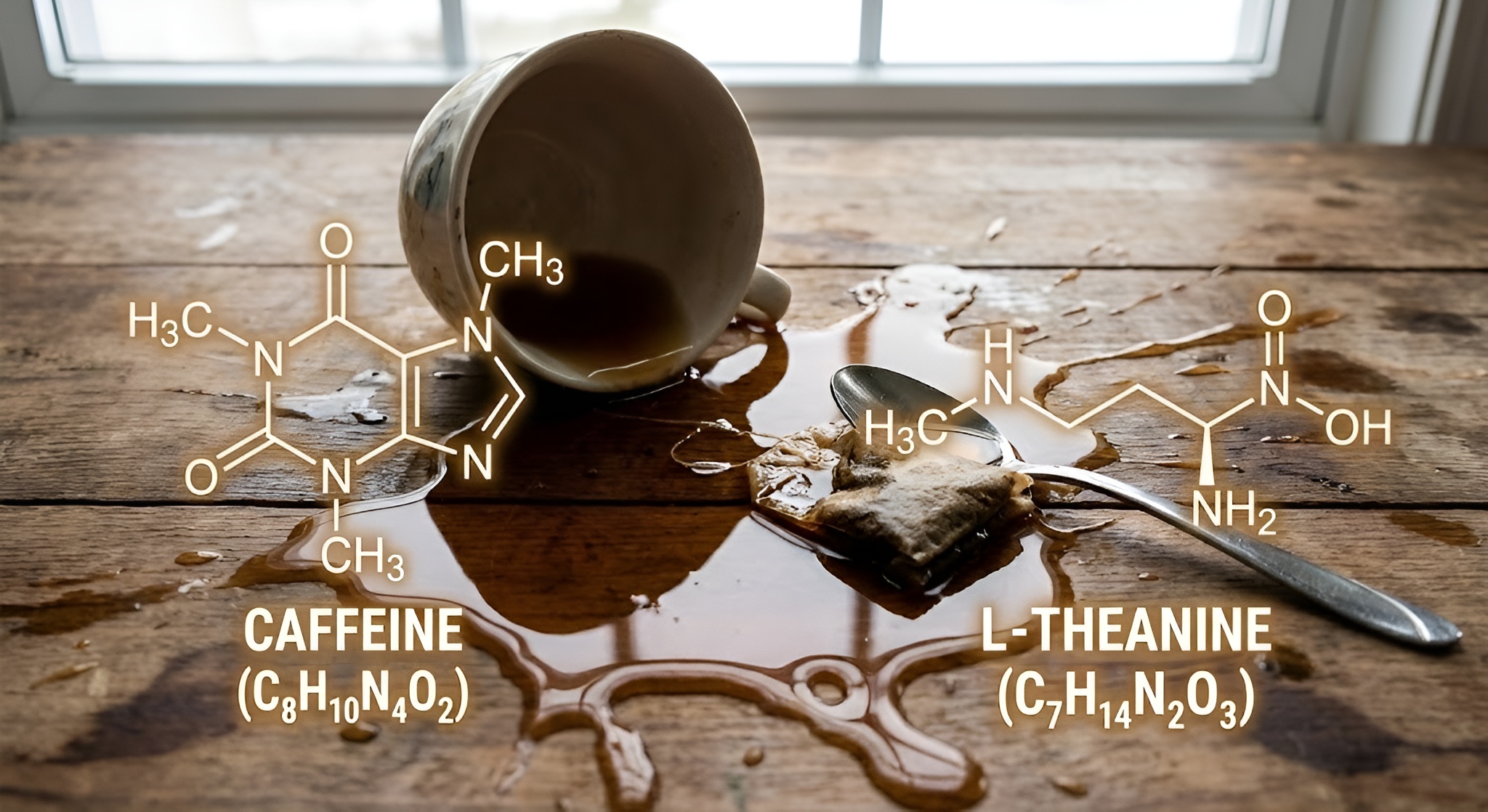
Why does coffee make you jittery, but tea makes you focused? The answer is L-Theanine.
L-Theanine is a unique amino acid found almost exclusively in the tea plant (Camellia sinensis). It crosses the blood-brain barrier and increases the production of GABA (gamma-aminobutyric acid), a neurotransmitter that promotes relaxation.
The Synergy: When consumed with caffeine, L-Theanine smooths out the "spike." It prevents the jagged adrenaline rush and the subsequent crash. It turns the "Fight or Flight" energy of caffeine into "Stay and Focus" energy. Because tea contains this natural antidote, the effective toxicity threshold is higher than synthetic energy drinks, which lack this protective compound. Read our full guide to L-Theanine here.
4. Matcha: A Special Case
With Matcha, you are not steeping leaves; you are eating them. You consume 100% of the caffeine, heavy metals, and fluoride in the leaf.
Because of this, it is easier to reach the "Tea Drunk" state with Matcha. A single bowl can contain 70mg of caffeine. If you drink 3-4 bowls in a row (during a ceremony, for example), you are ingesting a significant drug load. However, Matcha is also the highest source of L-Theanine (due to the shading process), so the "high" is often euphoric rather than panic-inducing.
5. Who Should Be Careful?
While healthy adults are safe, certain groups have a much lower threshold for caffeine toxicity:
- Pregnant Women: Caffeine crosses the placenta. Most doctors recommend limiting intake to 200mg/day (approx 4 cups of tea).
- People with Anxiety: Caffeine triggers the release of cortisol. High doses can mimic a panic attack. Read: Best Teas for Anxiety.
- Those with Iron Deficiency: High tea consumption inhibits non-heme iron absorption. Read: The Iron Thief.
6. Conclusion: Respect the Potency
Can you overdose on tea? Technically, yes. Practically, no. Your body will force you to stop drinking (via nausea or urination) long before you reach lethal levels.
However, tea is a potent pharmacological cocktail. It contains stimulants (caffeine), relaxants (theanine), and heavy metals (fluoride/aluminum). Treating it with respect—drinking it with food, listening to your body, and avoiding extracts—ensures that it remains a medicine, not a poison.
Low Caffeine Options
Love the taste but hate the shakes? We reviewed the best naturally low-caffeine teas that won't keep you up at night.
Comments