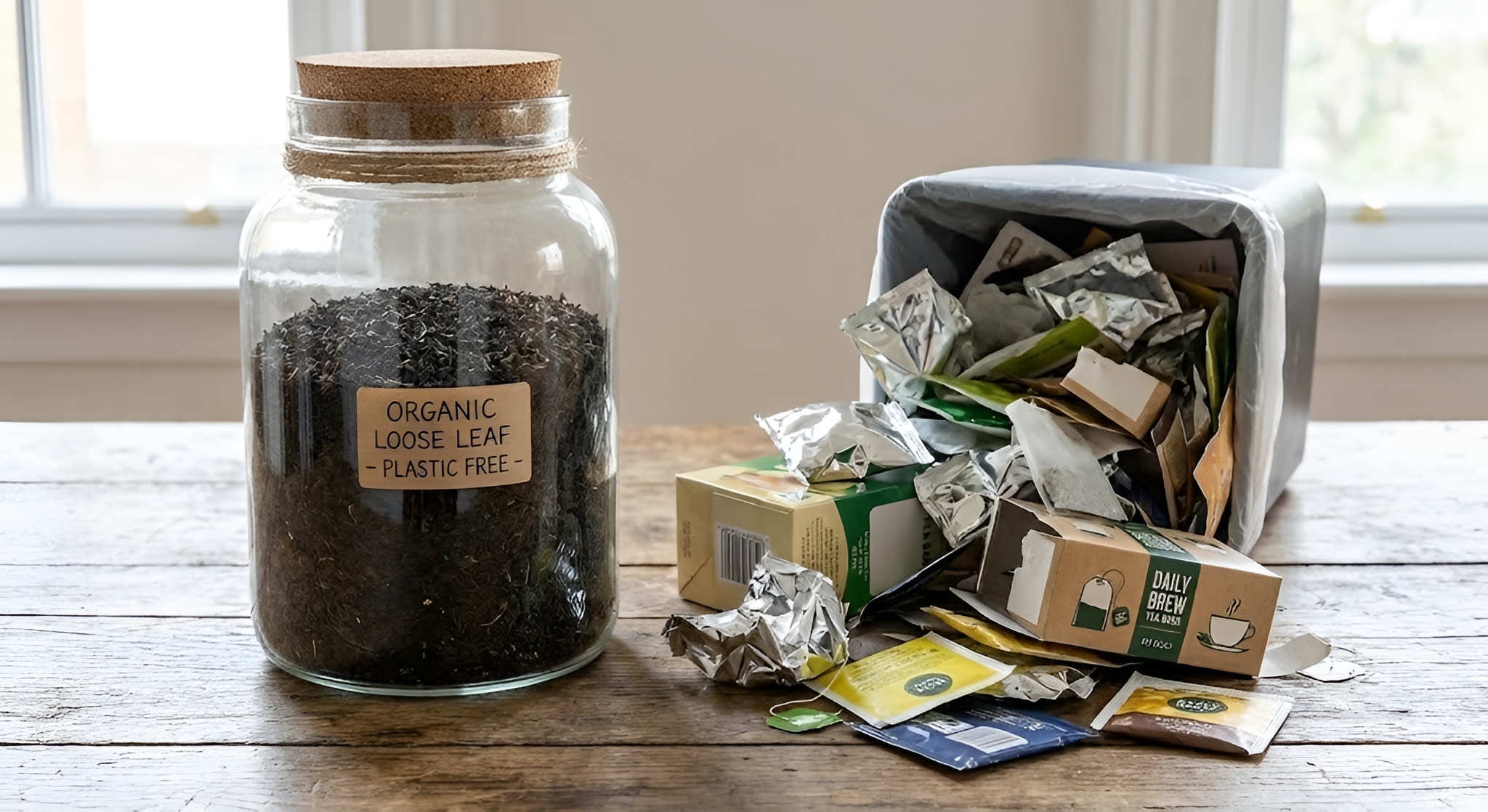
1. The Anatomy of Waste: Bagged vs. Loose
To understand the footprint, we must look at what you throw away.
Loose Leaf: The tea leaves (compostable) and the bag/tin (recyclable).
Bagged Tea: The tea leaves, the filter paper (often plastic-sealed), the string, the staple/glue, the paper tag, the individual envelope, the cardboard box, and the plastic cellophane wrap.
According to sustainability studies, the packaging alone for tea bags contributes significantly more CO2e (Carbon Dioxide Equivalent) than the tea cultivation itself.
Expert Tip: Buy in Bulk
Buying a 500g (1lb) bag of loose leaf tea drastically reduces packaging waste compared to buying ten 50g boxes of tea bags. It also usually saves you about 30-50% in cost.
2. Manufacturing Energy: Paper vs. Leaf
Producing tea leaves is relatively low-energy: pluck, wither, roll, dry.
Producing tea bags involves industrial paper mills, bleaching processes (often using chlorine), and complex machinery to fold, staple, and seal the bags. This manufacturing stage adds a layer of industrial carbon emissions that simply doesn't exist for loose leaf tea.
3. Comparison: Environmental Impact per Cup
| Impact Factor | Loose Leaf | Bagged Tea |
|---|---|---|
| Packaging Waste | Low (One bag/tin per 100 cups) | High (Multiple layers per cup) |
| Microplastics | Zero | Common (Polypropylene sealant) |
| Compostability | 100% Home Compostable | Variable (Many require industrial heat) |
| Transport Efficiency | High (Dense packing) | Low (Shipping "air" in boxes) |
Ready to switch to Loose Leaf?
It sounds intimidating, but it's easy. We have guides on the best infusers and biodegradable options if you must use bags. See our Guide to Plastic-Free Tea Bags →
Comments