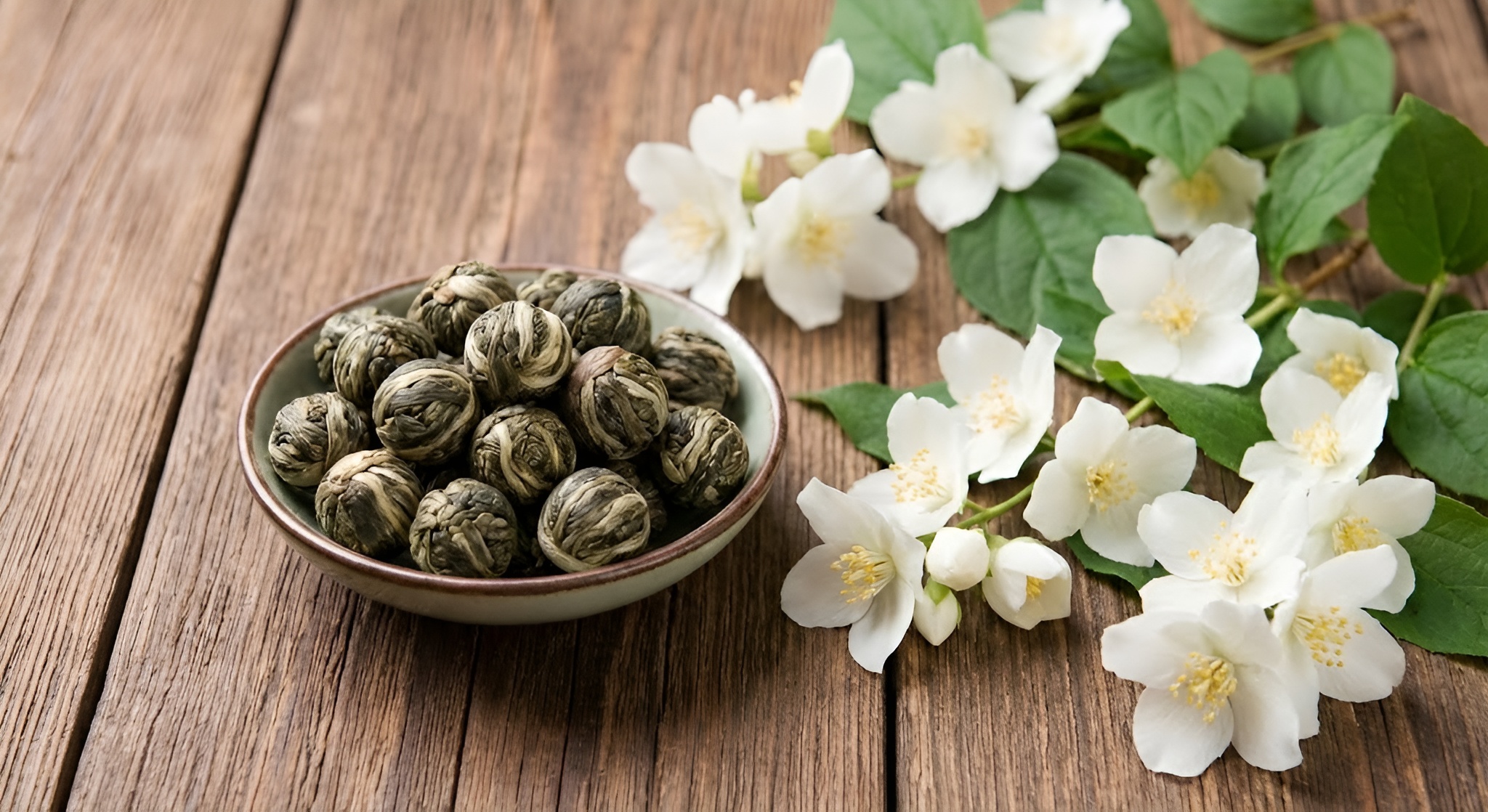
1. The Pluck & The Wait
The journey begins in early Spring. Tea masters pluck the tender shoots—usually "one bud and one leaf" or "one bud and two leaves"—to ensure sweetness.
These leaves are processed into green tea (steamed or pan-fried to stop oxidation) and then hand-rolled into pearls. Rolling the leaf protects the bud and helps retain flavor. However, the jasmine flowers aren't ready yet. The tea is carefully stored to wait for the summer bloom.
Expert Tip: Why Hand-Rolling?
Hand-rolling isn't just aesthetic. By tightly rolling the leaf, the surface area is reduced, preserving the aroma inside the pearl until it hits hot water. It effectively "seals in" the freshness for months.
2. The Scenting (Xun)
In mid-summer, jasmine flowers are harvested in the afternoon while the buds are still tightly closed. They are kept cool until nightfall.
At night, the flowers naturally pop open (a process called Tiger's Mouth), releasing their volatile oils. At this exact moment, the tea maker layers the tea pearls and the fresh flowers together in a pile. The dry tea acts like a sponge, absorbing the moisture and fragrance from the flowers for 4 to 12 hours.
3. The Separation & Repetition
In the morning, the wilted flowers must be removed quickly before they start to rot and spoil the tea. This is done by hand or sieving.
For cheap tea, the process ends here (1 scenting). For premium Dragon Pearls, the tea is dried to remove the moisture, and then the entire process is repeated with fresh flowers the next night. Top-tier pearls undergo this cycle 5, 7, or even 9 times.
| Grade | Scenting Rounds | Characteristics |
|---|---|---|
| Commercial | 1 - 2 | Often contains dried petals for visual appeal. Scent fades fast. |
| Premium | 3 - 5 | Strong scent, no petals. Lasts 3-4 infusions. |
| Imperial (Gongfu) | 7 - 9 | Deep, lingering fragrance. Sweet even after 6 infusions. |
Expert Tip: Petals = Lower Quality?
Counter-intuitively, high-quality Jasmine Tea rarely contains actual flowers. The flowers are removed because they can turn bitter/sour in hot water. If your tea is full of dried white petals, it's likely a lower grade dressed up to look pretty.
4. Brewing: Watching Them Dance
Because the pearls are tightly rolled, you don't need a strainer if you drink "Grandpa Style" (leaves in a tall glass). The heavy pearls sink to the bottom and slowly unfurl, releasing bubbles and scent.
- Temperature: 75°C - 80°C (cool the water down!).
- Time: 2-3 minutes for the first steep to let the pearl open.
- Re-steep: A good pearl should give you at least 3 strong cups.
Ready to taste the 7-scent difference?
We've curated a list of the best authentic Jasmine Pearls that rely on fresh flowers, not essential oils. See our top picks here: The 5 Best Jasmine Pearl Teas of 2025 →
Comments