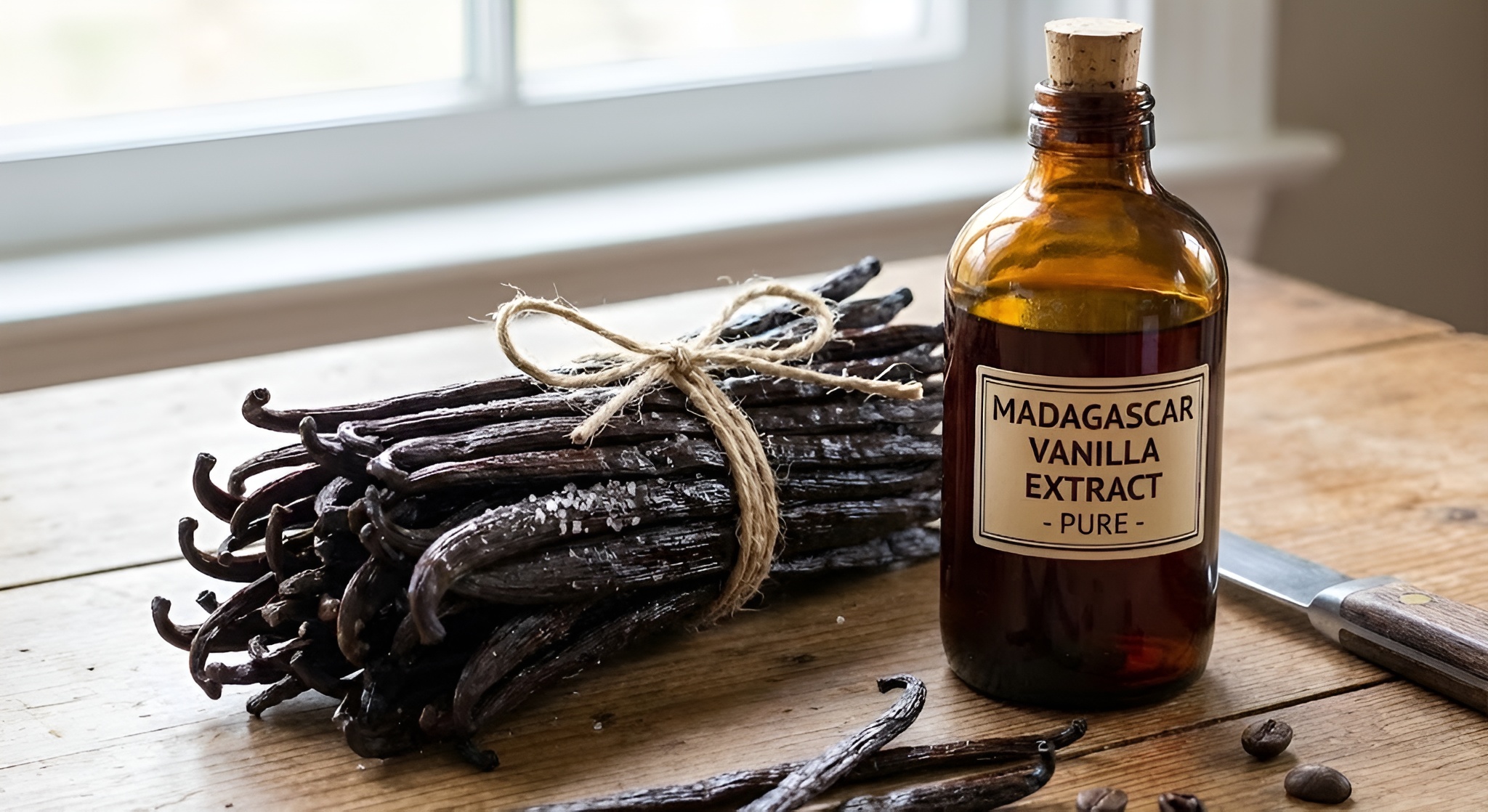
1. The "Curing" Method (Whole Beans)
This method relies on the tea leaves' hygroscopic nature—they will absorb the aroma from the beans over time. It requires patience but produces the finest tea.
Ingredients: 100g Black Tea, 2 Grade B Vanilla Beans.
Process:
1. Slice the beans lengthwise to expose the seeds (caviar).
2. Chop the beans into small 0.5cm pieces.
3. Mix thoroughly with the tea leaves in a glass jar.
4. Seal tightly and store in a dark place for 2-4 weeks.
5. Shake the jar every few days to redistribute.
Expert Tip: Don't Remove the Beans
Unlike herbs that can go rancid, vanilla beans are stable. You can leave the chopped pieces in the tea indefinitely. They add a beautiful visual appeal to the blend.
2. The "Spraying" Method (Extract)
If you don't have weeks to wait, you can use high-quality extract. Note: You must let the alcohol evaporate.
Ingredients: 100g Black Tea, 1 tsp Vanilla Extract or Paste.
Process:
1. Put the tea leaves in a bowl.
2. Drizzle the extract over the leaves (or use a dedicated spray bottle for even coverage).
3. Toss/Stir vigorously to coat the leaves evenly.
4. CRUCIAL: Spread the wet leaves on a baking tray and let them air dry for 24-48 hours until completely dry to the touch.
5. Store in a tin once dry.
3. Grade A vs. Grade B Beans
Most people buy Grade A (Gourmet) beans because they look plump and oily. This is wrong for tea blending.
- Grade A (30% Moisture): Great for cooking, bad for tea (mold risk). Expensive.
- Grade B (20% Moisture): Dry, brittle, ugly. But they contain *more* vanillin per bean and are safer for dry storage. Much cheaper.
Where to buy Grade B beans?
You won't find them in the supermarket. We've sourced the best suppliers for Grade B beans and high-intensity pastes suitable for tea blending. See our DIY Vanilla Shopping List →
Comments