1. Defining the Categories: What Makes a Tea Oolong or Black
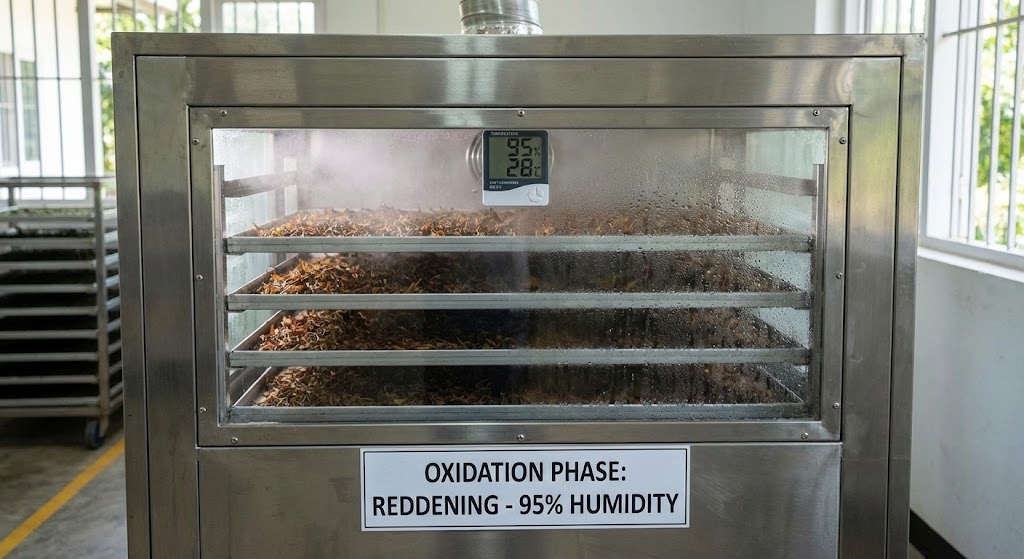
Both oolong and black tea begin as Camellia sinensis leaves; the split happens in the factory, not the field. Oolong is defined by partial oxidation – typically 10 to 80 per cent – arrested mid-process by heat (pan-firing, roasting, or baking) before polyphenol oxidase enzymes have fully converted the leaf's catechins. The result is a spectrum: light oolongs such as Bao Zhong taste closer to green tea, while dark oolongs such as traditional Dan Cong or heavily roasted Wuyi rock teas edge toward black-tea territory in colour, body, and flavour.
Black tea undergoes near-complete oxidation – usually 90 to 100 per cent – achieved by rolling or crushing the withered leaf to rupture cell walls and expose polyphenols to oxygen. Enzymatic browning continues until the leaf is fired, locking in the dark colour and malty, brisk flavour. In China the category is called hóngchá (red tea), reflecting the liquor's copper hue; in the UK market it encompasses everything from single-estate Keemun and Himalayan black to everyday breakfast blends.
Crucially, oxidation percentage is a processing descriptor, not a caffeine metric. The enzymes that turn catechins into theaflavins and thearubigins do not synthesise or degrade caffeine; they simply rearrange polyphenols around it. Caffeine is an alkaloid laid down in the growing leaf, chiefly as an insect deterrent, and its concentration is set by genetics, growing conditions, and harvest timing long before the tea-maker's wok or roller gets involved.
2. How Caffeine Ends Up in the Leaf: Cultivar, Terroir, and Season
Caffeine biosynthesis in Camellia sinensis is driven by the plant's need to defend tender new growth against herbivores. Young buds and the first one or two leaves typically carry the highest alkaloid load – often 3 to 5 per cent dry weight – while mature leaves further down the stem drop to 1.5 to 3 per cent. This is why bud-heavy grades (first-flush Darjeeling, Silver Needle white, early-spring Alishan oolong) tend to clock higher caffeine than larger-leaf, summer-harvest teas, regardless of whether they end up as black or oolong.
Cultivar exerts an even stronger baseline effect. The broad-leafed Assamica variety (C. sinensis var. assamica), native to India's Assam plains and parts of Yunnan, naturally produces more caffeine than the smaller-leafed Chinese Sinensis variety (C. sinensis var. sinensis). A typical Assam CTC black can deliver 60–80 mg per 200 ml cup, while a Taiwanese high-mountain oolong made from a Sinensis cultivar might yield 40–55 mg when brewed to similar strength. Yet many mainland Chinese oolongs – especially Dan Cong from Fenghuang or certain Wuyi rock teas – use cultivars selected over centuries for robust flavour and reasonable yield, and these can approach Assamica-level caffeine when harvested young.
Growing altitude and stress also matter. High-altitude tea plants (Alishan at 1,200–1,800 m, Darjeeling first-flush gardens at similar elevations) grow more slowly in cool, misty conditions, concentrating flavour compounds and alkaloids including caffeine. Conversely, lowland estates in hot, humid climates produce faster-growing, larger-volume leaf with slightly lower caffeine density. Insect pressure can also trigger temporary alkaloid spikes – a phenomenon exploited in bug-bitten black teas and certain oolongs that deliberately encourage jassid leafhopper feeding to develop honeyed aromatics alongside elevated caffeine and polyphenol defences.
Harvest Season Beats Oxidation
When comparing caffeine, check the harvest date and leaf grade first. A spring-bud black and a spring-bud oolong from the same garden will sit closer together than a spring black and an autumn black.
3. What Oxidation Actually Does (and Doesn't Do) to Caffeine
It's tempting to assume that the enzymatic tumult of oxidation might chemically alter caffeine, but the molecule is remarkably stable. Polyphenol oxidase – the enzyme responsible for browning – targets catechins (epigallocatechin gallate, epicatechin, and kin), polymerising them into larger theaflavins (the orange-red pigments in black tea) and thearubigins (the deeper brown tannins). Caffeine, a purine alkaloid, sits chemically aloof from this process; lab analyses consistently show that total caffeine content remains unchanged across oxidation levels when you control for leaf grade, cultivar, and harvest.
Where oxidation does make a difference is in extraction kinetics and perceived effect. Theaflavins and thearubigins are larger, more complex molecules than catechins, and they interact with caffeine in solution – sometimes forming transient, non-covalent complexes that may modestly slow early caffeine release or alter mouthfeel. In practice, this means a heavily oxidised black tea often yields its caffeine slightly faster in the first 60 seconds of steeping than a lightly oxidised oolong, even when both start with identical dry-leaf caffeine. The difference is small – perhaps 5–10 per cent in the initial minute – but it can shift the sensory impression of 'kick'.
Meanwhile, L-theanine – the calming amino acid that modulates caffeine's stimulant edge – is partially degraded during prolonged oxidation and the high-temperature firing common in black-tea production. Oolongs, especially greener styles, retain more L-theanine, which is why many drinkers report a smoother, less jittery energy from oolong despite similar or even higher caffeine numbers. The perceived caffeine experience is thus a cocktail of alkaloid dose, polyphenol profile, and amino-acid balance – not oxidation alone.
4. Comparing Real-World Numbers: Oolong and Black Side by Side
When we measure brewed caffeine in UK cups (200–250 ml, Western-style steeping), the ranges for oolong and black overlap substantially. A standard English Breakfast brewed three minutes delivers roughly 40–60 mg; a single-estate Assam or Kenyan CTC can push 60–80 mg. On the oolong side, a light Bao Zhong or young Alishan brewed at 85–90 °C for two minutes typically yields 30–45 mg, while a 70 per cent oxidised Dan Cong or a heavily roasted Wuyi rock tea, steeped hotter and longer, can reach 50–65 mg – squarely in black-tea territory.
The picture shifts further when you account for multiple infusions. Oolongs are traditionally brewed gongfu-style: short, repeated steeps in a small gaiwan or Yixing pot. A 5 g charge of Dan Cong might be infused five or six times at 95 °C for 20–30 seconds each. Total cumulative caffeine across all infusions can exceed 70 mg, but any single small cup contains only 10–15 mg – a gentler, distributed dose. By contrast, Western black-tea drinkers typically brew once, emptying the pot and consuming the full alkaloid load in one go. This difference in delivery pattern explains why gongfu oolong sessions feel less intense than a mug of builder's tea, even when the dry-leaf caffeine content is comparable.
For UK buyers seeking direct comparisons, consider these rough benchmarks (200 ml, three-minute steep unless noted): Assam CTC 60–80 mg; Darjeeling second flush 50–65 mg; Ceylon OP 45–60 mg; Keemun 40–55 mg; Taiwanese high-mountain oolong (50–60 % oxidation) 40–55 mg; Dan Cong (70 % oxidation, four-minute steep) 50–65 mg; Bao Zhong (20 % oxidation) 30–45 mg. The lesson: category tells you less than cultivar, grade, and brew method.
Gongfu Spreads the Load
Brewing oolong gongfu-style in short bursts means each cup is milder, even if total session caffeine rivals a single black-tea mug. Perfect for sustained focus without a sharp spike.
5. The L-Theanine Factor: Why Oolong Caffeine Feels Different
Caffeine's subjective effect in tea is not a solo performance; it's a duet with L-theanine, an amino acid unique to Camellia sinensis that promotes alpha-wave brain activity and modulates arousal. Green and lightly oxidised oolongs can carry 10–20 mg L-theanine per cup, roughly one-third to one-half the caffeine dose. Studies suggest this ratio smooths the caffeine peak, reducing jitteriness and extending the alertness window without a steep crash – the phenomenon often labelled 'calm focus' in tea marketing, though individual sensitivity varies widely.
Black tea's more aggressive oxidation and higher firing temperatures degrade some L-theanine, dropping the typical cup to 5–10 mg. The caffeine-to-theanine ratio therefore tilts more heavily toward stimulation, which many UK drinkers interpret as a sharper, more immediate 'kick'. Meanwhile, the theaflavin-rich liquor of black tea can feel astringent and brisk, reinforcing the perception of potency even when absolute caffeine content is modest.
Heavily oxidised oolongs occupy a middle ground: they've lost some L-theanine to heat and time, but usually retain more than a fully processed black. A 70 per cent Dan Cong might deliver 12–15 mg L-theanine alongside 55 mg caffeine, yielding a rounder, less edgy lift than an equivalent-strength Assam. If you're sensitive to caffeine jitters or prefer a gentler ramp, prioritising oolong – even a dark one – over black tea can make a noticeable difference, despite similar milligram counts.
6. Brewing Variables: How Steeping Time, Temperature, and Ratio Amplify or Mute Caffeine
Even when two teas share identical dry-leaf caffeine, your kettle and timer decide how much lands in the cup. Temperature is the most obvious lever: hotter water extracts caffeine (and tannins) faster. Steeping black tea at 95–100 °C for three minutes can pull 70–80 per cent of available caffeine into solution, while brewing the same leaf at 80 °C for the same duration might yield only 50–60 per cent. Oolongs are often recommended at 85–95 °C depending on oxidation level, which slightly slows extraction compared to a rolling-boil black but rarely by more than 10–15 per cent over a typical steep.
Time matters even more. The extraction rate is steepest in the first minute – roughly 50–60 per cent of total caffeine emerges by 60 seconds, then the curve flattens. A one-minute 'builder's brew' delivers perhaps 60 per cent of the caffeine a five-minute steep would, but it also leaves behind much of the astringency. For oolong, gongfu timing (20–30 seconds per infusion) means each individual cup is mild, yet cumulative extraction across multiple infusions can eventually surpass a single long Western steep. If you're chasing maximum caffeine from oolong, a single four- to five-minute Western-style steep at 95 °C will outperform six gongfu rounds drunk over an hour.
Leaf-to-water ratio scales everything proportionally. Doubling your dose from 2.5 g to 5 g per cup nearly doubles caffeine (and flavour intensity), provided you don't also halve the steep time. UK tea drinkers accustomed to one teaspoon per mug may find speciality oolong and black teas, sold loose and often denser than commodity tea dust, require careful weighing: 3 g of tightly rolled Tie Guan Yin can look like half a teaspoon yet brew as strong as 5 g of fluffy Darjeeling. For consistent caffeine control, use a digital scale and note your sweet-spot grams per cup, then adjust steep time and temperature to taste.
Weigh, Don't Eyeball
Oolong pearls and twisted black leaves pack very different densities. A kitchen scale (0.1 g precision) is the only reliable way to compare caffeine dose across tea styles.
7. Practical Use Cases: Choosing Oolong or Black for Morning, Afternoon, and Evening
For early-morning wake-up – especially during the UK's dark autumn and winter months when circadian rhythm lags – many drinkers prefer the immediate, brisk hit of a robust black tea: Assam, a strong breakfast blend, or a Kenyan. The higher theaflavin content and lower L-theanine deliver a sharp caffeine curve that pairs well with toast and a tight schedule. If you're also managing school-run logistics or staffroom deadlines, a strong black in a thermal mug is hard to beat for portability and punch.
Mid-morning through to mid-afternoon is oolong territory. A 50–60 per cent oxidised Taiwanese oolong or a moderately roasted Dan Cong offers 45–55 mg caffeine with a gentler L-theanine cushion, sustaining focus through long meetings, library study sessions, or revision marathons without the jittery rebound. The complex flavour also rewards slower sipping, which naturally moderates intake. For active pursuits – weekend park runs or long cycling sportives – either category works, but consider total hydration: black tea's higher tannin load can feel drying if you're already sweating heavily.
Late afternoon and evening call for lighter oolongs (20–40 per cent oxidation) or a switch to caffeine-free alternatives. A cup of Bao Zhong at 4 p.m. delivers 30–40 mg – enough to fend off the post-lunch dip without threatening sleep six hours later. If you're especially caffeine-sensitive or chasing post-festival recovery or immune support without stimulation, neither oolong nor black is ideal after 3 p.m.; herbal or decaffeinated black are safer bets. For cold-brew fans, both categories work well chilled – see our oolong vs black for cold brew and black-tea cold-brew guides for timing and tannin control.
The Three O'Clock Rule
If you're caffeine-sensitive, treat heavily oxidised oolong like black tea for cut-off timing. A 70 % Dan Cong at 5 p.m. can disrupt sleep as much as an Assam.
8. Buying and Tasting in the UK: What to Look For and How to Compare at Home
When shopping for oolong or black tea with caffeine content in mind, ask your supplier about cultivar, harvest season, and leaf grade – not just oxidation percentage. Reputable UK speciality retailers (in 2026, many have added detailed tasting notes and processing specs to online listings) should be able to tell you whether a tea is spring or autumn flush, whether it uses Assamica or Sinensis cultivar, and the approximate bud-to-leaf ratio. If the vendor can't or won't share that information, you're buying blind.
For a side-by-side home comparison, buy small samples – 25–50 g – of a lightly oxidised oolong, a heavily oxidised oolong, and a black tea from a similar region or elevation. Brew each at the same ratio (3 g per 200 ml), temperature (95 °C), and time (three minutes) to isolate the oxidation variable as much as possible. Note flavour, astringency, and how you feel 30 and 60 minutes post-cup. Many UK tea clubs and subscription boxes now offer black-tea samplers and oolong discovery sets that make this kind of comparative tasting straightforward and affordable.
If you're particularly interested in high-caffeine oolongs, seek out Dan Cong (especially Ya Shi Xiang or Mi Lan Xiang single-bush cultivars), darker Wuyi rock teas (Shui Xian, Rou Gui), and Taiwanese autumn roasted oolongs. On the black-tea side, Assam and Yunnan Dian Hong top the caffeine charts; for a gentler but still substantial dose, look to high-altitude Himalayan blacks or a good Keemun. And if you want to explore flavour-forward oolongs with moderate caffeine, our fruity oolong and Tie Guan Yin reviews point to UK-available options that balance aroma, body, and a manageable 40–50 mg per cup.
Spring for Spring, Autumn for Autumn
To compare oxidation fairly, match the harvest season. A spring black vs spring oolong or autumn black vs autumn oolong keeps cultivar and growing conditions constant.



Comments