1. The Physics of Expansion
Dry tea leaves are deceptive. A rolled Oolong pearl or a tightly twisted Sencha needle looks small, but once hydrated, it expands significantly. A "Ball" rolled Oolong can expand to 500% of its dry volume.
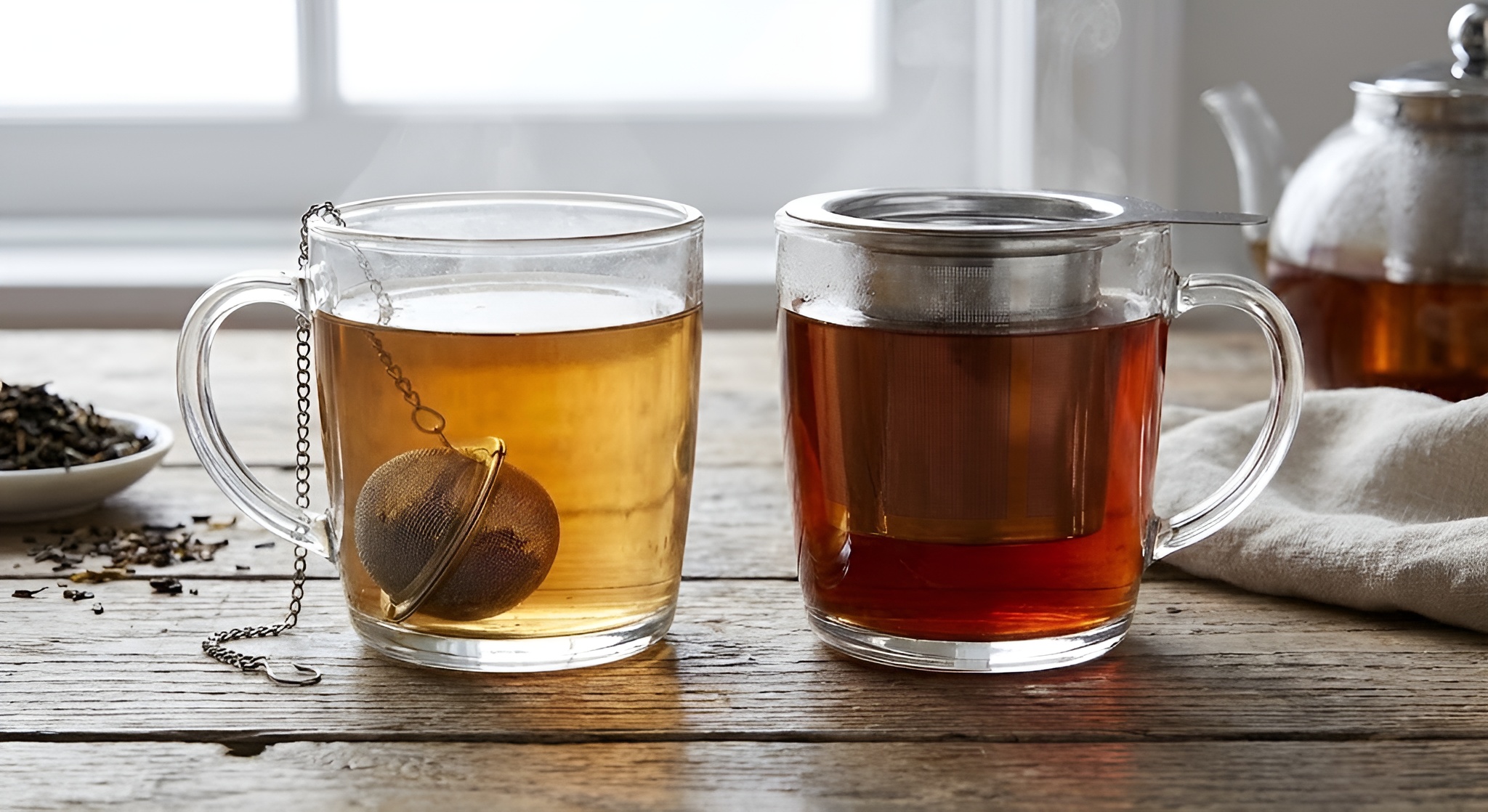
If you put a teaspoon of pearls into a 1-inch tea ball, they will expand until they hit the metal walls. The leaves in the center remain dry or compressed, never touching the water. This leads to uneven extraction: the outside leaves get bitter/over-steeped, while the inside leaves remain wasted.
Expert Tip: The "Agitation" Factor
Water needs to move through the leaves, not just sit around them. This is called agitation. In a basket or teapot, convection currents move the leaves around ("The Dance of the Leaf"). In a ball, the leaves are paralyzed, leading to a flat, one-dimensional flavor.
2. Mesh vs. Laser Cut vs. Silicone
Not all holes are created equal. The material of your infuser dictates the clarity of your liquor.
- Wire Mesh (Woven): The gold standard. Woven stainless steel mesh is flexible and fine enough to stop even Rooibos dust.
- Laser Cut / Etched: A solid sheet of metal with holes drilled in it. Durable and easy to clean, but sometimes allows fine dust to pass through if the holes aren't microscopic.
- Silicone (Novelty): Avoid these. While cute (Manatees, Submarines), the holes are huge, they stain easily, and cheap silicone can impart a plastic taste to the water.
Expert Tip: The Rooibos Test
To test if an infuser is good quality, brew loose leaf Rooibos in it. Rooibos needles are incredibly fine. If your cup ends up with a layer of red dust at the bottom, your infuser mesh is too coarse.
3. The "Heat Trap" (Why you need a lid)
You pour boiling water over your tea, and then... you leave it open to the air. As steam rises, it carries away aromatic compounds (the smell of the tea). Furthermore, the water temperature drops rapidly.
Good brewing baskets come with a lid. This traps the steam, condensing the essential oils back into the cup, and keeps the water temperature stable for the 3-5 minute steep time. A tea ball hanging in a mug has no lid, resulting in a lukewarm, less aromatic brew.
| Infuser Type | Expansion | Cleaning | Verdict |
|---|---|---|---|
| Brewing Basket | Excellent | Easy (Tap & Rinse) | The Winner |
| Tea Ball / Egg | Poor (Cramped) | Hard (Hinges trap leaf) | Travel Only |
| Silicone Novelty | Terrible | Medium (Stains) | Avoid |
| Tongs / Pincer | Very Poor | Hard | Avoid (Weak spring leaks) |
Expert Tip: Basket as a "Mini Teapot"
A brewing basket essentially turns your mug into a teapot. It provides the same volume-to-leaf ratio as a small pot, but without the hassle. It is the most efficient way to brew loose leaf tea for one person.
4. Conclusion: Upgrade for $15
Upgrading from a $3 tea ball to a $15 brewing basket is the single biggest flavor improvement you can make for the price. It is cheaper than buying a new kettle or nicer tea, but it unlocks the flavor of the tea you already have.
Ready to bin the tea ball?
We tested the top brewing baskets to see which ones fit best in standard mugs and actually stop the leaks. See our top 5 picks here: The 5 Best Tea Infusers for Mugs (That Don't Leak Leaves) →
Comments