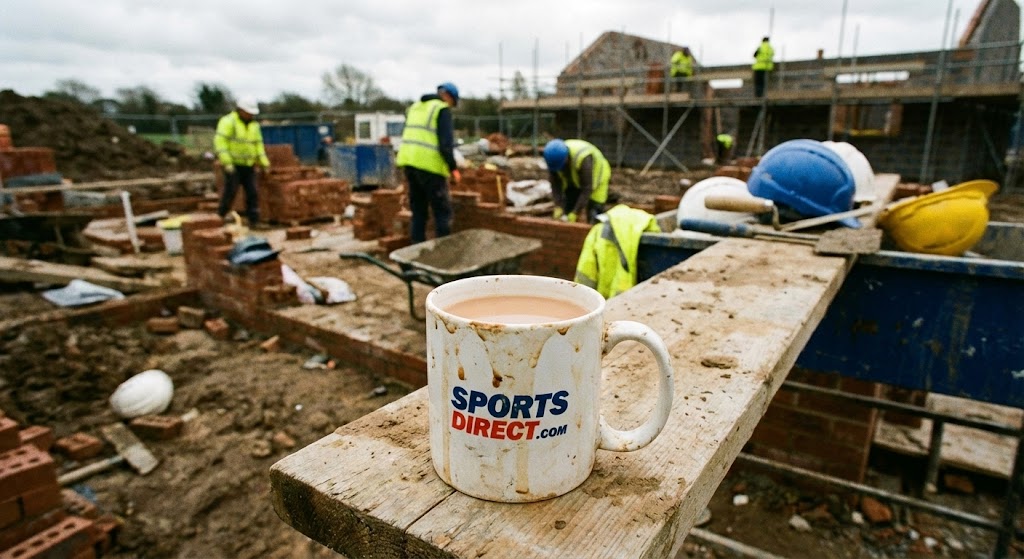
Defining Builders' Tea: The Working-Class Standard
Builders' tea specifications (cultural norms, not written rules): Strong brew (steep 4-6 minutes, dark brown color), full-fat milk (30-40ml per 250ml cup), 2-3 teaspoons sugar (some drink it with 4-5), large mug (300-500ml, not delicate teacup), cheap black tea (Assam-dominant blends like PG Tips, Yorkshire Tea, Tetley). Temperature: scalding hot (95°C+). Preparation: functional, fast (tea bag in mug, boiling water, milk, sugar, stir, drink immediately). No ritual or ceremony—just caffeinated fuel.
The name "builders' tea" comes from construction workers (builders) who popularized this style on work sites (1970s-80s UK). Manual labor requires high-calorie intake and caffeine for alertness—strong sweet tea provides both. The style spread beyond construction to all working-class occupations: factory workers, truck drivers, warehouse staff, manual trades. It became class marker more than occupation marker.
Builders' Tea Formula
- Brew: 4-6 minutes (dark brown)
- Milk: 30-40ml full-fat
- Sugar: 2-3 teaspoons minimum
- Purpose: Functional fuel, not aesthetic experience
Contrast with middle-class tea: delicate, light brew, minimal/no milk, no sugar, small cup, expensive tea, careful preparation, aesthetic appreciation. Every element inverted—builders' tea is anti-aesthetic by design. The crudeness is the point.
Identity Performance: Tea as Class Signal
Drinking builders' tea broadcasts: "I'm working-class," "I do manual labor," "I'm practical, not pretentious," "I'm one of the lads," "I'm not trying to be fancy." Refusing builders' tea (when offered in working-class context) broadcasts: "I think I'm better than you," "I'm ashamed of working-class culture," "I'm trying to escape my background." This creates social enforcement: you drink builders' tea to belong, or you're labeled a snob/traitor.
The psychology: costly signaling in reverse. Standard costly signaling: expensive behaviors prove wealth/status (luxury goods, formal education, refined tea rituals). Builders' tea is cheap signaling: deliberately choosing low-status option proves solidarity with working class. If you had choice, you'd drink better tea—but you choose builders' tea anyway (loyalty demonstration).
Tea as Loyalty Test
Upwardly mobile working-class individuals code-switch: builders' tea with family (maintain belonging), specialty tea privately (personal preference). Drinking green tea in front of working-class family risks "getting above your station" accusations.
This explains why correcting builders' tea preferences ("try less sugar," "use better tea") backfires socially—it reads as class correction, not helpful advice. The person isn't drinking builders' tea because they don't know better—they're drinking it because it signals who they are.
Reappropriation Psychology
Elite culture says "tacky/excessive"—working-class culture says "exactly, and I love it." The Sports Direct mug's ugliness becomes virtue through defiant pride. Compare to luxury teaware (heavy Yixing, bone china)—exact opposite status signaling.
Value Inversion
Working-class culture prizes practicality, efficiency, honesty. Tea = functional fuel, not aesthetic experience. Spending time/money on tea refinement signals wasted resources (upper-class privilege) or pretension (trying to seem upper-class).
The political dimension: tea refinement is seen as class oppression. Upper classes use sophisticated taste to exclude working classes (you can't participate in expensive tea culture without money/education/free time). Builders' tea is democratic—anyone can make it, it costs nothing, no expertise required. Refusing to participate in refined tea culture is class resistance.
Sports Direct Mug: Reappropriation and Defiant Pride
Sports Direct (UK budget sports retailer) gave away massive branded mugs (750ml capacity, nearly 3x standard mug) as promotional items (2010s). The mugs became ironic working-class symbol: absurdly oversized, cheap plastic/ceramic, garish branding—everything refined taste rejects. Working-class response: embrace it proudly. "Sports Direct mug" became meme, representing unpretentious excess and anti-elitism.
The psychological mechanism: reappropriation. Elite culture says "that mug is tacky/excessive"—working-class culture says "exactly, and I love it." Using Sports Direct mug signals: "I don't care about your aesthetic judgments," "I'm comfortable with cheap/excessive," "I'm not embarrassed by working-class markers." It's defiant pride—the mug's ugliness/size becomes its virtue.
Compare to luxury teaware psychology: heavy Yixing pots, bone china cups, aesthetic refinement. Sports Direct mug is anti-luxury—cheap, light, ugly—but within working-class culture, it's high-status (authentic, unpretentious, self-aware humor).
Anti-Elitism: Why Builders' Tea Rejects Refinement
Builders' tea culture views refined tea practices as waste: "Why pay £20/100g when £3 PG Tips tastes fine?" "Why spend 10 minutes on Gongfu ceremony when you could just steep a bag?" "Why drink it black when milk makes it better?" "Why no sugar when sugar gives you energy?" Every refinement is seen as impractical snobbery—form over function, appearance over substance.
This isn't ignorance—it's value inversion. Working-class culture prizes practicality, efficiency, and honesty (substance matters, not presentation). Tea should be functional fuel, not aesthetic experience. Spending time/money on tea refinement signals you have resources to waste (upper-class privilege) or you're pretentious (trying to seem upper-class). Either way, it's suspicious.
The political dimension: tea refinement is seen as class oppression. Upper classes use sophisticated taste to exclude working classes (you can't participate in fancy tea culture without money/education/free time). Builders' tea is democratic—anyone can make it, it costs nothing, no expertise required. Refusing to participate in refined tea culture is class resistance.
MIF vs MIL: Builders' Tea Defaults to MIF
Builders' tea has masculine associations: strong, no-nonsense, functional, associated with male-dominated manual trades. Women drinking builders' tea signal toughness, solidarity with male working-class culture, rejection of feminine refinement. "I can drink it as strong as the lads" becomes gender performance.
Conversely, men drinking delicate tea (white tea, floral oolong, no milk/sugar) risk masculinity challenges: "That's too fancy," "Drink a proper cuppa," "Are you going soft?" The tea becomes masculinity test within working-class culture. This doesn't exist in Gongfu culture (where refined tea is masculine sophistication) or middle-class tea culture (where gender associations are weaker).
The psychology: hegemonic masculinity (dominant masculine ideal emphasizes toughness, rejection of refinement, physical labor). Builders' tea aligns with this ideal; delicate tea contradicts it. Drinking builders' tea = performing working-class masculinity, regardless of actual gender.
Navigating Builders' Tea Social Dynamics
- In working-class contexts: Accept offered builders' tea gratefully—refusal signals class superiority/snobbishness
- Making tea for working-class guests: Default to builders' tea specs (strong, milk, sugar) unless they specify otherwise
- Upward social mobility: Code-switch—drink builders' tea with family/working-class friends, experiment privately with other teas
- Avoiding offense: Never criticize builders' tea preparation ("it's too strong," "too sweet")—criticism reads as class attack
- Introducing specialty tea: Frame as addition, not replacement ("I also like oolong, want to try?") not ("you should drink better tea")
- Sports Direct mug usage: If you own one, use it proudly in working-class contexts (signals belonging), hide it in middle-class contexts (signals poor taste)
| Tea Style | Class Association | Key Values | Social Function |
|---|---|---|---|
| Builders' Tea | Working-class, manual labor | Practicality, function, anti-elitism, solidarity | Boundary marker—inclusion/exclusion, loyalty test |
| Middle-Class Tea | Office workers, professionals | Health, moderation, taste appreciation | Personal preference, health signaling |
| Gongfu Tea | Upper-middle class, enthusiasts | Ritual, sophistication, expertise, cultural capital | Status display, costly signaling, gatekeeping |
| Afternoon Tea (formal) | Upper class, heritage culture | Tradition, elegance, social ritual | Class performance, heritage maintenance |
The "Too Posh for a Proper Cuppa" Accusation
In working-class culture, refusing builders' tea triggers specific accusation: "too posh for a proper cuppa"—meaning you think you're better than working-class norms. This isn't about tea preference; it's about perceived class betrayal. The accusation implies: you've forgotten your roots, you're ashamed of working-class culture, you're trying to join elite class that looks down on us.
Defense mechanisms: (1) Accept builders' tea publicly, drink preferred tea privately. (2) Frame alternative tea as health requirement ("doctor said cut sugar"). (3) Make self-deprecating jokes about tea preference ("I know, I'm weird"). (4) Explicitly affirm working-class identity while explaining tea choice ("I'm still a worker, just happen to like green tea"). None of these fully resolve suspicion—the safest route is conformity.
Defense Mechanisms
Working-class individuals who like specialty tea must: (1) Accept builders' tea publicly, drink preferred tea privately, (2) Frame as health requirement ("doctor said cut sugar"), or (3) Explicitly affirm working-class identity while explaining choice. Safest route: conformity.
This creates genuine constraint: working-class individuals who develop taste for specialty tea face real social costs. Conforming to builders' tea limits personal tea enjoyment but preserves social belonging. Pursuing preferred tea risks exclusion/suspicion. Neither option is cost-free.
Builders' Tea in Non-British Cultures
Builders' tea is specifically British (and Irish/Commonwealth) phenomenon—strong sweet milk tea doesn't exist in US, Australia (where tea is less central), or Asia (where milk tea is different tradition). American "sweet tea" (iced black tea, heavy sugar, no milk, southern US) is functional equivalent: working-class beverage, high sugar, identity marker, but different preparation/cultural meaning.
Chinese milk tea (nai cha) uses different tea (usually Assam or black tea), condensed milk, and sometimes butter/salt (Tibetan-style). It's not class-coded the same way—more regional/ethnic marker than class signal. Hong Kong-style milk tea shares builders' tea's strength, but middle-class acceptability is higher (no anti-elitism connotation).
The British specificity reflects UK's particular class history: rigid class system, industrialization creating distinct working-class culture, tea as national beverage making it ideal class battlefield. Other countries lack this exact combination, so builders' tea phenomenon doesn't replicate.
Evolution and Future: Is Builders' Tea Declining?
Younger working-class Britons (under 30) show mixed patterns: some maintain builders' tea tradition (family socialization), others abandon it (health awareness, specialty tea exposure, weakening class boundaries). However, builders' tea remains dominant in manual trades—construction sites, factories, warehouses still default to strong sweet milk tea.
Possible futures: (1) Builders' tea persists as occupational norm (manual labor) but declines as universal working-class marker. (2) Specialty tea becomes class-neutral, eliminating builders' tea as boundary marker. (3) Builders' tea becomes retro/ironic symbol (like Sports Direct mug), losing literal function but gaining nostalgic/performative meaning. (4) Health concerns (sugar, obesity) push working-class tea toward reduced sugar, but strong milk tea persists.
Current evidence (2020s): builders' tea remains strong in traditional working-class communities and manual trades, but weakening in upwardly mobile/younger demographics. The transition is gradual, not sudden—class cultures change slowly.
Comments