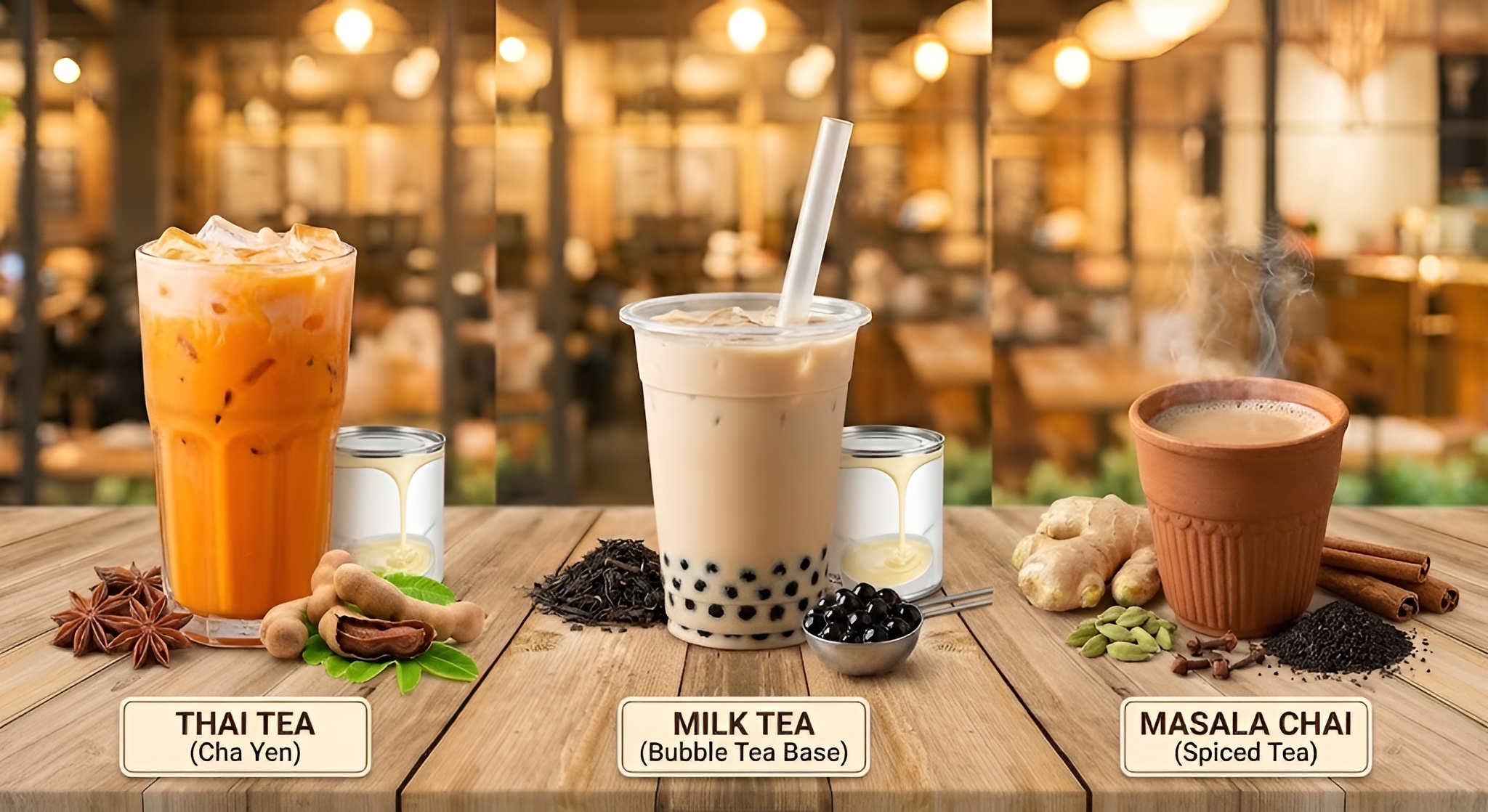
1. The Quick Breakdown: What Am I Drinking?
Before we dive into the history and botany, here is the cheat sheet to identifying your drink at a glance.
| Feature | Thai Tea (Cha Yen) | Milk Tea (Boba) | Masala Chai |
|---|---|---|---|
| Origin | Thailand | Taiwan | India |
| Base Tea | Assam/Ceylon (Strong Black) | Black, Green (Jasmine), or Oolong | CTC Assam (Granular Black) |
| Key Spices | Star Anise, Tamarind, Vanilla | None (Usually just tea & sugar) | Cardamom, Ginger, Clove, Cinnamon |
| Dairy | Condensed & Evaporated Milk | Powdered Creamer or Fresh Milk | Whole Milk (Boiled with tea) |
| Color | Vivid Orange | Beige / Light Brown | Caramel Brown |
| Served | Iced (Always) | Iced or Hot (with toppings) | Hot (Traditionally) |
2. Thai Tea (Cha Yen): The Neon Orange Giant
If you see a drink that looks like a melted sunset, it's Thai Tea. Known locally as Cha Yen (literally "Tea Cold"), it is a staple of Thai street food culture. But it isn't just about the color; it's about a very specific flavor profile that balances floral sweetness with earthy spice.
The Flavor Profile: The "Cooling" Spices
Unlike the fiery heat of Chai, Thai Tea is built on "cooling" and aromatic flavors. The dominant note is Star Anise, which provides a licorice-like sweetness. This is often layered with:
- Tamarind: Adds a sour, fruity depth that cuts through the sugar.
- Orange Blossom Water: Adds a perfume-like top note.
- Vanilla: Smooths out the tannins of the black tea.
The Milk: The "Oil" Factor
Authentic Thai Tea uses a one-two punch of dairy: 1. Sweetened Condensed Milk: Mixed into the hot tea to provide sugar and a thick, syrupy texture. 2. Evaporated Milk: Floated on top of the ice. This creates the famous creamy gradient visual. The use of canned milk is a holdover from the colonial era when fresh milk was scarce in tropical climates. The high sugar content acts as a preservative.
Expert Tip: Why is it Orange?
Tea is naturally brown. The neon orange color of Thai Tea comes from FD&C Yellow No. 6 (Sunset Yellow), a food dye added to the tea leaves during processing. Historically, it may have come from Annatto seeds, but modern mixes use coloring to distinguish the "spiced" tea from regular black tea. Without the dye, it would look like muddy coffee. Get our Dye-Free Thai Tea Recipe here.
3. Milk Tea (Boba): The Taiwanese Revolution
"Milk Tea" is a broad term, but in modern context, it refers to Taiwanese Bubble Tea (Boba). Invented in the 1980s in Taichung, Taiwan, this drink revolutionized tea by adding texture.
The Tea Base: It's Not Just Black
Unlike Thai Tea or Chai, which require strong black tea to stand up to spices, Milk Tea is more versatile.
- Classic Milk Tea: Uses a Black Tea base (often Assam or Ceylon) for a malty flavor.
- Jasmine Milk Tea: Uses Green Tea scented with Jasmine for a floral, lighter taste.
- Oolong Milk Tea: Uses Roasted Oolong for a nutty, toasted profile.
The "Creamer" Controversy
Traditional Taiwanese Milk Tea often uses Non-Dairy Creamer (powdered coffee creamer) rather than fresh milk. Why? 1. Mouthfeel: Powdered creamer contains hydrogenated oils that coat the tongue, creating a silkier texture than milk. 2. Stability: It doesn't curdle when mixed with acidic fruit syrups. However, the modern "Third Wave" boba movement emphasizes using fresh organic milk and high-quality loose leaf tea.
The Chew: Tapioca Pearls (Boba)
The defining feature is the topping. Boba are balls made from Tapioca Starch (from the Cassava root) boiled in brown sugar syrup. They add a chewy texture known in Taiwan as "QQ." This transforms the drink from a beverage into a snack. Learn how to make Brown Sugar Boba here.
4. Masala Chai: The Ayurvedic Elixir
Masala Chai literally translates to "Spiced Tea." Originating in India, it is the oldest of the three, with roots in Ayurveda (traditional medicine). While we often call it "Chai Tea" in the West, saying "Chai Tea" just means "Tea Tea."
The Spice Blend (Karha)
Every Indian family has their own recipe for the spice mix (Karha), but the "Holy Trinity" usually includes:
- Green Cardamom: The dominant top note. Floral and citrusy.
- Fresh Ginger: Provides the "heat" and throat-burn. Excellent for digestion.
- Clove: Adds a numbing, deep warmth.
The Method: Boiling vs. Steeping
This is the critical difference. Western tea is steeped (water poured over leaves). Authentic Chai is decocted. The tea (usually granular CTC Assam), spices, milk, and sugar are all thrown into a pot and boiled together. Boiling the milk caramelizes the lactose sugars (Maillard reaction), creating a rich, toffee-like flavor that you cannot replicate by just adding cold milk to hot tea. Read the full History of Chai here.
Expert Tip: The "CTC" Factor
To make real Chai, don't use fancy whole-leaf tea. It's too delicate. You need CTC (Crush, Tear, Curl) tea—those tiny pellets that look like coffee grounds. CTC tea releases tannins instantly and creates a dark, bold liquor that can stand up to the dilution of milk and strong spices. Learn more about CTC vs. Whole Leaf.
5. caffeine Content: Which Hits Hardest?
If you're looking for a buzz, which one wins? It depends on the brewing method.
- Thai Tea (Highest): Often brewed very strong (sometimes left to stew for hours in street stalls) to combat the ice dilution. It packs a heavy caffeine punch.
- Masala Chai (High): Boiling the tea leaves extracts 100% of the caffeine. However, because it is split 50/50 with milk, the caffeine per cup is diluted compared to straight tea.
- Milk Tea (Variable): Depends entirely on the base. A Black Milk Tea will have moderate caffeine. A Taro Milk Tea (made with powder) often has zero caffeine.
Read our deep dive into Caffeine Science here.
6. Conclusion: Which Creamy Tea is for You?
While they all fall under the umbrella of "Milk Tea," they serve different cravings.
- Drink Thai Tea if: You want a dessert-like, vanilla-heavy treat to cool down after spicy food.
- Drink Boba Milk Tea if: You want a snack you can chew, endless customization, and a fun texture experience.
- Drink Masala Chai if: You want warmth, comfort, and a spicy kick to wake you up on a rainy day.
The beauty of tea culture is that you don't have to choose just one. They are all valid expressions of how different cultures have adapted the simple leaf (Camellia sinensis) to their local ingredients and palates.
Make Them At Home
Ready to start brewing? We have authentic recipes for all three, tested in the TeaTrade kitchen.
Comments