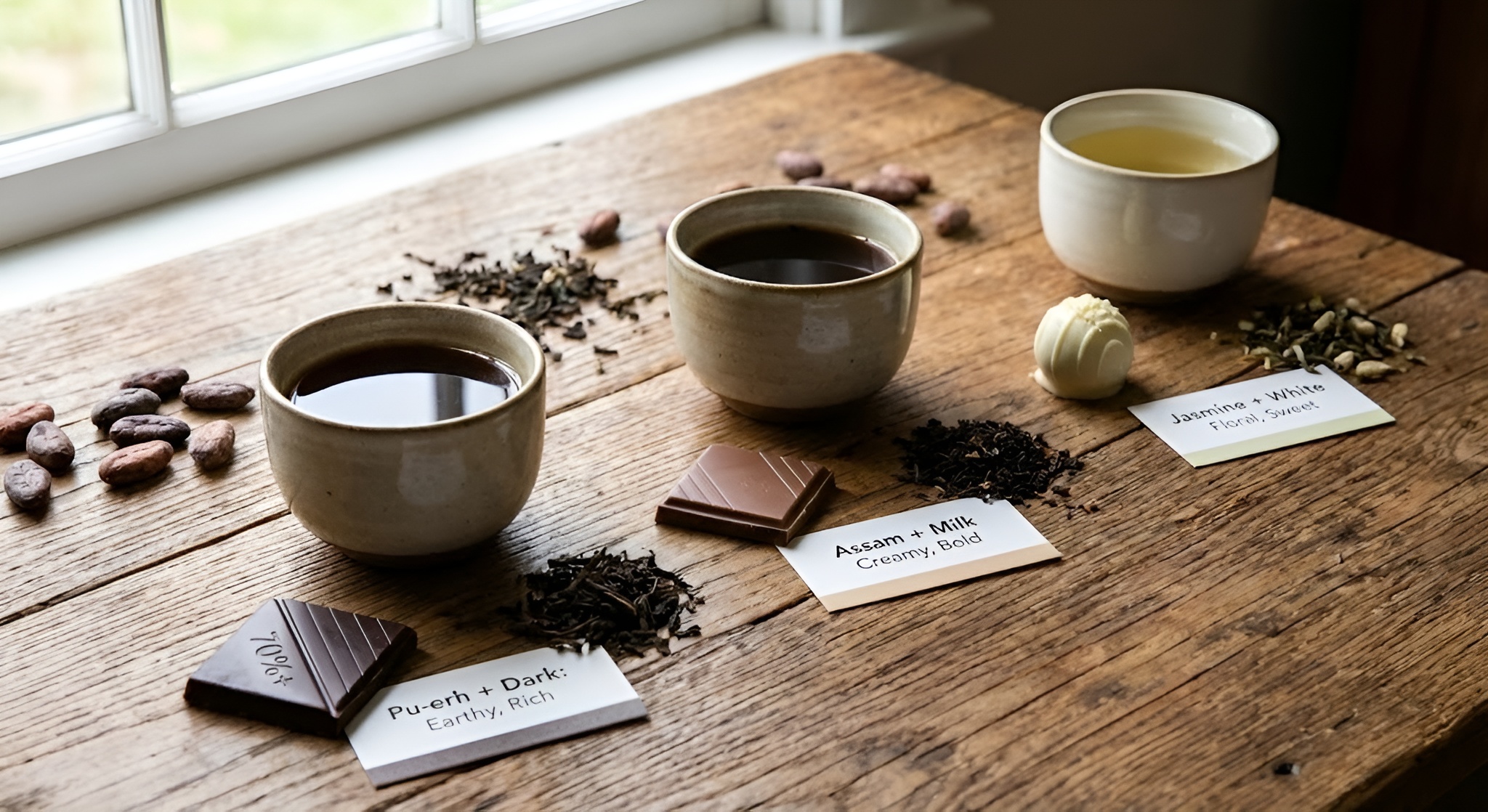
The Chemistry of Compatibility: Why It Works
To understand why this pairing works, we have to look at the molecules. Tea and Chocolate are distant cousins in the plant kingdom. Both are rich in Flavanols (a type of flavonoid) and Tannins. This shared chemical structure means they interact with our palate in similar ways.
1. The Lipid Interaction (Fat vs. Astringency)
Chocolate is essentially microscopic solids (sugar and cocoa mass) suspended in fat (Cocoa Butter). When you eat chocolate at room temperature, it takes time for the heat of your mouth to melt this fat. It coats the tongue, sometimes creating a waxy sensation that can dull the palate.
Hot Black Tea acts as a solvent. The heat melts the cocoa butter instantly, turning the chocolate into a liquid emulsion in your mouth. Simultaneously, the Tannins in the tea (see our polyphenols-glossary.html" class="internal-link">Polyphenols Glossary) bind to the proteins and fats, "scrubbing" the tongue clean. This creates a cycle of Richness -> Cleansing -> Richness that makes every bite feel fresh.
2. The Flavor Bridge: Bergamot
Flavor pairing often relies on "Bridging ingredients"—flavors that share chemical compounds with both main components. In this case, Bergamot is the bridge.
- The Tea: Earl Grey is Black Tea flavored with the oil of the Bergamot Orange rind. It is citrusy, floral, and slightly bitter.
- The Chocolate: High-quality Dark Chocolate often has natural "fruity" or "citrusy" top notes (especially beans from Madagascar or Peru).
The Bergamot amplifies these hidden fruit notes in the chocolate, making a 70% dark bar taste sweeter and more vibrant than it would alone. It mimics the classic combination of "Chocolate Orange" (think Terry's) but in a much more sophisticated, floral way.
The caffeine Factor
Both tea and chocolate contain stimulants. Tea has Caffeine; Chocolate has Theobromine (and small amounts of caffeine). When consumed together, they provide a synergistic boost to focus and alertness, often without the jittery "crash" of coffee. This makes it an ideal mid-afternoon ritual.
Understanding the Tea: Earl Grey Profiles
Not all Earl Greys are the same. The base tea and the quality of the oil matter immensely for pairing. See our Review of the Best Earl Greys here.
- Classic Earl Grey: Usually a blend of Ceylon and Assam. Medium body, sharp citrus. Ideally paired with balanced 60-70% chocolate.
- Lady Grey: Contains added lemon and orange peel. Lighter and zestier. Pairs well with sweeter, fruitier chocolates or milk chocolate. Learn the difference here.
- French Earl Grey: Contains rose petals and sometimes vanilla. Floral and perfumed. Pairs beautifully with very dark, floral chocolates (Ecuadorian).
- Cream Earl Grey: Contains vanilla flavor. Rich and smooth. Pairs with dessert chocolates or truffles.
Understanding the Chocolate: Terroir & Percentages
Just like wine or tea, chocolate has Terroir—the flavor imparted by the soil and climate where the bean was grown.
- Madagascar (The Fruity One): Known for distinct notes of red berries and citrus. This is the Holy Grail pairing for Earl Grey, as the tea's citrus aligns perfectly with the bean's acidity.
- Ecuador (The Floral One): Often has notes of jasmine and flowers. Pairs exceptionally well with French Earl Grey.
- Ghana/West Africa (The Earthy One): The classic "chocolatey" taste with notes of fudge and earth. Needs a stronger, maltier tea base (like an Assam-heavy Earl Grey) to stand up to it.
The Percentage Rule: Generally, aim for 60% to 75% cocoa solids.
- Under 50% (Milk Chocolate): Can be too sweet and cloying, masking the delicate bergamot.
- Over 85% (Super Dark): Can be too astringent. The tannins in the chocolate clash with the tannins in the tea, drying out your mouth.
The Ritual: How to Taste Like a Pro
You don't just chew and swallow. To experience the molecular interaction, you must follow the "Melt & Slurp" method.
Step 1: The Snap & Sniff
Break a piece of chocolate. Listen for a sharp "snap" (indicating good tempering). Smell the broken edge to prime your palate. Then, smell the hot tea. Your brain effectively begins to "taste" the combination before food enters your mouth via Orthonasal Olfaction.
Step 2: The Melt
Place a small piece of chocolate on your tongue. Do not chew yet. Press it against the roof of your mouth and let it sit for 10-15 seconds. Feel it begin to soften.
Step 3: The Slurp (The Magic Moment)
Take a sip of hot Earl Grey. Do not swallow immediately. Slurp it in (aerating it) so it washes over the melting chocolate. This is where the magic happens. The hot liquid emulsifies the chocolate, spreading the cocoa butter and sugar across every taste bud. The bergamot vapor rises into your nasal cavity (Retro-nasal Olfaction), fusing with the chocolate aroma.
Step 4: The Finish
Swallow. Notice the aftertaste (the finish). A good pairing will leave a lingering taste of "Chocolate Orange" or "Floral Cocoa" that lasts for minutes.
Pairing Menu: 4 Combinations to Try
1. The Classic: Twinings Earl Grey + 70% Madagascar Dark
The standard benchmark. The bright, sharp bergamot of the tea lifts the red berry notes of the Madagascan cocoa. It tastes like a sophisticated fruit tart.
2. The Floral Fantasy: French Earl Grey + 65% Ecuadorian
French Earl Grey often contains rose petals. Ecuadorian Arriba cacao has floral notes. Together, they create a perfumed, elegant experience that feels like walking through a garden.
3. The Comfort Pair: Cream Earl Grey + 55% Dark Milk
For those with a sweet tooth. "Dark Milk" chocolate (high cocoa content but with milk added) combined with Vanilla Earl Grey tastes like a London Fog latte in solid form. See our London Fog Recipe.
4. The Citrus Bomb: Lady Grey + Orange-Infused Dark Chocolate
Double down on the citrus. Lady Grey has added lemon and orange peel. Pairing this with a high-quality Orange Dark Chocolate (like Lindt Excellence Orange) creates an explosion of zest that is incredibly refreshing.
Want to Make This at Home?
You can create your own tea-infused chocolate treats. We have a guide on making tea-infused foods that pairs perfectly with this article.
Review: Best Tea-Infused SnacksCommon Mistakes to Avoid
- Tea Too Hot: Boiling water (100°C) can sometimes scorch the chocolate oils, creating a greasy mouthfeel. Let the tea cool to a drinkable 70-80°C before the pairing sip.
- Over-steeping: If you steep your Earl Grey for too long (5+ minutes), the tannins become overwhelming. When combined with the tannins in dark chocolate, your mouth will feel like sandpaper. Stick to a 3-minute steep. Check our Brewing Guide.
- Cheap Chocolate: Cheap chocolate replaces cocoa butter with vegetable fats (palm oil). These fats have a higher melting point and leave a waxy film that hot tea cannot wash away easily. Always look for "Cocoa Butter" as the only fat ingredient.
Beyond the Bar: Tea-Infused Chocolate Recipes
Once you understand the flavor profile, you can start cooking. Earl Grey is a fantastic ingredient in chocolate desserts.
- Earl Grey Truffles: Infuse heavy cream with loose leaf tea before pouring it over chocolate to make ganache. The bergamot flavor becomes trapped in the fat, releasing slowly as it melts.
- Tea-Infused Mousse: Steep tea in milk before making a chocolate mousse for a lighter, airy dessert.
If you want to try infusing flavors yourself, check out our guide on How to Make Your Own Earl Grey using Bergamot oil—you can use the same oil to flavor homemade chocolates.
Comments