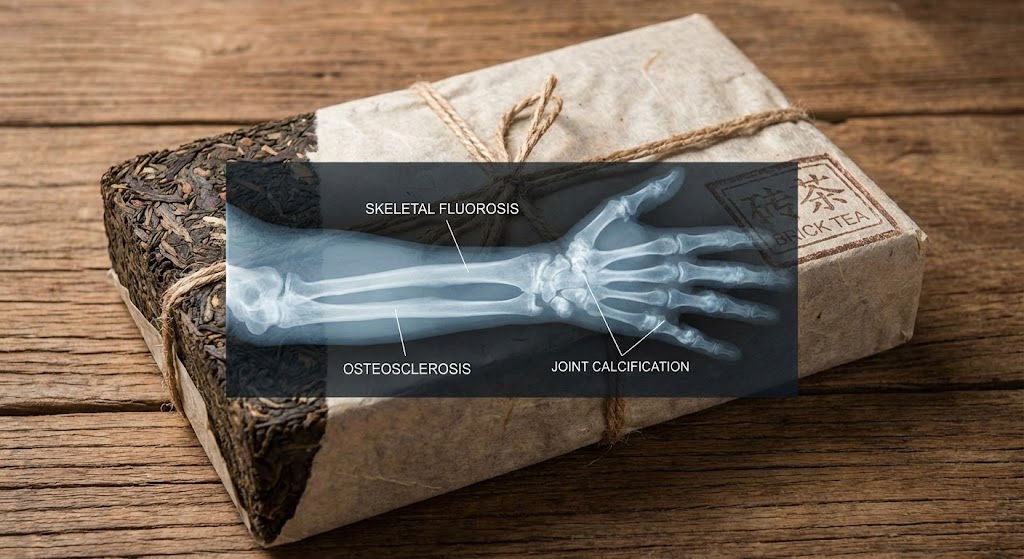
Brick tea (compressed old leaves from Tibet and China) contains 10-20x more fluoride than high-grade tea. Chronic consumption causes skeletal fluorosis: bone deformities, calcified ligaments, and chronic pain. Tibetan populations drinking 5-10 cups/day show fluorosis prevalence of 30-80% in endemic areas.
This is why old tea leaves accumulate fluoride, WHO safe limits, and why white tea is fluoride-safe.
Why Old Leaves Are Toxic
Tea plants absorb fluoride from soil and water, concentrating it in mature leaves. Young buds (white tea) have 1-5 ppm fluoride. Mature leaves (black tea) have 10-20 ppm. Old/damaged leaves (brick tea) have 50-300 ppm. Brewing releases 70-90% into tea. WHO safe limit for drinking water is 1.5 ppm.
Fluoride Content by Tea Type
| Tea Type | Fluoride (ppm dry leaf) | Brewed Tea (ppm) | Daily Limit (cups) | Long-Term Risk |
|---|---|---|---|---|
| White Tea (Silver Needle) | 1-5 | 0.2-0.5 | 20+ cups | Negligible |
| Green Tea (young leaves) | 5-15 | 0.5-2.0 | 6-8 cups | Low |
| Black Tea (mature leaves) | 10-20 | 2.0-4.0 | 3-4 cups | Medium with heavy use |
| Oolong (mixed leaves) | 8-18 | 1.5-3.5 | 4-5 cups | Low-Medium |
| Brick Tea (old leaves) | 50-300 | 10-30 | 1-2 cups MAX | Skeletal fluorosis |
What Is Skeletal Fluorosis?
Chronic fluoride intake above 6 mg/day causes:
- Dental Fluorosis: Mottled, discolored teeth (first sign, appears in children)
- Skeletal Fluorosis (Stage 1): Joint pain, stiffness (after 10-20 years exposure)
- Skeletal Fluorosis (Stage 2): Calcified ligaments, reduced mobility (20-30 years)
- Skeletal Fluorosis (Stage 3): Bone deformities, crippling pain (30+ years, irreversible)
Endemic Fluorosis Zones
- Tibet (Qinghai Province): Brick tea consumption 5-10 cups/day + high-fluoride water = 50-80% fluorosis prevalence
- India (Assam): Heavy brick tea use in tribal populations shows 20-40% fluorosis
- China (Inner Mongolia): Brick tea + coal burning (fluoride emissions) = epidemic levels
Prevention Strategies
Fluoride Risk Reduction
- Switch to Young-Leaf Teas: White tea or green tea has 1/10th the fluoride of brick tea.
- Limit Brick Tea: If culturally necessary, limit to 1-2 cups/day maximum (vs. traditional 5-10 cups).
- Use Low-Fluoride Water: If local water has >1 ppm fluoride, use filtered water for tea (compound effect is dangerous).
- Calcium Supplementation: High-calcium diet (milk, cheese) reduces fluoride absorption by 20-30%.
- Children Are Most Vulnerable: NEVER give brick tea to children - dental fluorosis occurs at lower doses.
Related Deep Dives
- Heavy Metals in Tea - Lead and cadmium contamination patterns
- Tea Oxalates - Another brick tea health risk
- Tea Criminology Hub - Fraud in premium vs. low-grade tea
Brick tea is traditional in Tibet and Mongolia—but it is also toxic with chronic use. White tea is chemically safer.
Comments