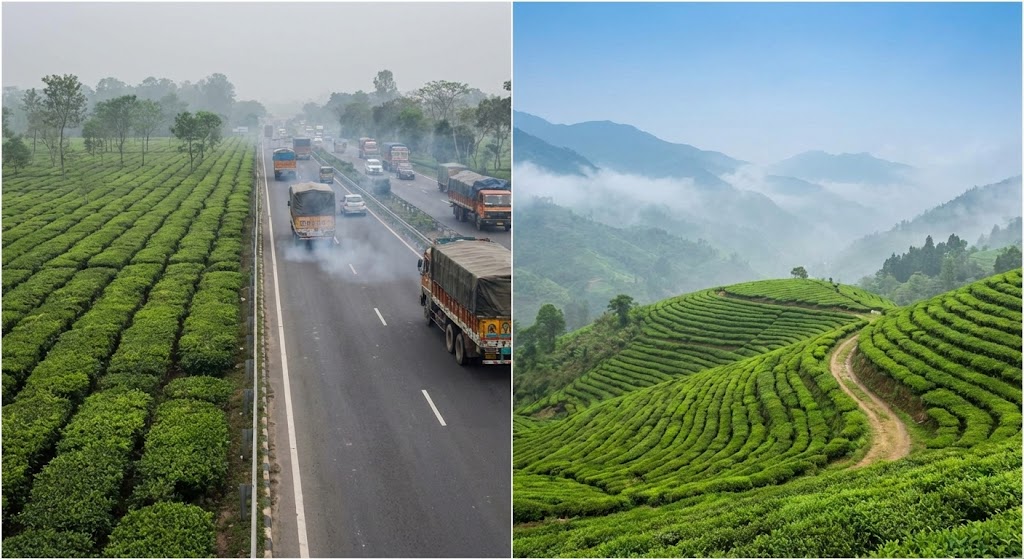
Tea plants bio-accumulate heavy metals from soil and air pollution. Roadside tea gardens have 10-20x more lead than high-mountain tea. Old leaves accumulate more than young buds. Brick tea from industrial zones can exceed WHO safe limits for lead (0.01 mg/L) and cadmium (0.003 mg/L).
This audit reveals which teas are contaminated, why geography matters, and how brewing temperature affects metal extraction.
The Bio-Accumulation Problem
Tea plants (Camellia sinensis) are hyperaccumulators of fluoride, aluminum, lead, and cadmium. Older leaves accumulate 5-10x more metals than young buds. Tea gardens near highways or smelters absorb airborne lead. Once in the plant, metals concentrate in older leaves used for brick tea and low-grade blends.
Contamination by Tea Type
| Tea Type | Lead (mg/kg dry leaf) | Cadmium (mg/kg) | Risk Level | Why |
|---|---|---|---|---|
| White Tea (buds only) | 0.05-0.2 | 0.01-0.05 | VERY LOW | Young buds, minimal accumulation |
| Green Tea (young leaves) | 0.1-0.5 | 0.02-0.1 | LOW | Harvested before heavy metal buildup |
| Oolong (mature leaves) | 0.5-2.0 | 0.1-0.3 | MEDIUM | Older leaves, partial accumulation |
| Black Tea (mature leaves) | 1.0-3.0 | 0.2-0.5 | MEDIUM | Older leaves, higher accumulation |
| Brick Tea (old leaves) | 5.0-20.0 | 0.5-2.0 | HIGH | Oldest leaves from polluted areas |
Geographic Contamination Hotspots
- Roadside Gardens (China/India): Traffic emissions deposit lead on leaves (10-20 mg/kg in some samples)
- Industrial Zones (Hunan Province): Smelter emissions cause cadmium contamination (1-2 mg/kg)
- High-Mountain Tea (Above 1,500m): Minimal air pollution, lowest metal content (0.1-0.5 mg/kg lead)
- Organic Certification: Does NOT test for heavy metals—only pesticides. Organic tea can still be contaminated.
Extraction Rates (How Much Gets Into Your Cup)
Brewing Temperature Effects
- Cold Brew (4°C, 8 hours): Extracts 5-10% of leaf lead/cadmium (safest brewing method for contaminated tea)
- Green Tea Temp (70-80°C): Extracts 20-30% of metals (moderate risk)
- Black Tea Temp (95-100°C): Extracts 40-60% of metals (higher risk)
- Boiling/Decoction (100°C, 10+ min): Extracts 70-90% of metals (worst for brick tea)
- First Rinse Method: Discard first 30-second steep - removes 30-40% of surface lead
Safe Tea Selection Strategies
- Buy White Tea or First Flush: Young buds have minimal metal accumulation
- Choose High-Altitude Sources: Darjeeling (Himalayas), Alishan (Taiwan), Wuyi (above pollution zones)
- Avoid Brick Tea from Tibet/China: Old leaves + industrial pollution = dangerous levels
- Rinse First Steep: Pour boiling water, steep 30 sec, discard - removes surface contaminants
- Test Before Trusting: ICP-MS testing costs $50-100, reveals exact metal content
Related Deep Dives
- Tea Chelation Chemistry - How tannins can bind metals (partial protection)
- Fluoride Toxicity in Brick Tea - Another contamination risk
- Silver Needles Arsenic Detection - Historical contamination
- Tea Forensics Hub - Modern testing methods
High-mountain white tea is chemically safer than roadside brick tea. Choose your source wisely.
Comments