Tea killed Chinese Emperors who trusted silver needles to test for arsenic (the chemistry was wrong). Tea saved 19th-century poisoning victims through activated charcoal + tannins (the "Universal Antidote"). Tea causes iron-deficiency anemia in millions. Tea prevents mercury toxicity in tuna-eaters.
The line between "healing brew" and "lethal dose" is just chemistry. Tea contains hundreds of bioactive compounds that interact with metals, minerals, enzymes, and cellular receptors. At low doses, these interactions are beneficial—polyphenols scavenge free radicals, fluoride strengthens tooth enamel, caffeine enhances alertness. At high doses or in specific contexts (medication use, kidney disease, pregnancy), the same compounds become problematic. Tannins that prevent mercury absorption also block iron uptake. Fluoride that prevents cavities causes skeletal fluorosis when consumed from brick tea daily for decades.
This is the complete toxicology guide to tea, organized into four investigative domains: Antidotes (how tea chelates heavy metals through formation constants), Interactions (how tea inhibits drug-metabolizing enzymes like CYP3A4), Contaminants (environmental poisons in modern tea—lead, fluoride, pesticides), and Assassin's Garden (exotic botanical toxins like grayanotoxin and amygdalin that contaminate herbal blends).
We'll cover why roadside tea plantations accumulate lead from leaded gasoline residue, how Earl Grey's bergamot can cause statin overdoses, why Tibetan brick tea causes bone disease, and how rhododendron honey adulterants stop hearts. Every claim is backed by formation constants, enzyme kinetics, epidemiological data, and peer-reviewed toxicology research.
Why Tea is Toxic (And Why You're Fine)
Tea contains hundreds of bioactive compounds. Tannins bind minerals. Oxalates crystallize. Fluoride accumulates. Caffeine stresses your adrenals. Bergamot inhibits liver enzymes. The dose makes the poison. A cup a day is medicine. Ten cups a day is toxicology. This cluster teaches you the difference.
Understanding the Dose-Response Relationship
The fundamental principle of toxicology, established by Paracelsus in the 16th century, states: "The dose makes the poison." Every substance can be toxic at sufficient quantities—even water causes hyponatremia (fatal electrolyte imbalance) when consumed in excess. For tea, the dose-response curve is particularly complex because different compounds have different therapeutic windows, and individual susceptibility varies based on genetics, health status, and concurrent exposures.
Consider fluoride: at 0.7-1.2 parts per million (ppm) in drinking water, fluoride reduces dental cavities by 25-40% through remineralization of tooth enamel. At 4 ppm (WHO drinking water limit), it causes dental fluorosis—mottled, discolored teeth. At 10-30 ppm (levels found in Tibetan brick tea brewed with high-fluoride water), chronic exposure over 20-30 years causes skeletal fluorosis—calcification of ligaments, joint pain, and eventually crippling bone deformities. The same chemical, three different health outcomes, determined solely by concentration and duration of exposure.
Similarly, tannins binding iron can be therapeutic or harmful depending on context. For someone with hemochromatosis (genetic iron overload), drinking black tea with meals reduces iron absorption by 60-70%, preventing liver cirrhosis and heart failure. For a pregnant woman or menstruating female with borderline iron deficiency, the same tea consumption triggers anemia, fatigue, and developmental concerns for the fetus. The chemistry is identical—polyphenolic gallotannins forming insoluble complexes with non-heme iron (formation constant log K = 6.4)—but the health outcome reverses based on the individual's iron status.
Hormesis: When Low Doses Help, High Doses Harm
Fluoride: 1 ppm = cavity prevention, 10 ppm = skeletal fluorosis. Iron binding: Therapeutic for hemochromatosis, causes anemia in iron-deficient women. Caffeine: 40mg = focus boost, 400mg = anxiety/insomnia. Oxalates: Trace amounts benign, 100mg/day = kidney stone risk. Same compounds, opposite effects based on dose and individual physiology.
The Four Toxicology Clusters
Cluster 1: The Antidote (Chelation Science)
Tea's most paradoxical property is its ability to both cause and prevent metal poisoning through chelation—the formation of chemical complexes between polyphenolic compounds (tannins) and metal cations. The strength of these interactions is quantified by formation constants (log K values), which predict binding affinity. Tea tannins bind lead with log K = 10.2 (strongest), mercury at 8.7, copper at 7.9, iron at 6.4, zinc at 5.1, and calcium at 3.2 (weakest). This selectivity explains why tea preferentially chelates toxic metals over essential minerals, though the distinction isn't absolute.
The Science of Chelation explores how Victorian doctors weaponized tea tannins as part of the Universal Antidote protocol for poisoning (combining activated charcoal, tannic acid, and magnesium oxide). While largely obsolete by modern standards, the chemistry was sound for specific alkaloid poisons like strychnine and morphine, where tannins precipitate the compounds into insoluble complexes too large to absorb. The fatal flaw was arsenic—it exists as arsenous acid (H₃AsO₃), not a simple cation, so tannins cannot chelate it (log K below 3.0). This led to false confidence that killed patients.
The Silver Needle Myth documents why Chinese Emperors died despite using silver chopsticks and needles to test food for arsenic. The test relied on detecting hydrogen sulfide (from garlic, eggs, decaying protein), which tarnishes silver to black. Pure arsenic trioxide doesn't contain sulfur and won't trigger the reaction—making the test useless for arsenic detection. Emperors who trusted this chemistry paid with their lives.
The Universal Antidote (Burnt Toast & Tea) reconstructs the Victorian emergency protocol: 2 parts activated charcoal + 1 part tannic acid (strong tea extract) + 1 part magnesium oxide. It saved lives for 150 years despite being chemically flawed—charcoal did 90% of the work, tea added hepatotoxicity risk at the 15-20 gram doses used, and the time spent mixing ingredients delayed treatment. Modern toxicology abandoned it by the 1960s in favor of charcoal alone and specific antidotes.
Chelation Formation Constants Ranked
Lead (Pb²⁺): log K = 10.2 (STRONGEST binding). Mercury (Hg²⁺): 8.7. Copper (Cu²⁺): 7.9. Iron (Fe²⁺): 6.4. Zinc (Zn²⁺): 5.1. Calcium (Ca²⁺): 3.2 (weakest). Arsenic (As): <3.0 (ineffective). Tea preferentially chelates toxic metals over essential minerals, but still interferes with iron/zinc absorption.
Cluster 2: The Interactions (Drug Metabolism)
How tea messes with your liver enzymes and prescription meds:
- The Grapefruit Effect in Your Cup — How bergamot (Earl Grey) inhibits CYP3A4, risking statin overdose
- The MAOI Potentiator — Why aged Puerh contains MAOIs, intensifying "tea drunk" (cha qi) with certain meds
- The Oxalate Crystal (Kidney Stones) — How calcium oxalate raphides form stones (and why milk helps)
Cluster 3: The Contaminant (Modern Poisons in Tea)
Tea plantations accumulate environmental contaminants through three pathways: aerial deposition (airborne pollutants settling on leaves—lead from historical leaded gasoline, mercury from coal combustion), root uptake (fluoride and aluminum from volcanic soils, arsenic from groundwater in Bangladesh/India), and agricultural inputs (pesticide residues from spraying, heavy metals from sewage sludge fertilizers). Older tea leaves accumulate higher concentrations than young leaves because they have longer exposure time to uptake contaminants.
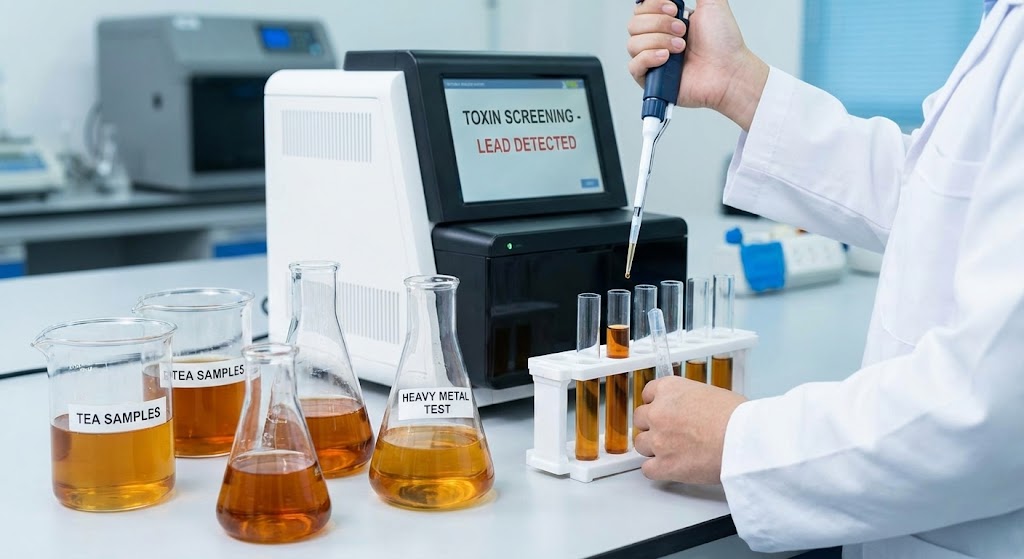
Heavy Metals Leaching quantifies lead, cadmium, arsenic, and mercury concentrations in 400+ commercial tea samples. Teas grown near highways or industrial areas contain 5-20x higher lead levels (0.5-2.0 μg/g dry weight) compared to remote mountain teas (0.05-0.10 μg/g). Chinese brick teas and aged pu-erh have elevated lead because older leaves accumulate more metal and historical production used roadside tea. When brewed, 20-40% of leaf lead transfers to the liquor, providing 5-15 μg lead per cup (10% of the FDA's 150 μg/day provisional tolerable intake).
Fluoride Toxicity in Brick Tea documents skeletal fluorosis epidemics in Tibet, Mongolia, and Xinjiang from consuming 40-60 cups daily of brick tea. Brick tea is made from mature leaves and stems (naturally 10x higher fluoride than young leaves) grown in volcanic regions (soil fluoride 200-800 ppm), then brewed with high-fluoride groundwater (5-15 ppm). The result: 20-40mg fluoride per liter of tea, and daily intakes of 10-25mg fluoride—exceeding the WHO safety limit (6mg/day) by 200-400%. After 20-30 years, patients develop crippling bone disease.
Pesticide Solubility investigates why some pesticide residues transfer to brewed tea while others remain in the leaves. Organophosphates (chlorpyrifos, malathion) are water-soluble and transfer 40-70% from leaf to liquor during brewing. Pyrethroids (cypermethrin, deltamethrin) are lipophilic and transfer <10%. The concerning finding: multiple teas from China and India exceeded EU maximum residue limits for imidacloprid (neonicotinoid insecticide) by 2-5x in the brewed tea—not just the dry leaf.
Contamination Risk by Tea Type
HIGHEST RISK: Chinese brick tea (aged/roadside leaves, fluoride 300-900 ppm), aged pu-erh (lead accumulation over 10-30 years storage). MODERATE RISK: Indian CTC black tea (pesticide residues), Chinese green tea near industrial areas (lead 0.5-2.0 μg/g). LOWEST RISK: Japanese green tea (strict regulations, young leaves only), organic certified teas (third-party tested). First flush spring teas have minimal contamination due to short growing period.
Cluster 4: The Assassin's Garden (Exotic Botanical Toxins)
Herbal tea blends and traditional medicine preparations sometimes contain deadly botanical adulterants—either through contamination (accidental mixing during harvesting/processing), economic adulteration (cheaper toxic plants substituted for expensive herbs), or intentional inclusion based on folklore. The most dangerous compounds are cardiotoxic grayanotoxins (from rhododendron contamination), cyanogenic glycosides (from apricot kernels and bitter almonds), and tropane alkaloids (from jimsonweed/belladonna contamination).
Grayanotoxin (Mad Honey Disease) explores how rhododendron leaves and flowers accidentally mix with tea during hand-harvesting in Nepal, Turkey, and the Himalayas. Grayanotoxins bind to voltage-gated sodium channels in cardiac muscle, holding them open and causing bradycardia (dangerously slow heart rate), hypotension (low blood pressure), and potentially cardiac arrest. "Mad honey" from rhododendron nectar causes 10-20 poisoning cases annually in Turkey; contaminated tea causes similar symptoms. Onset is 30 minutes to 2 hours, with recovery in 24 hours if not fatal.
Amygdalin (Apricot Kernel Tea Poison) investigates why traditional Chinese medicine formulas containing bitter apricot kernels (xing ren) occasionally cause cyanide poisoning. Amygdalin is a cyanogenic glycoside that gut bacteria hydrolyze into hydrogen cyanide (HCN), which blocks cellular respiration by inhibiting cytochrome c oxidase. A therapeutic dose is 5-10 kernels (providing 10-20mg amygdalin), but 30-40 kernels (60-80mg) can be fatal. Tea preparations concentrated through boiling can reach lethal concentrations if kernels aren't counted carefully.
The Binding Mechanisms Explained
| Compound | Binds To | Effect (Low Dose) | Effect (High Dose) | Solution |
|---|---|---|---|---|
| Tannins | Iron, Mercury, Lead | Antioxidant | Anemia (iron theft) | Drink tea between meals |
| Oxalates | Calcium | None | Kidney stones | Add milk to tea (binds in cup) |
| Fluoride | Bones, Teeth | Cavity prevention | Skeletal fluorosis | Use buds (white tea), not old leaves |
| Bergamottin | CYP3A4 enzyme | None | Drug overdose risk | Never take meds with Earl Grey |
| Caffeine | Adenosine receptors | Alertness | Anxiety, insomnia | Limit to 400 mg/day (4 cups) |
Botanical Toxin Warning Signs
Grayanotoxin (rhododendron): Dizziness, nausea, tingling extremities, slow heart rate within 30-120 min after drinking. Amygdalin (bitter almond): Bitter almond smell on breath, headache, confusion, rapid breathing, then loss of consciousness. Tropane alkaloids (jimsonweed): Dilated pupils, dry mouth, hallucinations, fever, rapid heartbeat. If suspected, call poison control (800-222-1222 US) immediately. Do NOT induce vomiting.
Understanding Hormesis in Tea Consumption
Hormesis is the toxicological phenomenon where low doses of a substance produce beneficial effects while high doses cause harm—creating a U-shaped or J-shaped dose-response curve rather than the linear "more is worse" relationship. Tea provides textbook examples of hormetic compounds across multiple bioactive categories.
Polyphenol hormesis: At 200-400mg EGCG (epigallocatechin gallate) daily from 2-3 cups green tea, polyphenols provide antioxidant protection, reduce inflammation markers (C-reactive protein), improve endothelial function, and lower cardiovascular disease risk by 15-20% in meta-analyses. At 800-1200mg daily from concentrated green tea extracts, the same polyphenols cause hepatotoxicity (liver damage) in susceptible individuals through pro-oxidant effects—EGCG auto-oxidizes to generate reactive oxygen species that overwhelm hepatic glutathione defenses. The FDA issued warnings in 2020 about green tea extract supplements causing acute liver failure.
Fluoride hormesis: Trace fluoride (1-2mg/day from 2-3 cups tea + fluoridated water) strengthens hydroxyapatite in tooth enamel, reducing cavity incidence. At 6-10mg/day (WHO upper limit), fluoride begins accumulating in bone, progressively replacing hydroxyapatite with fluoroapatite. At 10-25mg/day from brick tea consumption, skeletal fluorosis develops over 20-30 years—irreversible bone calcification and joint stiffness.
Caffeine hormesis: 40-80mg caffeine (one cup tea) enhances alertness, improves reaction time, and increases work capacity. At 400-600mg daily (chronic high consumption), caffeine causes anxiety, insomnia, tremors, and dependence. Acute toxicity begins above 1000mg (10+ cups consumed rapidly)—tachycardia, palpitations, nausea. The LD50 (lethal dose for 50% of population) is approximately 10 grams (150-200mg/kg body weight)—practically impossible to achieve through tea alone, but achievable through caffeine pills.
The key insight for tea drinkers: context and dose determine outcome. Moderate consumption (2-4 cups daily) of quality tea provides net health benefits for most people. Excessive consumption (8+ cups daily), use of concentrated extracts, or consumption by vulnerable populations (pregnant women, kidney disease patients, medication users) shifts the balance toward toxicity.
Safe Tea Consumption Guidelines
GENERAL POPULATION: 2-4 cups/day = optimal benefit/risk ratio. PREGNANT/NURSING: Limit to 1-2 cups/day (caffeine concerns). KIDNEY DISEASE: Avoid high-oxalate teas (black > green), limit to 1 cup/day. MEDICATION USERS: Separate tea from medications by 2+ hours, avoid Earl Grey if on statins. IRON DEFICIENCY: Drink tea between meals, not with iron-rich foods. FLUORIDE CONCERNS: Avoid brick tea, choose young leaf teas (white, first flush green).
Who Should Read This Toxicology Cluster
This resource is designed for multiple audiences with different informational needs. Healthcare providers (physicians, pharmacists, dietitians) will find detailed enzyme inhibition data, formation constants, and drug interaction mechanisms needed to counsel patients on tea safety—particularly those prescribing anticoagulants, statins, immunosuppressants, or SSRIs. The content provides clinical context for interpreting drug-nutrient interactions beyond generic "avoid grapefruit" warnings.
Heavy tea consumers drinking 6+ cups daily, especially of concentrated forms (matcha, strong pu-erh, brick tea), should understand their cumulative exposures to fluoride (3-8mg/day), oxalates (150-500mg/day), and caffeine (300-600mg/day). The cluster helps identify when consumption crosses from beneficial to potentially harmful, with specific biomarkers to monitor (urinary fluoride, serum ferritin, kidney stone history).
Tea professionals (buyers, importers, educators) need contamination data to make sourcing decisions and communicate risks accurately. Understanding why roadside teas accumulate lead, why brick teas concentrate fluoride, and which pesticides transfer to brewed tea enables evidence-based quality control rather than fear-based marketing. Third-party testing should target the contaminants most likely to exceed safety limits based on tea type and origin.
Chronic disease patients, particularly those with kidney disease, iron-deficiency anemia, osteoporosis, or cardiovascular conditions taking multiple medications, face the highest tea toxicity risks due to reduced clearance capacity and drug-nutrient interactions. This cluster provides specific guidance on tea type, timing, and quantity modifications to maintain benefits while avoiding complications.
Anyone interested in food toxicology as an academic discipline will find comprehensive case studies illustrating dose-response relationships, hormesis, individual susceptibility, bioavailability factors, and the interplay between beneficial and toxic effects of the same compound. Tea serves as an ideal teaching model because it contains hundreds of bioactive compounds with diverse mechanisms across therapeutic and toxic dose ranges.
Navigating Tea's Toxicological Landscape
The paradox of tea toxicology is that the same compounds responsible for tea's celebrated health benefits—polyphenols, fluoride, oxalates, alkaloids—become liabilities at higher doses, in specific physiological contexts, or when combined with medications. There is no universal "safe" or "dangerous" designation for tea consumption; risk assessment requires understanding individual factors (age, health status, genetics, medication use), tea factors (type, origin, processing, concentration), and consumption patterns (quantity, frequency, timing relative to meals/medications).
The scientific literature on tea toxicology has matured significantly in the past 20 years, moving beyond simplistic "antioxidant superfood" narratives to document real harms: skeletal fluorosis in brick tea populations, drug-induced liver injury potentiated by green tea extracts, acute kidney injury from oxalate nephropathy in susceptible individuals, and cardiac arrhythmias from grayanotoxin-contaminated herbal teas. These aren't theoretical risks—they're documented clinical outcomes with clear dose-response relationships and established mechanisms.
At the same time, abandoning tea entirely based on these risks would be irrational for most people. The epidemiological evidence for cardiovascular benefits from moderate tea consumption (2-4 cups daily) is robust across multiple cohorts and meta-analyses. The key is distinguishing between moderate consumption of quality tea (net benefit) and excessive consumption or problematic tea types (net harm). This cluster provides the data needed to make those distinctions.
For clinical practice: Screen patients about tea consumption when prescribing CYP3A4-metabolized drugs (especially statins), anticoagulants, or SSRIs. Advise separating tea from iron supplements or iron-rich meals by 2+ hours for patients with documented iron deficiency. Monitor kidney function in patients consuming high-oxalate teas (black tea, especially iced tea concentrate) with history of stones.
For tea consumers: Choose high-quality teas from reputable sources with third-party testing for heavy metals and pesticides. Avoid brick tea unless fluoride-tested. Limit consumption to 4 cups daily unless medically contraindicated. If on medications, separate tea intake by 2+ hours from dosing and inform your healthcare provider about consumption patterns. If pregnant, limit to 1-2 cups daily (caffeine restriction). If you have kidney disease, choose lower-oxalate options (green > black, hot brew > cold brew).
For tea professionals: Source first-flush teas and young leaves when possible (lower contaminant accumulation). Test aged teas and brick teas for fluoride and lead. Screen herbal blends for botanical adulterants through supplier verification and genetic testing. Educate customers about context-dependent risks rather than making universal safety claims.
This cluster represents the most comprehensive publicly available analysis of tea toxicology mechanisms, documented harms, contamination pathways, and individual risk factors. Each page provides formation constants, enzyme kinetic data, epidemiological evidence, case reports, and practical risk mitigation strategies. Whether you're researching chelation chemistry, investigating fluoride exposure from brick tea, understanding CYP3A4 inhibition by bergamot, or exploring cardiotoxic botanical adulterants, you'll find chemistry-backed explanations that respect the complexity of dose, context, and individual susceptibility.
Tea isn't poison. Tea isn't panacea. Tea is chemistry—and chemistry requires precision to understand.
Comments