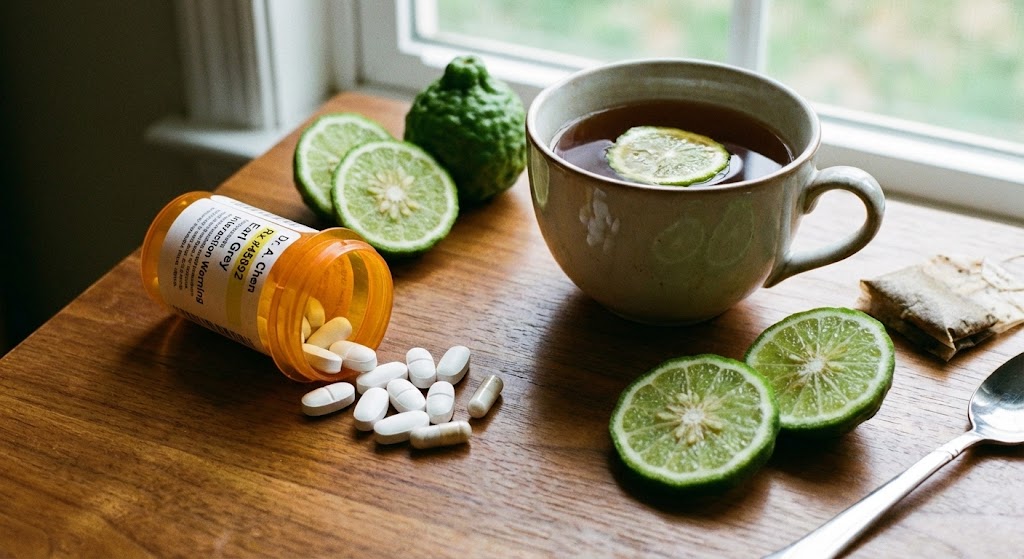
Earl Grey tea contains bergamot oil (from Citrus bergamia), which inhibits the CYP3A4 enzyme—the same mechanism as grapefruit juice. This can cause dangerous drug overdoses: statins (muscle breakdown), calcium channel blockers (hypotension), and immunosuppressants (toxicity). Taking medication with Earl Grey can triple blood concentration of these drugs, turning therapeutic doses into toxic ones.
This is the science of cytochrome P450 inhibition, the pharmacokinetics of bergamottin-drug interactions, which specific medications are affected, clinical case reports of Earl Grey-induced adverse events, and why Earl Grey is NOT a harmless breakfast tea if you're on medication. The interaction is mechanism-based (irreversible enzyme inactivation), long-lasting (24-72 hours per cup), and clinically significant (can cause hospitalization and death).
The Grapefruit Effect in Tea Form
Bergamottin and 6,7-dihydroxybergamottin (furanocoumarin compounds in bergamot oil) irreversibly bind to CYP3A4 enzyme in your small intestine. This enzyme normally metabolizes 50%+ of prescription drugs. Inhibiting it means drugs stay in bloodstream longer at higher concentrations. Effect lasts 24-72 hours per cup.
High-Risk Drug Classes
| Drug Class | Common Medications | Risk with Earl Grey | Consequence |
|---|---|---|---|
| Statins | Atorvastatin, Simvastatin | Blood levels increase 3-15x | Rhabdomyolysis (muscle breakdown) |
| Calcium Channel Blockers | Amlodipine, Felodipine | Blood levels increase 2-4x | Severe hypotension, dizziness |
| Immunosuppressants | Cyclosporine, Tacrolimus | Blood levels increase 2-6x | Kidney toxicity, tremors |
| Benzodiazepines | Midazolam, Triazolam | Blood levels increase 2-3x | Excessive sedation, respiratory depression |
| Antihistamines | Fexofenadine | Absorption reduced | Loss of allergy relief (opposite effect) |
Why This Is Worse Than Grapefruit
- Higher concentration: Bergamot oil in Earl Grey is 2-4% by weight (vs. 0.5% furanocoumarins in grapefruit)
- Hot water extraction: Steeping releases more bergamottin than cold grapefruit juice
- Cultural blind spot: Everyone knows about grapefruit-drug interactions; almost nobody knows about Earl Grey
- Multiple daily doses: Tea drinkers consume 3-5 cups/day (vs. 1 glass of juice)
Case Studies: Real Clinical Consequences
Case 1: Statin-Induced Rhabdomyolysis
A 2015 British Medical Journal case report documented a 44-year-old woman on atorvastatin (Lipitor, 40mg daily) who developed severe muscle pain, weakness, and dark urine after switching from regular black tea to Earl Grey (4 cups daily) for "health benefits." Blood tests revealed creatine kinase (CK) levels of 12,400 U/L (normal <200 U/L)—diagnostic of rhabdomyolysis, a life-threatening condition where muscle tissue breaks down and releases myoglobin into bloodstream, potentially causing kidney failure.
Pharmacokinetic testing showed atorvastatin blood levels 8.2x normal therapeutic range. The mechanism: atorvastatin is 98% metabolized by CYP3A4; bergamot inhibition prevented clearance, causing drug accumulation to toxic levels over 3 weeks. Treatment required hospitalization, IV fluids to prevent kidney damage, immediate statin discontinuation, and switch to pravastatin (a statin NOT metabolized by CYP3A4). After stopping Earl Grey, CYP3A4 activity normalized within 72 hours and muscle enzymes returned to baseline in 10 days.
Case 2: Calcium Channel Blocker Overdose
A 67-year-old man on amlodipine 10mg (for hypertension) experienced severe dizziness, fainting episodes, and blood pressure drops to 85/50 mmHg after his wife introduced Earl Grey as their "afternoon tea ritual" (2 cups daily, 3pm). Normally well-controlled on amlodipine, his blood pressure became dangerously low 4-6 hours after tea consumption. Hospital monitoring revealed amlodipine levels 3.4x therapeutic range. The temporal pattern (symptoms appearing mid-afternoon, persisting into evening) matched bergamottin's inhibition kinetics. Switching to unflavored Ceylon tea resolved the issue within 5 days.
Case 3: Immunosuppressant Toxicity (Transplant Patient)
A 52-year-old kidney transplant recipient on tacrolimus (immunosuppressant to prevent organ rejection) developed tremors, confusion, and elevated creatinine (kidney damage marker) after switching to Earl Grey. Tacrolimus has an extremely narrow therapeutic window (blood levels must stay between 5-15 ng/mL)—too low causes rejection, too high causes neurotoxicity and nephrotoxicity. Her levels spiked to 28 ng/mL (nearly double safe maximum) despite unchanged medication dosing. Emergency intervention required tacrolimus dose reduction by 60% and strict Earl Grey avoidance. This case highlights why transplant patients receive explicit grapefruit warnings but rarely hear about Earl Grey—a dangerous gap in patient education.
Red Flag Symptoms of Drug-Tea Interaction
STATINS: Unexplained muscle pain, weakness, dark urine (rhabdomyolysis). CALCIUM CHANNEL BLOCKERS: Dizziness, fainting, abnormally low blood pressure, swelling. IMMUNOSUPPRESSANTS: Tremors, confusion, kidney function changes. BENZODIAZEPINES: Excessive sedation, slurred speech, respiratory depression. ANTIHISTAMINES: Loss of allergy relief (paradoxical). If symptoms appear after starting Earl Grey, contact physician immediately.
Clinical Recommendations and Safe Alternatives
If you take CYP3A4-metabolized medications (statins, calcium channel blockers, immunosuppressants, certain antidepressants, benzodiazepines, or any of the 50+ drug classes affected), the safest approach is complete Earl Grey avoidance. The interaction risk outweighs any perceived benefits of bergamot flavoring. Safe tea alternatives include English Breakfast (robust black tea, no bergamot), Ceylon tea (bright, citrusy notes without enzyme inhibition), Japanese green tea, or rooibos (naturally caffeine-free, zero drug interactions).
Some Earl Grey brands use synthetic bergamot flavoring (artificial fragrance compounds) that lack furanocoumarins and therefore don't inhibit CYP3A4. Check ingredient labels for "natural bergamot oil" (AVOID if on medications) vs. "bergamot flavor" or "natural and artificial flavors" (generally safe, but confirm with manufacturer). Premium loose-leaf Earl Grey almost always uses real bergamot oil, while mass-market tea bags sometimes use synthetic flavor.
For patients who discover they've been consuming Earl Grey while on affected medications, immediate disclosure to prescribing physician is critical. The doctor may need to adjust medication doses, order blood tests to check drug levels, or switch to alternative medications not metabolized by CYP3A4. Never stop prescription medications abruptly without medical guidance—sudden discontinuation of statins, blood pressure medications, or immunosuppressants can cause serious complications.
The broader lesson extends beyond Earl Grey: any food, beverage, or supplement that inhibits drug-metabolizing enzymes creates overdose risk. Beyond bergamot and grapefruit, other CYP3A4 inhibitors include pomegranate juice, Seville oranges, starfruit, and supplements like St. John's Wort (paradoxically both inhibits and induces CYP enzymes depending on isoform). Always inform healthcare providers about ALL dietary habits, not just prescriptions and over-the-counter medications.
For related information on tea-drug interactions, see Tea & Antidepressants (MAOI and SSRI risks), Tea Chelation Chemistry (how tannins affect mineral and medication absorption), and The Complete Toxicology Hub covering all tea-health interactions from fluoride toxicity to botanical contaminants.
Earl Grey is NOT a safe tea if you take prescription medications. The bergamot-CYP3A4 interaction is as clinically significant as grapefruit juice—but far less recognized by patients and some healthcare providers. Awareness and avoidance prevent adverse events, overdoses, and potentially fatal complications.
Comments