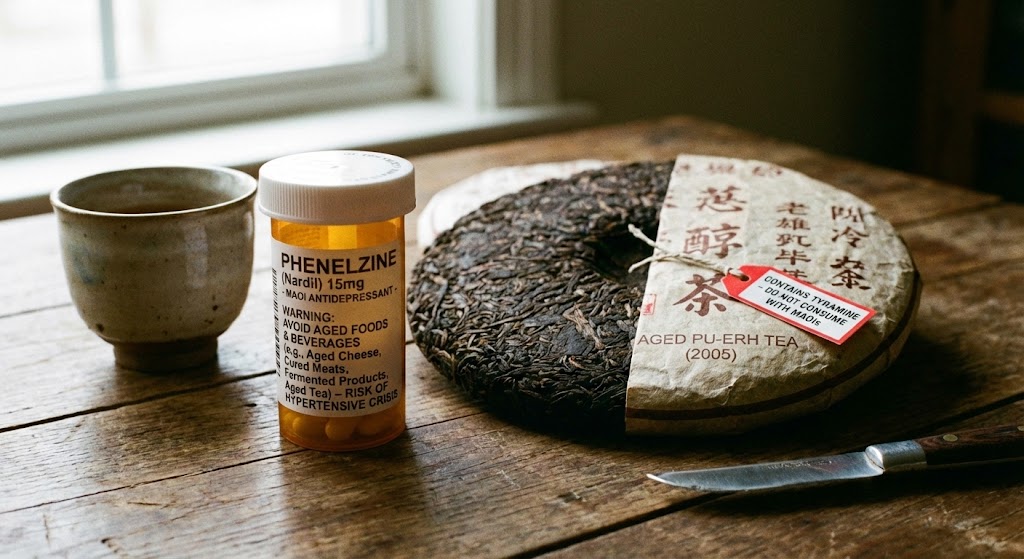
Fermented teas (aged puerh, dark oolong, heicha) contain tyramine—an amino acid that triggers hypertensive crisis in people taking MAOI antidepressants (phenelzine, tranylcypromine). Blood pressure can spike to 220/140 mmHg, causing stroke, heart attack, or death. Most tea drinkers and doctors are unaware of this interaction.
This guide explains tyramine formation in fermented tea, MAOI enzyme inhibition, and which teas are safe vs. dangerous for depression patients.
The Tyramine-MAOI Crisis
MAOIs (Monoamine Oxidase Inhibitors) block the enzyme that normally breaks down tyramine. When tyramine accumulates, it triggers massive norepinephrine release - spiking blood pressure dangerously. Aged/fermented teas have 10-50mg tyramine per cup (safe limit on MAOIs is <6mg/day total).
Tyramine Content by Tea Type
| Tea Type | Tyramine Content (mg/cup) | Risk Level on MAOIs | Mechanism |
|---|---|---|---|
| Green Tea (fresh) | <1 mg | Safe | No fermentation, minimal tyramine |
| Black Tea (fresh) | 1-2 mg | Low Risk | Oxidation but no aging |
| Aged Puerh (10+ years) | 20-50 mg | DANGEROUS | Microbial fermentation creates tyramine |
| Dark Oolong (aged) | 10-30 mg | HIGH RISK | Partial fermentation + aging |
| Heicha (Liu Bao) | 15-40 mg | HIGH RISK | Pile fermentation process |
Which Antidepressants Cause This Interaction?
MAOI Antidepressants (AVOID fermented tea):
- Phenelzine (Nardil)
- Tranylcypromine (Parnate)
- Isocarboxazid (Marplan)
- Selegiline oral (Emsam patch is safer at low doses)
Safe Antidepressants (no tyramine interaction):
- SSRIs (Prozac, Zoloft, Lexapro) - NO interaction with tea
- SNRIs (Effexor, Cymbalta) - NO interaction
- Atypicals (Wellbutrin, Remeron) - NO interaction
Safe Tea Options for MAOI Patients
Low-Tyramine Tea Protocol
- Stick to Fresh Green Tea: Sencha, Longjing, or white tea (all <2mg tyramine/cup)
- Avoid All Aged/Fermented: No puerh, no liu bao, no aged oolong (10-50mg tyramine)
- Fresh Black Tea OK: Ceylon or English Breakfast is safe (1-2mg tyramine)
- NEVER Kombucha: Fermented tea drinks have 20-80mg tyramine per serving
Conclusion: Know Your Enzyme Inhibitors
The interaction between MAOIs and tyramine in fermented tea is biochemically identical to the cheese effect that sends patients to the ER. The difference is that most people don't think of aged puerh as a fermented food—but it is. Microbial pile fermentation produces tyramine levels comparable to aged cheese or soy sauce.
If you take MAOIs (phenelzine, tranylcypromine, isocarboxazid, selegiline), avoid all fermented teas. Fresh green tea, white tea, and unflavored black tea are safe. For other drug interactions with tea, see our article on bergamot and CYP3A4 enzyme inhibition, which affects statins and calcium channel blockers.
For general medication timing with tea, consult our guide on mineral binding and absorption. And if you're interested in how fermentation affects tea authenticity and fraud, explore our criminology cluster.
Fresh tea is safe with MAOIs. Fermented tea can trigger hypertensive crisis. The difference is chemistry you now understand.
Comments