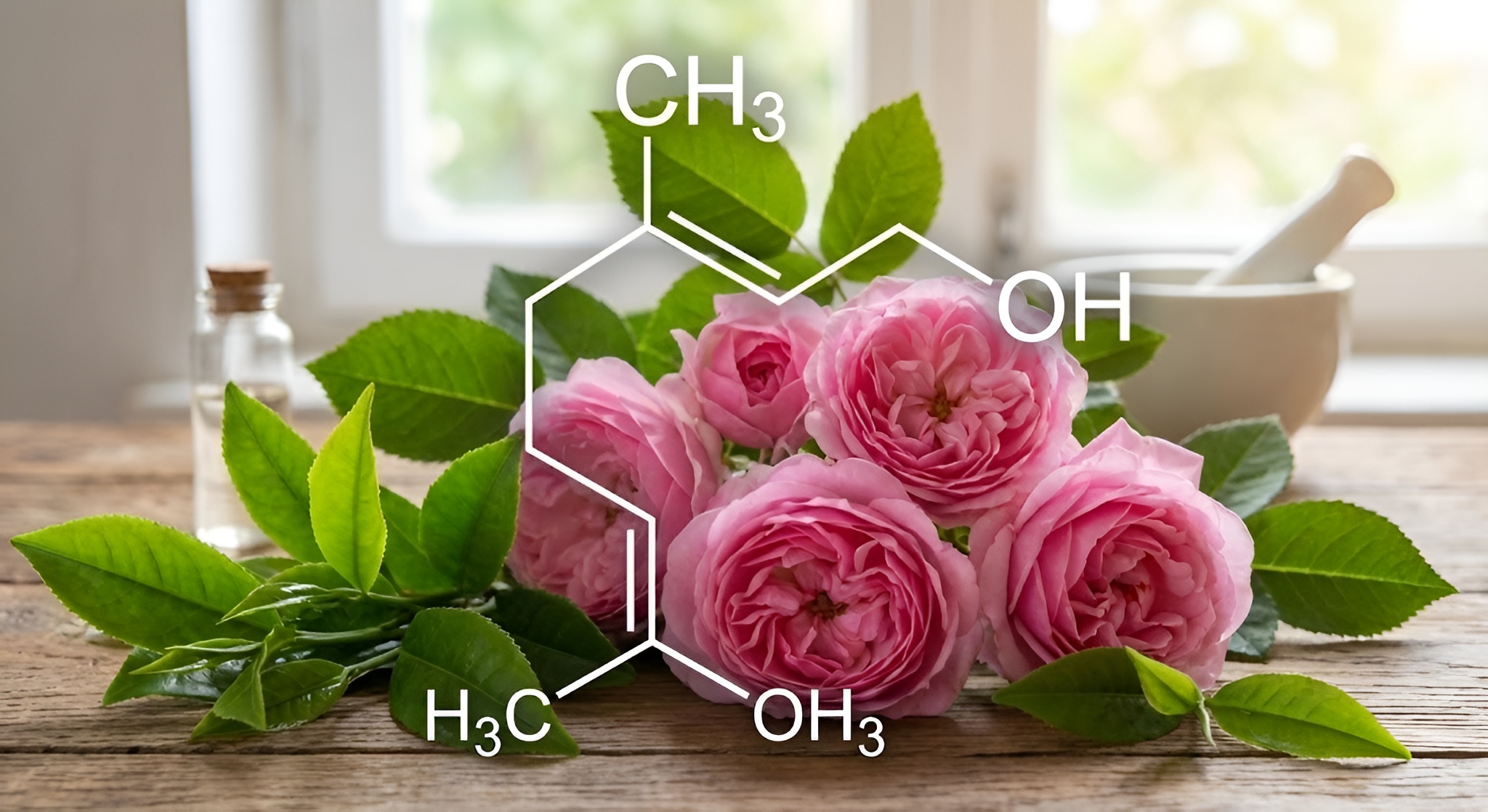
1. Biosynthesis: The MEP Pathway
Geraniol doesn't just appear out of nowhere. It is synthesized within the chloroplasts of the tea leaf via the MEP (Methylerythritol Phosphate) Pathway.
The plant uses glucose to create Geranyl Diphosphate (GPP), the universal precursor for all monoterpenes. Under specific stress conditions (like UV radiation from the summer sun), enzymes convert GPP into free Geraniol.
This is why Second Flush (Summer Harvest) Darjeeling has higher Geraniol content than First Flush (Spring). The intense UV index of the Himalayas in June supercharges the MEP pathway, turning the leaf into a terpene factory.
2. The "Hidden" Aroma (Glycosides)
In the fresh green tea leaf, you can't actually smell Geraniol. It is trapped.
It exists as a Glycoside—specifically Geranyl beta-primeveroside. This is a "two-part" molecule where the aromatic oil is chemically bonded to a sugar molecule (glucose + xylose). As long as this bond holds, the molecule is heavy, non-volatile, and odorless.
The Release Mechanism (Hydrolysis): To free the Geraniol, the tea maker must break the bond.
1. Withering: As the leaf loses moisture, cell walls degrade, allowing endogenous enzymes (beta-glucosidase) to mix with the glycosides.
2. Rolling: Physical disruption accelerates this mixing.
3. Oxidation: The enzymes cleave the sugar, releasing the free Geraniol into the air. This is why Black Tea (fully oxidized) smells like roses, while Green Tea (unoxidized) smells like grass.
3. The Muscatel Synergy: Geraniol + Hotrienol
Geraniol alone smells like roses. So why does Darjeeling taste like grapes?
The "Muscatel" flavor is a result of a chemical synergy between Geraniol and another terpene called 3,7-dimethyl-1,5,7-octatrien-3-ol (also known as Hotrienol).
Hotrienol provides a sweet, fruity, woody top note. When combined with the heavy, floral base of Geraniol and Linalool Oxides, the human brain interprets the mixture as "Dried Fruit" or "Muscat Grape." This specific ratio is almost exclusive to high-altitude teas that have been attacked by leafhoppers.
Expert Tip: Why "AV2" Matters
In Darjeeling, the tea bushes are a mix of old China seed (grown from seeds) and Clonal plants (grown from cuttings). The AV2 (Ambari Vegetative 2) clone is famous because it genetically produces significantly higher levels of Geraniol than other varieties. If you want the "Rose/Muscatel" bomb, always check the invoice for "AV2."
4. Where to Find Geraniol (The Cultivars)
If you are chasing that rose/grape note, don't just buy "Black Tea." Buy these specific genetics:
| Cultivar | Origin | Flavor Profile | Best Season |
|---|---|---|---|
| AV2 Clonal | Darjeeling, India | Intense Rose, Muscat Grape | Second Flush (Summer) |
| Tie Guan Yin | Fujian, China | Orchid, but with Geraniol depth | Autumn Harvest |
| Qing Xin Da Mao | Taiwan | Honey, Spice, Rose | Summer (Bug Bitten) |
| Keemun (Qimen) | Anhui, China | Rose, Wine, Toast | Spring/Summer |
5. Brewing: Heat is Your Friend
Unlike Linalool, which evaporates at low temperatures (198°C), Geraniol has a slightly higher boiling point (230°C) and is chemically more stable due to its alcohol structure. It acts as a "Base Note" in the tea's perfume.
This means it is harder to "flash off" or destroy with heat. In fact, you need hotter water to fully solubilize it from the leaf matrix.
The Protocol:
1. Use boiling water (95-100°C) - See Brewing Guide.
2. Perform a "Rinse" to hydrate the leaf and start the hydrolysis of any remaining surface glycosides.
3. Allow the tea to cool slightly in the cup (to ~60°C). As the steam dissipates, the heavy Geraniol molecules will remain in the liquid, creating a long-lasting, oily aftertaste (Hui Gan) that coats the back of the throat.
Experience the Muscatel
The ultimate expression of Geraniol is a Single Estate Second Flush Darjeeling. We have reviewed the best AV2 Clonal teas from estates like Castleton and Jungpana.
Best Darjeeling Teas
Comments