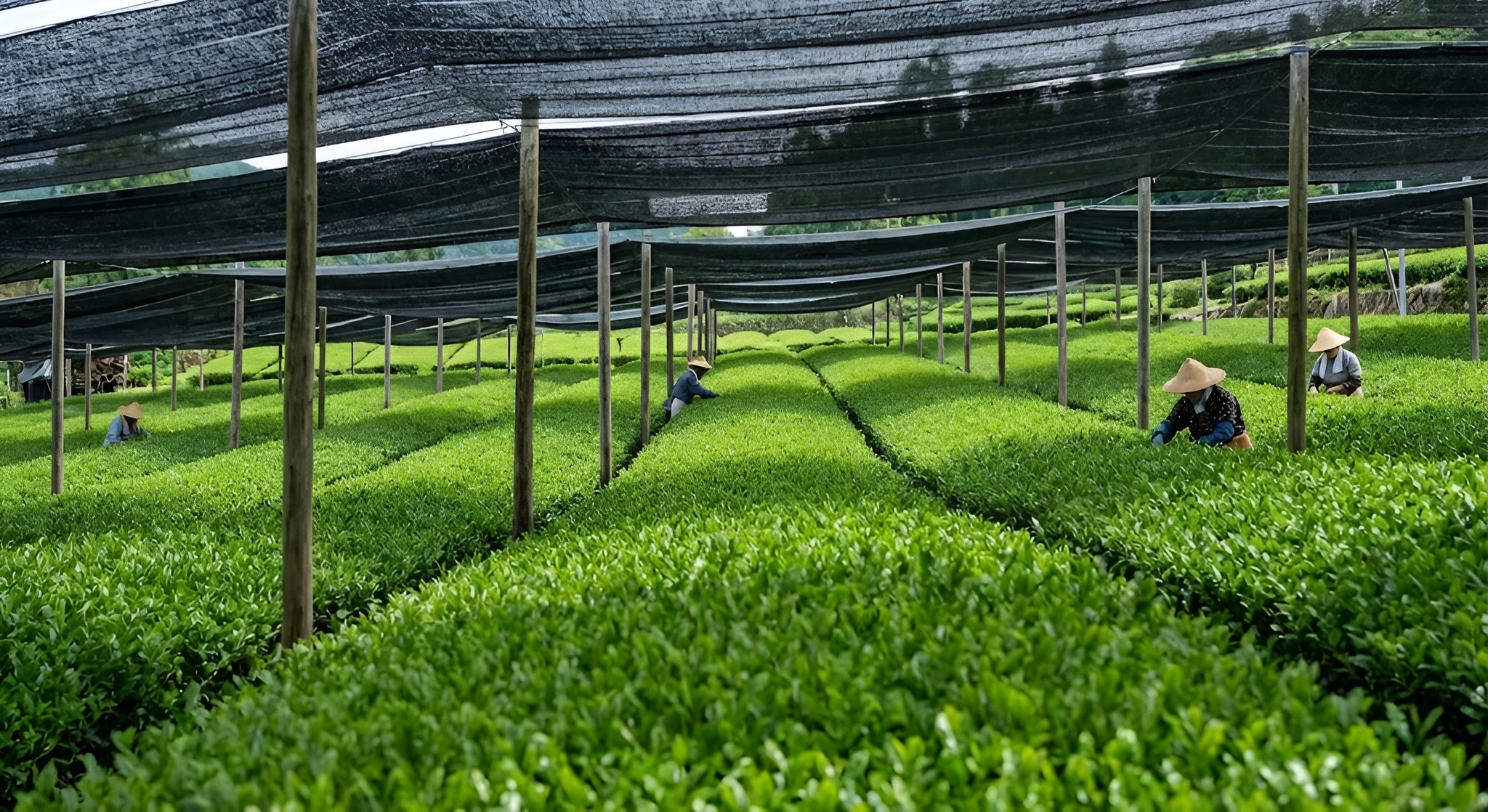
1. History: The "Hope" of Uji
In the post-war era (1950s), the Japanese government pushed to standardize tea production with high-yield cultivars like Yabukita. While Shizuoka farmers adopted Yabukita en masse, the farmers of Uji (the birthplace of Matcha) faced a problem. Yabukita made excellent Sencha, but it lacked the depth and "Ooika" (covered aroma) required for top-tier Gyokuro.
The Kyoto Tea Research Station began selecting local "Zairai" (native seed-grown) bushes that had historically produced the best shaded tea. They looked for plants with deep green leaves that responded well to the traditional "Hon-zu" (straw covering) shading method.
They selected a local bush from a field in Uji and named it Gokou (Gokoh), which translates roughly to "Halo" or "Hope." It was registered as Cultivar #33 in 1953. To this day, it remains a Kyoto specialty, rarely found in other prefectures like Kagoshima or Saitama.
2. Botany: Built for Darkness
Physically, the Gokou plant is distinct.
Budding Time: It is a "Late Budding" (Okute) cultivar, sprouting 2-4 days after Yabukita. This is crucial for Uji farmers because it spreads out the harvest workload. They pick the Yabukita first, then the Samidori, and finally the Gokou.
Leaf Structure: The leaves are slightly smaller and more oval than Yabukita, but they turn an intensely dark, glossy green when shaded. This high chlorophyll density is a survival mechanism—the plant is trying to capture every photon of light in the darkness. This chlorophyll is what gives high-grade Matcha its electric neon color.
3. The Chemistry of "Ooika" (Covered Aroma)
What makes Gokou smell like berries and cream? It comes down to a radical shift in metabolism caused by shading.
When a tea plant is shaded, it stops photosynthesis. It stops converting sweet amino acids into bitter catechins. But more importantly, it starts producing Fatty Acids and specific volatile compounds.
The Flavor Compounds:
- Dimethyl Sulfide (DMS): This compound smells like the ocean (Nori/Seaweed). It increases significantly under shade and is a hallmark of Gyokuro.
- Ionones & Lactones: These compounds provide the "Creamy" and "Milky" notes. Gokou is genetically predisposed to produce high levels of these lactones, similar to the Jin Xuan cultivar, but more subtle.
- Coumarin: A compound that smells like dried straw, vanilla, and cherry blossoms (Sakura). This gives Gokou its distinctive "Berry" finish.
Expert Tip: The "Hiire" (Firing) Factor
The creamy aroma of Gokou is not fully present in the raw leaf (Aracha). It is unlocked during the final processing step called Hiire (Firing/Roasting). The master blender heats the leaves to trigger a mild Maillard reaction between the abundant amino acids (L-Theanine) and the leaf sugars. This turns the raw "seaweed" smell into a rich, savory "baked cream" aroma.
4. The Art of Gogumi (Blending)
In Uji, drinking "Single Cultivar" Matcha is a relatively modern trend. Traditionally, tea masters practice Gogumi (Blending) to create a perfect harmony. Gokou is the "Base Note" or "Body" of these blends.
The Classic Uji Blend:
1. Samidori (Top Note): Adds bright green color, velvety texture, and elegant floral aroma.
2. Gokou (Base Note): Adds the creamy "milk" flavor, heavy body, and aftertaste.
3. Yabukita (Structure): Adds a touch of refreshing bitterness to prevent the tea from being cloying.
By mixing these, the tea master creates a Matcha that is better than the sum of its parts. However, seeing "100% Gokou" on a label is a sign that the producer is confident in the singular, intense character of their harvest.
5. Gokou vs. The World
How does it stack up against other shade cultivars?
| Cultivar | Flavor Profile | Texture | Color |
|---|---|---|---|
| Gokou | Cream, Berry, Earthy | Heavy, Oily | Deep Green |
| Samidori | Elegant, Verdant, Clean | Velvety | Bright Green |
| Okumidori | Neutral, Savory, Round | Smooth | Dark Green |
| Yabukita | Grassy, Sharp | Crisp | Yellow-Green |
6. Brewing: Low and Slow
Because Gokou is packed with Amino Acids and Fatty Acids, you must treat it gently. Heat is the enemy.
Matcha: Use water at 75°C - 80°C. If you use boiling water, you will "cook" the delicate fatty acids, making the tea taste flat or fishy. Whisk vigorously to emulsify the oils into a thick foam.
Gyokuro: Use water at 50°C - 60°C. This extreme low temperature extracts the savory Theanine and the creamy aromatics without pulling out any bitterness (Catechins). The result is a thick, broth-like liquor that feels more like soup than tea. The "Berry" note of Gokou is most prominent in the second steep of Gyokuro, when the water is slightly hotter (65°C).
Experience the Cream
We have sourced Single Cultivar Gokou Matcha and Gyokuro from award-winning farms in Uji. This is the ultimate test for your palate: can you taste the strawberry milk?
Shop Gokou Matcha
Comments