The Prerequisite: Cold Brew Only
Before you choose a carbonation method, you must have the right base. As explained in our Science of Cream Down guide, hot-brewed tea that is chilled will turn cloudy and muddy. This particulate matter acts as "nucleation sites" for the CO2. If you try to carbonate cloudy tea, it will foam uncontrollably (like dropping Mentos in Coke). You must use a Cold Brew base for clarity and stability.
Method 1: The Drinkmate Hack (Easy & Fast)
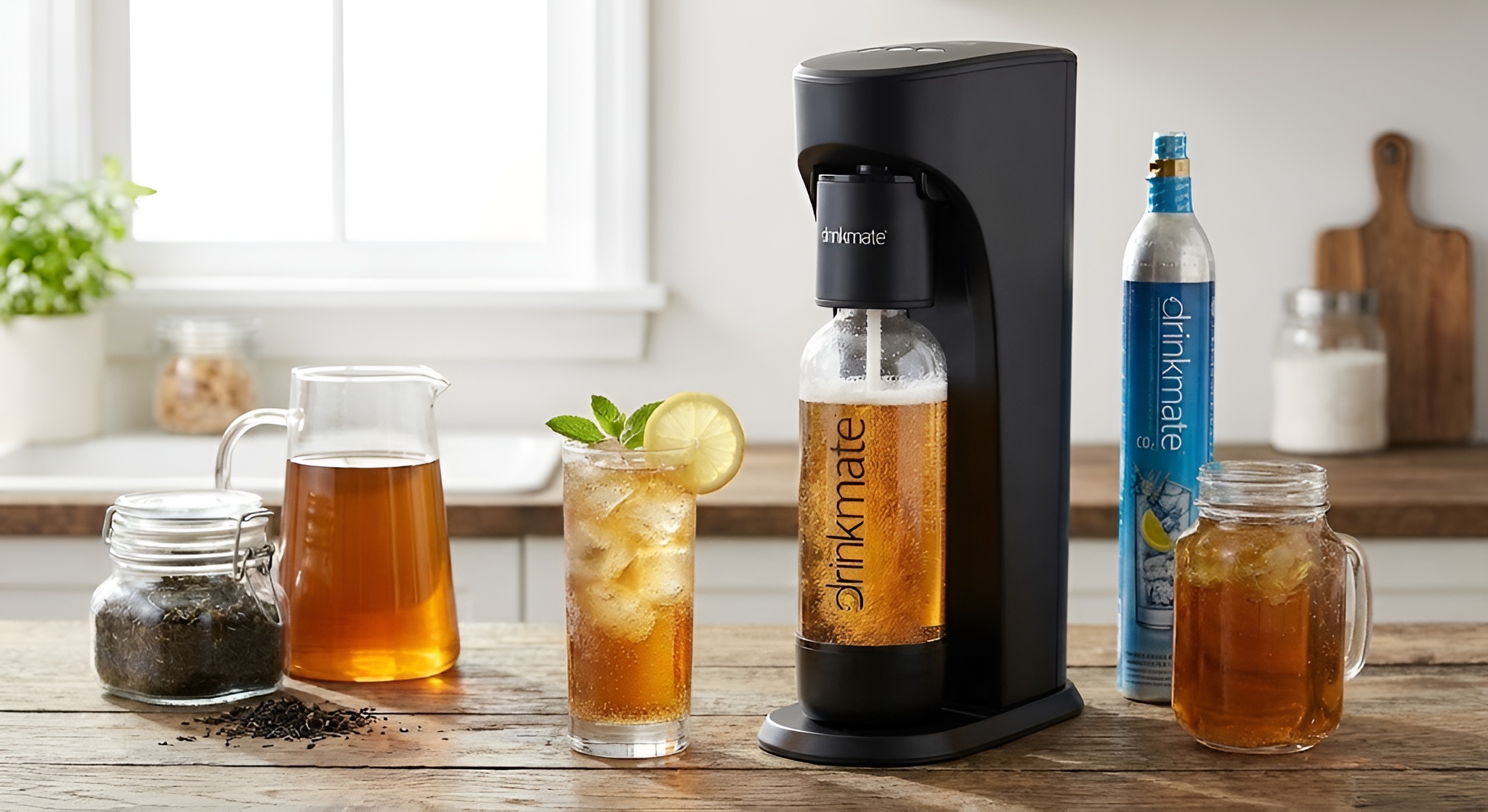
Most people own a SodaStream. Do not put tea in a SodaStream. The warranty explicitly states "Water Only" for a reason. The machine injects gas rapidly and releases pressure instantly. With water, this is fine. With tea (which contains foaming proteins), the liquid will shoot up the nozzle, clog the machine, and spray your ceiling.
The Solution: The Drinkmate. This device has a patented "Fizz Infuser" cap that allows you to depressurize the bottle slowly over 30 seconds. This lets the foam settle before you open the bottle.
The Protocol:
1. Fill the Drinkmate bottle with cold-brewed tea (sweetened if desired).
2. Chill in the freezer for 20 minutes until slushy (colder = better bubbles).
3. Attach to machine and inject short bursts of CO2 until the relief valve hisses.
4. Shake the bottle! (This integrates the gas).
5. Flip the slow-release tab and wait 60 seconds for the pressure to equalize.
6. Pour gently.
Read our full review of the Drinkmate vs. Aarke here.
Method 2: Force Carbonation (The Pro Way)
This is how commercial brands like Saicho make their product. It involves a stainless steel keg (Cornelius Keg), a CO2 tank, and a regulator. It allows you to dial in the exact "Volumes of CO2" you want.
The Equipment List
- Corny Keg (5L or 19L): A stainless steel pressure vessel.
- CO2 Tank & Regulator: To supply gas at constant pressure.
- Liquid & Gas Disconnects: To connect hoses.
The PSI Chart
Sparkling Tea needs to be highly carbonated to balance the tannins. While beer is served at 2.2 volumes of CO2, tea needs to be closer to 3.5 or 4.0 volumes (Champagne levels).
| Beverage Style | Target Volumes | PSI (at 4°C) | Notes |
|---|---|---|---|
| Beer / Ale | 2.0 - 2.4 | 10 - 12 PSI | Too low for tea (feels flat). |
| Sparkling Water | 3.0 - 3.5 | 20 - 25 PSI | Good for casual drinking. |
| Sparkling Tea | 3.5 - 4.0 | 30 - 35 PSI | The Sweet Spot. Sharp bite. |
| Champagne | 6.0+ | Not recommended | Dangerous for standard kegs. |
Expert Tip: The "Roll" Technique
To carbonate a keg quickly (in 15 minutes instead of 3 days), chill the keg to 4°C, crank the pressure to 30 PSI, lay the keg on the floor, and rock it back and forth with your foot while connected to the gas. This increases the surface area of the liquid, forcing the CO2 into solution rapidly. Caution: Let it settle for an hour before serving to avoid a foam volcano.
Method 3: Bottle Conditioning (The Natural Way)
This is the traditional "Méthode Champenoise." You don't use a machine; you use biology. You add a small amount of sugar and yeast to the tea, bottle it, and let the yeast eat the sugar to produce CO2 naturally inside the sealed bottle.
The Risk: Bottle Bombs. Unlike machines where you control the pressure, yeast is unpredictable. If you add too much sugar or leave it too long, the pressure can exceed the glass strength, causing the bottle to explode. You must use pressure-rated swing-top bottles (like Grolsch bottles) or PET plastic bottles to be safe.
The Recipe
- Base: 1 Litre Cold Brew Tea.
- Yeast: 1/8 tsp Champagne Yeast (EC-1118 is the gold standard for clean flavor). Do not use bread yeast (it tastes bready).
- Priming Sugar: 6g - 8g of white sugar per litre. This is specific. 4g of sugar produces 1 volume of CO2. To get 3 volumes (sparkling tea level), you need residual sugar plus the priming sugar.
Method: Dissolve sugar in the tea. Add yeast. Bottle immediately. Store at room temperature for 24-48 hours. Test one bottle (or use a plastic tester bottle—when it's rock hard, they are ready). Refrigerate immediately to stop fermentation.
Expert Tip: Why EC-1118?
We recommend Lalvin EC-1118 yeast because it is a "killer" strain with a neutral flavor profile. It outcompetes wild bacteria, settles firmly at the bottom of the bottle (flocculation), and doesn't add funky flavors like ale yeast. It produces a clean, crisp sparkle ideal for tea.
Which Method is Right for You?
- The Beginner: Buy a Drinkmate. It's safe, fast, and costs about £80.
- The Hobbyist: Try Bottle Conditioning. It costs pennies (yeast + sugar) but requires patience and safety precautions.
- The Pro: Build a Keg system. It costs £200+ but gives you tap-ready sparkling tea on demand.
Need the Gear?
Don't risk your kitchen ceiling. Check out our review of the safest home carbonators designed specifically for non-water beverages.
Review: Best Tea Carbonators
Comments