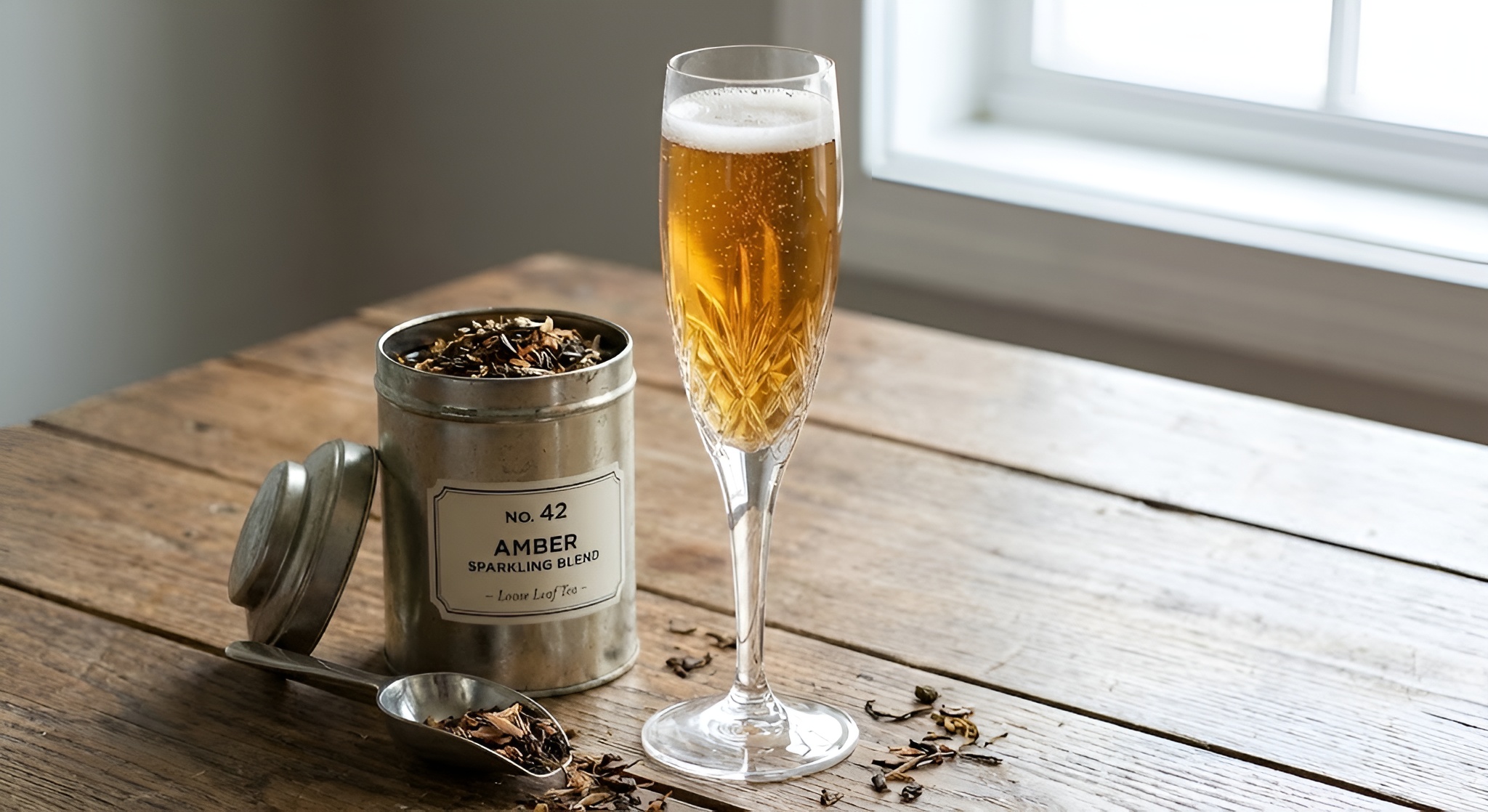
1. The Chemistry of Carbonation: It's Not Just Fizz
Why does sparkling water taste acidic compared to still water? The answer is Carbonic Acid (H_2CO_3). When CO_2 dissolves in water, a small portion of it reacts to form this weak acid. This drops the pH of the tea, usually from a neutral 7 down to a tart 3.5 or 4. This added acidity adds a "sour" or "bright" note that wasn't there before.
For tea, this is magic. Many teas (like Darjeeling or Jasmine) have floral top notes that can feel "flabby" or flat when cold. The acidity from carbonation sharpens these flavors, acting like a squirt of lemon juice. It creates structure.
Henry's Law: This law states that the amount of gas that dissolves in a liquid is proportional to the partial pressure of that gas. Crucially, solubility increases as temperature decreases. This means Cold Tea holds more bubbles than Warm Tea. If you try to carbonate warm tea, the CO_2 will not bond; it will just foam out of the bottle. To get the tiny, persistent bubbles of Champagne, your tea must be chilled to near freezing (4°C) before carbonating. This maximizes gas saturation.
Furthermore, the physical sensation of bubbles (chemesthesis) stimulates the trigeminal nerve, creating a sensation of freshness that cleanses the palate. This is why Sparkling Tea is superior to still iced tea for dining; it resets your tongue between bites of food.
Expert Tip #1: The Tannin Trap
Carbonation accentuates tannins (astringency). If you carbonate a very strong, bitter black tea, the bubbles will make it taste incredibly harsh and metallic. This is why Sparkling Tea requires a lighter, more delicate brewing hand than hot tea. You want Cold Brew to minimize bitterness before you add bubbles.
2. The "Wine" Alternative: Understanding Tannins
Alcohol-free wine often fails because it lacks "body." When you remove alcohol, you remove the texture. Tea solves this with Polyphenols (Tannins). These are the same compounds found in grape skins that make red wine feel dry and grippy in your mouth.
A sparkling fermented tea (like Jun or Kombucha) or a force-carbonated Darjeeling provides that essential dryness. This dryness is what allows the drink to stand up to a steak or a cheese board. It physically scrapes fat and protein off your tongue.
| Beverage | Acid Source | Body/Texture | Best Pairing |
|---|---|---|---|
| Champagne | Tartaric/Malic Acid | Alcohol + Yeast | Oysters, Fried Chicken |
| Sparkling White Tea | Carbonic Acid | Delicate Tannins | Seafood, Sushi, Brie |
| Sparkling Black Tea | Carbonic Acid | Heavy Tannins | Roast Pork, Charcuterie |
| Kombucha | Acetic Acid (Vinegar) | Yeast + Sugar | Salads, Pickles |
3. The Method: Why You Can't Just SodaStream Hot Tea
Many home enthusiasts try to make sparkling tea and fail. They brew a hot cup of Earl Grey, chill it, put it in a SodaStream, and it explodes or turns muddy brown. This happens for two reasons: Physical Physics and Chemical Bonding.
The Cloudiness Problem (Cream Down)
When hot tea cools rapidly, the caffeine bonds with the polyphenols to form a solid precipitate. This is called "Tea Cream." It creates a muddy, opaque liquid that tastes chalky. A cloudy sparkling tea looks unappealing in a glass. To get the crystal-clear liquid you see in luxury brands like Saicho, you must use Cold Brewing. Cold water extracts flavor without pulling out the heavy molecular complexes that cause cloudiness.
For more on the chemistry of this precipitate, read our deep dive: The Science of Cream Down.
The Explosion Problem
Standard SodaStreams are designed for water only. Tea contains proteins and saponins that lower the surface tension of the liquid. When you inject gas, these compounds trap the bubbles, creating massive amounts of foam. If you try to release the bottle from the machine, the pressure drops rapidly, and the foam expands instantly, spraying your kitchen ceiling.
You need specific equipment like the Drinkmate which has a slow-release valve designed for sugary or foamy liquids. This allows you to depressurize the bottle slowly over 30 seconds, letting the foam settle safely.
Expert Tip #2: Serving Temperature & Glassware
Treat Sparkling Tea exactly like White Wine. Serve it chilled at 8-10°C in a champagne flute or a white wine glass. The narrow opening of the flute preserves the carbonation, while the stem keeps your warm hands away from the liquid. Do not serve over ice. Melting ice dilutes the delicate carbonation and ruins the acidity balance, making the tea taste watery and flat.
4. The Market: From Niche to Luxury
Sparkling Tea is no longer a backyard experiment. Brands like Saicho and Copenhagen Sparkling Tea Company are sold in Michelin-star restaurants. They use single-estate teas (like Hojicha or Jasmine Silver Needle) and carbonate them to specific pressures.
Some are 0.0% ABV (Saicho), while others (Copenhagen Blue) contain a small amount of grape must or alcohol (5%). It is crucial to check the label if you are avoiding alcohol entirely. We review the top brands available in the UK in our Luxury Brand Guide.
Want to Make it at Home?
Stop buying £15 bottles. With the right gear, you can make 1L of single-origin sparkling tea for about 50p. We tested the best carbonators that won't explode.
Review: Best Tea Carbonators
Comments