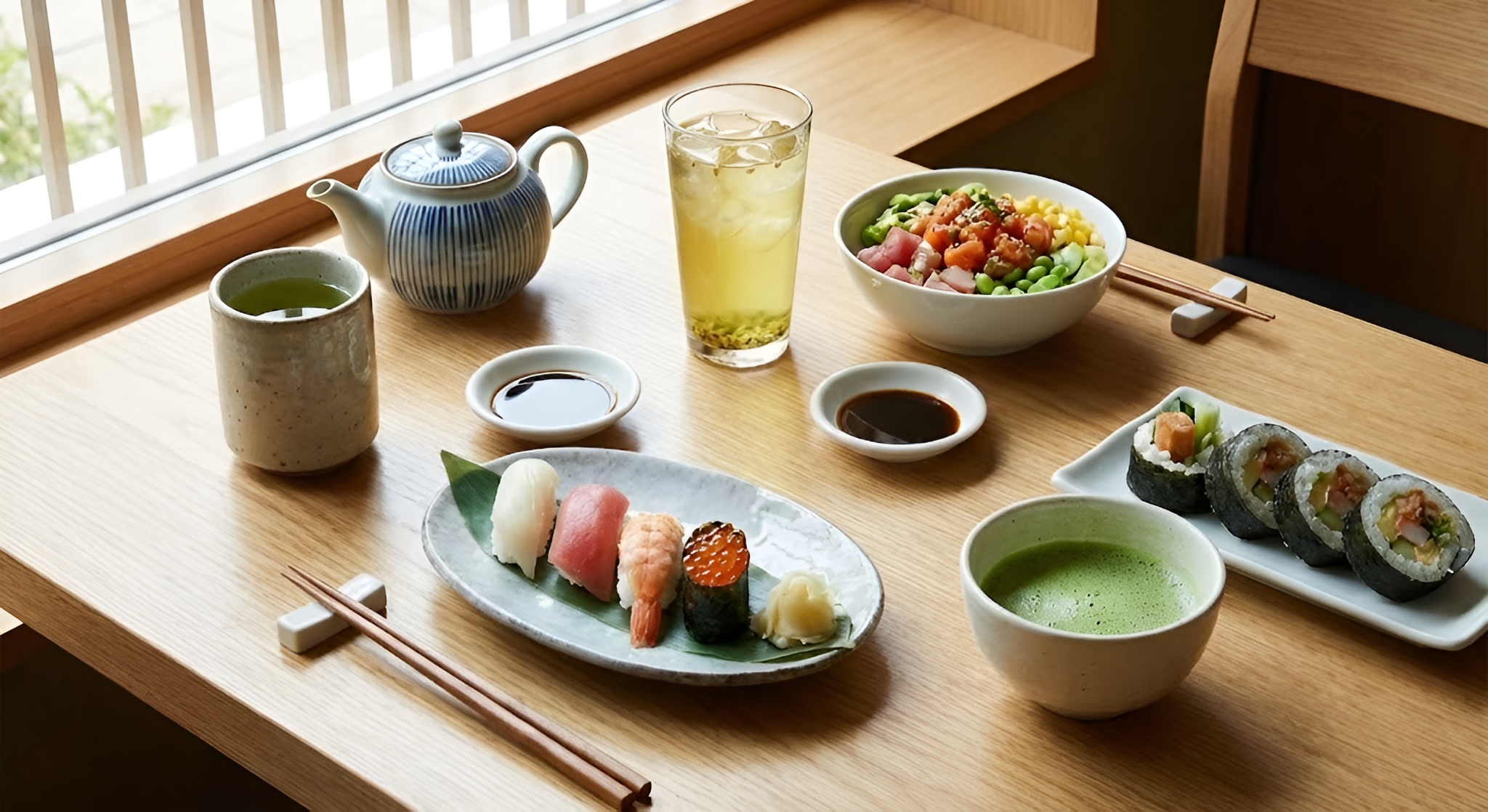
1. What is Agari? (It's Not Just "Green Tea")
If you order "Green Tea" in a Western cafe, you usually get a tea bag of low-grade Sencha. In a traditional sushi shop, you are served Agari. The word Agari originally came from the red light districts of Edo (old Tokyo), where it meant "the end" or "finish." In sushi culture, it signified the tea served at the end of the meal, though today it is served throughout.
The Ingredient: Konacha
Authentic Agari is made from Konacha (Powder Tea). This is not the same as Matcha. Konacha consists of the tea dust, buds (Mecha), and small broken leaf fragments left over after processing high-grade Gyokuro and Sencha. Because it is made of small particles, it infuses instantly, creating a thick, cloudy, dark green liquor.
The Brewing Method
Unlike premium Sencha, which is brewed delicately at 70°C, Agari is brewed with boiling water (100°C). This is intentional. The high heat extracts the maximum amount of Catechins (bitterness) and caffeine. The goal is not to savor the delicate umami of the tea itself, but to create a beverage strong enough to stand up to the potent flavors of soy sauce, vinegar, and raw fish.
Sushi Slang
Sushi chefs have their own secret language (Fucho) that dates back to the Edo period. Rice is Shari (Buddha's bones), Soy Sauce is Murasaki (Purple), Ginger is Gari (from the sound of crunching), and Tea is Agari. Using these terms shows you respect the history of the craft.
2. The Science of Fat: Why Hot is Better
Sushi—especially premium cuts like Otoro (Fatty Tuna), Hamachi (Yellowtail), or Salmon—is rich in Omega-3 fatty acids and oils. While delicious, these fats present a sensory problem.
The Melting Point Problem: Fish fat has a melting point. When you eat it cold, it can sometimes leave a greasy, waxy film on the roof of your mouth and tongue. This film acts as a barrier, blocking your taste buds. If you eat a piece of fatty tuna followed by a delicate piece of flounder, the lingering fat from the tuna will mute the flavor of the flounder.
The Solvent Effect: Water and oil don't mix, especially cold water. If you drink ice water or cold beer with sushi, you solidify the fish fats in your mouth. Hot tea, served at 70°C+, melts these fats instantly. It turns the grease into a liquid emulsion that can be easily washed away, leaving your tongue clean ("reset") and ready for the next delicate flavor. This is the same principle as washing greasy dishes with hot water versus cold.
3. Tannins vs. Fishy Aftertaste
The second challenge with seafood is the lingering "fishy" aftertaste (caused by amines like trimethylamine). You want to taste the ocean freshness while eating, but you don't want it to stick around for 20 minutes after the bite.
Green tea is packed with Catechins (a type of polyphenol or tannin). Tannins are astringent—they bind to proteins and organic compounds on your tongue. Read our Polyphenols Glossary here.
When you sip strong Agari, the catechins chemically bind to the residual fish oils and amines, stripping them from your oral receptors. This "scrubbing" action is what we call Palate Cleansing. It is the liquid equivalent of eating pickled ginger (Gari). Without it, the flavors of your meal would become muddied and indistinct.
4. The Hygiene Factor: Catechins Kill Bacteria
Historically, eating raw fish was a risky business before modern refrigeration. Sushi was originally fermented (Narezushi) to preserve it. When fresh Nigiri sushi became popular in the Edo period (1800s), food safety was a major concern.
The Antimicrobial Power: Scientific studies have shown that the EGCG (Epigallocatechin gallate) in green tea has powerful antibacterial properties. It can inhibit the growth of bacteria like Vibrio parahaemolyticus and Staphylococcus aureus, which are often associated with raw seafood. While drinking tea is not a substitute for proper food hygiene, historically, the strong green tea served at sushi stalls acted as a mild safety measure, much like the antimicrobial properties of Wasabi and Vinegar.
Want to Brew Authentic Green Tea?
We reviewed the best Japanese Green Teas on the market, from everyday Sencha to premium Gyokuro. Find the right leaf for your meal.
Review: Best Japanese Green Teas5. Pairing Guide: Which Tea with Which Fish?
While Agari (Konacha) is the standard "house tea" served at most establishments, if you are hosting a sushi night at home, you can elevate the experience by pairing specific teas with specific types of fish. This is the "Sommelier" approach to sushi.
For Shiromi (White Fish: Tai, Hirame, Scallop)
Pairing: Premium Sencha or Kukicha (Stem Tea).
Why: White fish is delicate, sweet, and subtle. A super-bitter Konacha might overpower it. High-quality Sencha has grassy, marine notes (from the steaming process) that mirror the seaweed in the sushi roll and the subtle sweetness of the scallop or snapper.
For Akami (Red Fish: Tuna, Bonito)
Pairing: Hojicha (Roasted Green Tea).
Why: Red fish often has a metallic, iron-rich flavor profile (bloody notes). Hojicha is roasted over charcoal, removing the vegetal "grassiness" and replacing it with savory, toasted notes. This roastiness grounds the metallic taste of the tuna, creating a harmonious balance.
For Hikarimono (Shiny/Oily Fish: Mackerel, Sardine) & Fatty Tuna (Toro)
Pairing: Genmaicha (Brown Rice Tea) or Strong Konacha.
Why: You need strength to cut the intense fat and fishiness. Genmaicha has a toasted, nutty flavor (from roasted rice) that stands up well to the richness of eel (Unagi) sauce or salmon fat. The toasted rice acts almost like a cracker, providing a savory counterpoint to the oil.
For Shellfish (Shrimp, Crab, Urchin)
Pairing: Matcha (Thin Preparation / Usucha).
Why: Shellfish like Uni (Sea Urchin) or Amaebi (Sweet Shrimp) are incredibly sweet and creamy. Matcha has a natural vegetative sweetness and a creamy mouthfeel that complements the texture of the shellfish without clashing with the iodine notes of the ocean.
Why Cups are Giant (Yunomi)
Sushi tea cups (Yunomi) are traditionally much larger and thicker than regular tea cups. They often have no handle. The thickness keeps the tea hot for a long time (essential for melting fat), and the large size means the chef doesn't have to refill it constantly while their hands are busy making sushi. The heat of the cup also forces you to sip slowly, pacing the meal.
How to Replicate "Sushi Shop Tea" at Home
If you buy expensive Sencha, it won't taste like the sushi shop. You need Konacha or a mix of Matcha and Sencha to get that thick, green, bitter kick.
The Konacha Hack
If you can't find specific Konacha, you can hack it using standard Japanese green tea bags (like Ito En or Kirkland). These usually contain broken leaves (fannings) which mimic Konacha.
- Use 2 Bags: Place two tea bags in one cup.
- Boiling Water: Pour 100°C water directly over them. Do not let it cool.
- Quick Brew: Steep for only 30-45 seconds. You want intense color and a bite of astringency, but not stewed bitterness.
- Squeeze: Squeeze the bags to release the potent tea dust into the cup.
For a cold alternative that still pairs well, check out our guide on Mugicha (Barley Tea)—it's a popular summer pairing that is savory and cleansing without the caffeine.
Comments