1. The Molecular Science of Pairing
Why do we drink wine with food? It isn't just tradition; it's chemistry. Eating fatty, salty, or protein-rich food coats the tongue, dulling the taste buds. To taste the next bite fully, you need to "reset" the palate. Sparkling Tea uses three mechanisms to do this.
Mechanism A: Physical Scrubbing (Carbonation)
The bubbles in sparkling tea are not just texture; they are mechanical cleaners. When a bubble bursts on your tongue, it creates a microscopic shockwave that physically lifts fat molecules (lipids) from the taste receptors. This is why Champagne goes so well with creamy oysters or fried chicken. A highly carbonated Sparkling Tea performs the exact same function.
Mechanism B: Chemical Cutting (Acidity)
Fat is alkaline. Acid neutralizes it. The carbonic acid formed by carbonation drops the pH of the tea, creating a tartness that cuts through rich sauces (like Hollandaise) or soft cheeses (like Brie), preventing them from feeling cloying.
Mechanism C: Protein Binding (Tannins)
This is the "Red Wine Effect." Saliva contains proteins that make it slippery. When you eat red meat, the fat adds more slipperiness, which can feel greasy. Tannins (found in grape skins and Black Tea leaves) are astringent molecules that chemically bind to these proteins, precipitating them out. This creates a sensation of "dryness" or friction (grip) on the tongue, which counteracts the slickness of the fat. A strong Sparkling Assam can stand up to a Ribeye steak just as well as a Cabernet.
Expert Tip #1: The Glassware Matters
Always serve Sparkling Tea in a white wine glass or tulip flute. Unlike a mug, the curved shape concentrates the delicate volatile aromas (terpenes) of the tea towards your nose. Since 80% of flavor is smell, this glassware is essential for the tea to compete with strong food odors.
2. Pairing White & Green Sparkling Teas
The Profile: Delicate, floral, grassy, high acidity, low tannins.
The Wine Equivalent: Prosecco, Sauvignon Blanc, Pinot Grigio.
Best Matches:
- Seafood: Oysters, Scallops, White Fish. The high acidity mimics the squeeze of lemon you would put on fish. A Sparkling Jasmine tea with scallops is a classic sommelier pairing.
- Soft Cheese: Goat Cheese (Chèvre), Mozzarella, Burrata. The bubbles scrub away the creamy coating, while the grassy notes of Green Tea compliment the herbal notes often found in goat cheese.
- Salads: Vinaigrettes can destroy wine (vinegar vs. wine acid). However, the vegetal notes of Green Tea stand up perfectly to sharp dressings.
| Tea Variety | Flavor Bridge | Perfect Cheese Match |
|---|---|---|
| Jasmine Silver Needle | Floral / Perfume | Brie de Meaux (Mushroomy rind compliments floral interior) |
| Japanese Sencha | Vegetal / Umami / Seaweed | Fresh Goats Cheese (Herbaceous connection) |
| Sparkling Hojicha | Nutty / Toasted | Comté (Nutty, crystallized cheese) |
3. Pairing Black & Oolong Sparkling Teas
The Profile: Robust, woody, malty, stone fruit, high tannins.
The Wine Equivalent: Pinot Noir, Sherry, light Cabernet.
Best Matches:
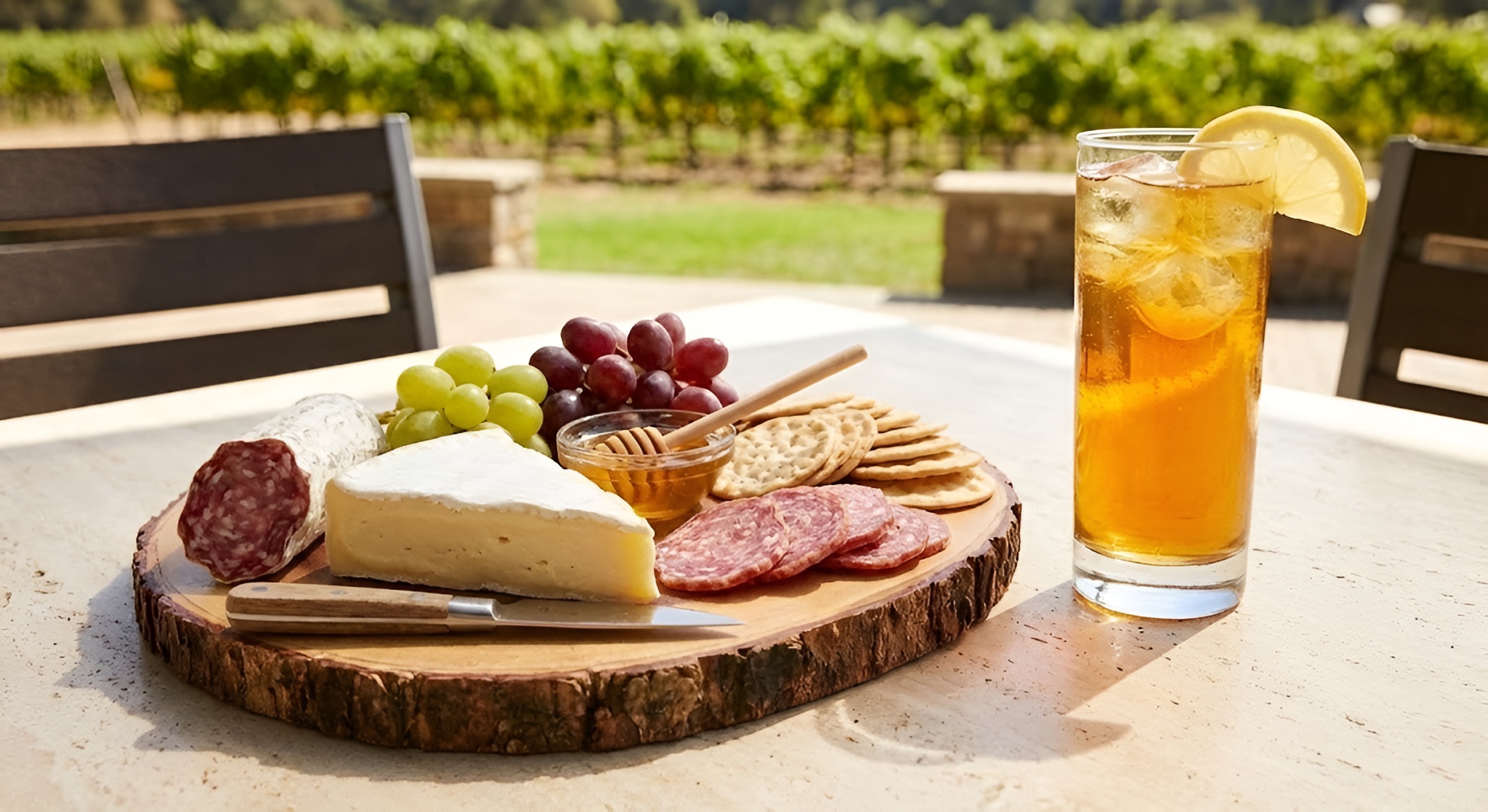
- Charcuterie: Salami, Prosciutto, Chorizo. The saltiness of cured meats is balanced by the fruity sweetness of a Sparkling Oolong (like Oriental Beauty). The fat needs the grip of the tannins.
- Hard Cheese: Aged Cheddar, Parmesan, Manchego. These savory (umami) cheeses need a tea with "body" to not disappear. A Sparkling Darjeeling (Second Flush) has the Muscatel (grape) notes to match them.
- Red Meat: Roast Pork, Duck, Lamb. You need a Sparkling Assam or Keemun. The maltiness pairs with the Maillard reaction (seared crust) of the meat.
4. Building the Alcohol-Free Board
If you are hosting a dinner party, here is the blueprint for a "Tea & Cheese" flight that will impress even the staunchest wine drinker.
Course 1: The Starter
Tea: Sparkling White Peony (White Tea).
Food: Mild Brie and Green Grapes. The tea acts as a palate cleanser.
Course 2: The Main
Tea: Sparkling Darjeeling (Second Flush).
Food: Prosciutto, Salami, and Aged Gouda. The tannins in the Darjeeling bind with the cured fat.
Course 3: The Dessert
Tea: Sparkling Hibiscus or Rooibos (Herbal).
Food: Dark Chocolate or Cheesecake. The berry notes of Hibiscus mimic a dessert wine or Port.
5. The DIY vs. Buying Debate
You can make these teas yourself using our Home Carbonation Guide, which allows you to control the sugar level perfectly for pairing. However, for a dinner party, presenting a beautiful corked bottle adds to the theatre.
We have reviewed the best luxury brands available in the UK, including the sommelier-favorite Saicho and the complex blends from Copenhagen Sparkling Tea Company.
See Top Rated Sparkling Tea Brands
Comments