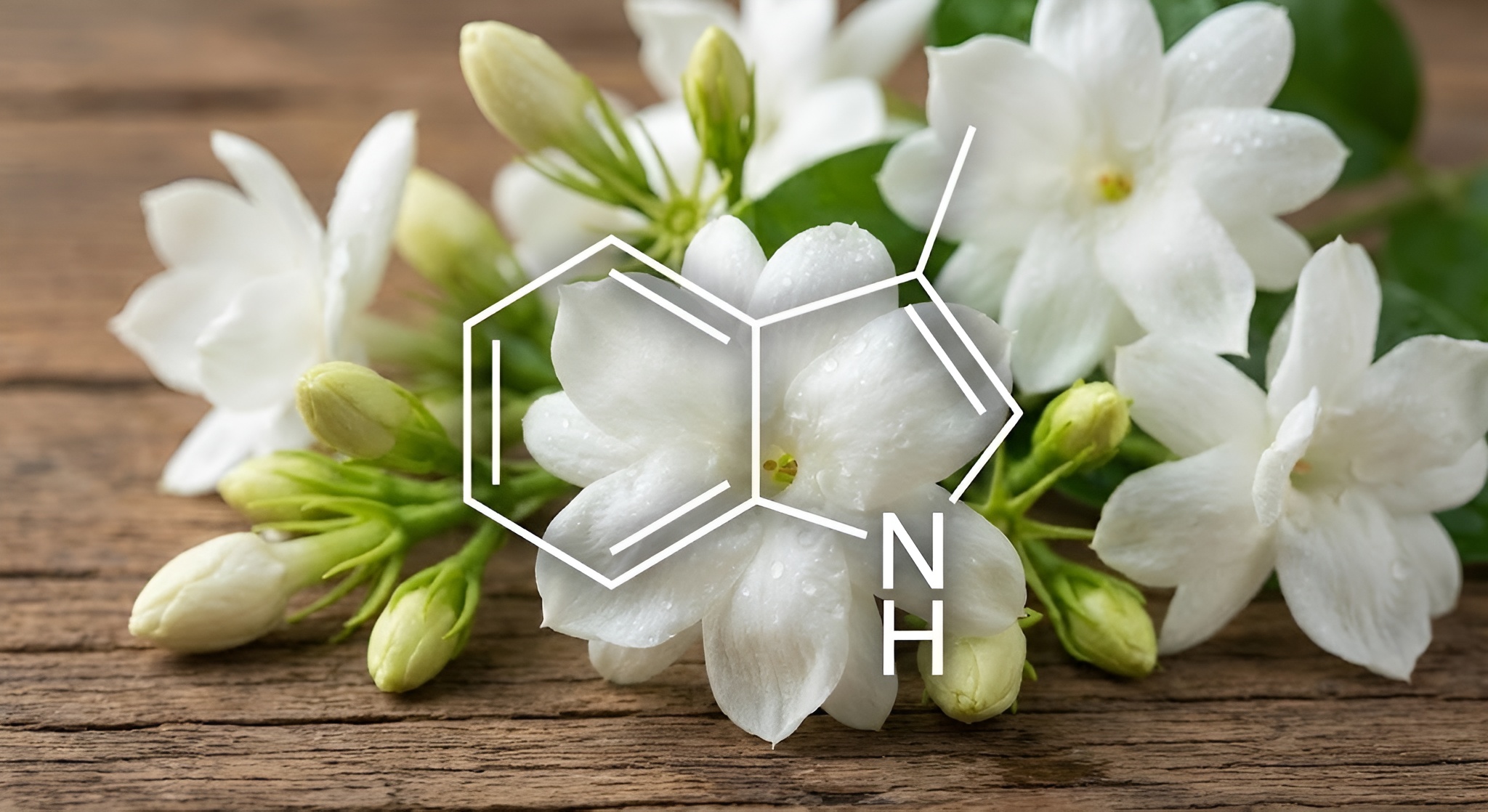
1. The Chemistry: From Coal Tar to Chanel No. 5
Indole is a nitrogen-containing compound found widely in nature. It is produced by bacteria as a degradation product of the amino acid Tryptophan.
Historically, Indole was isolated from coal tar. Today, it is synthesized for use in fine perfumery. Chanel No. 5, for example, relies on a precise dose of Indole to give the floral bouquet a "dirty," animalic depth that makes it smell natural rather than synthetic.
In Tea: The tea plant produces Indole naturally during growth, but levels spike during the Withering (Wei Diao) and Shaking (Yao Qing) stages of Oolong production. The mechanical stress causes the breakdown of precursors, releasing Indole into the leaf structure.
2. The Art of Scenting: Why Jasmine Tea Smells Like Indole
Most people associate Indole with Jasmine Tea. However, the tea plant itself (Camellia sinensis) doesn't produce enough Indole to smell like a jasmine bomb. That aroma comes from the flower.
Enfleurage: High-quality Jasmine Tea is made by layering tea leaves with fresh jasmine buds at night. Jasmine flowers release their volatile oils (rich in Indole) only when they open at dusk. The dry tea leaf acts as a sponge, absorbing the Indole gas. This process is repeated up to 7 times for premium Jasmine Pearls.
The Fake Stuff: Cheap Jasmine tea is sprayed with "Nature Identical" synthetic Indole. It lacks the complexity of the real flower and often tips over into the "chemical/mothball" smell.
Expert Tip: The "Rinse" is Mandatory
Indole can sometimes concentrate on the surface of the leaf during storage, leading to a stale or funky odor. Always perform a 5-second Flash Rinse with boiling water for Jasmine Tea or Tie Guan Yin. This washes away the surface Indole, revealing the sweet floral notes underneath.
3. The Cultivar Connection: Tie Guan Yin
While Jasmine Tea gets its Indole from flowers, one tea cultivar is famous for producing it naturally: Tie Guan Yin (Iron Goddess of Mercy).
The "Autumn Harvest" of Tie Guan Yin is particularly prized for its high aroma. The cooler weather causes the plant to grow slower, concentrating nitrogenous compounds like Indole.
When processed correctly (heavy shaking, light oxidation), this Indole creates the signature "Orchid Rhythm" (Lan Hua Xiang). However, unlike the pure floral note of Linalool, Indole adds a distinct "metallic" or "cold mineral" finish to the tea, which is the hallmark of a true Iron Goddess.
| Compound | Source | Smell (Low Dose) | Smell (High Dose) |
|---|---|---|---|
| Indole | Jasmine, Tie Guan Yin | White Flower, Gardenia | Mothballs, Swamp, Fecal |
| Linalool | High Mountain Oolong | Orchid, Citrus | Perfume, Soap |
| Geraniol | Darjeeling | Rose, Grape | Rotten Fruit |
4. Brewing Physics: Managing the Swamp
Because Indole has a high boiling point (254°C), it is very stable in the cup. It doesn't flash off like Linalool. This means it lingers on the breath.
Water Temperature: For Jasmine Green Tea, use 80-85°C. Boiling water can extract too much astringency (Catechins), which clashes with the Indole, creating a bitter, soapy taste.
For Oolong: For Tie Guan Yin, use 95-100°C. The heat is needed to unroll the ball-rolled leaves, but the "Rinse" is crucial to balance the initial aroma hit.
Experience Authentic Indole
Don't settle for sprayed flavoring. We have reviewed the best Hand-Rolled Jasmine Pearls and Authentic Anxi Tie Guan Yin that use natural scenting methods.
Best Jasmine Teas
Comments