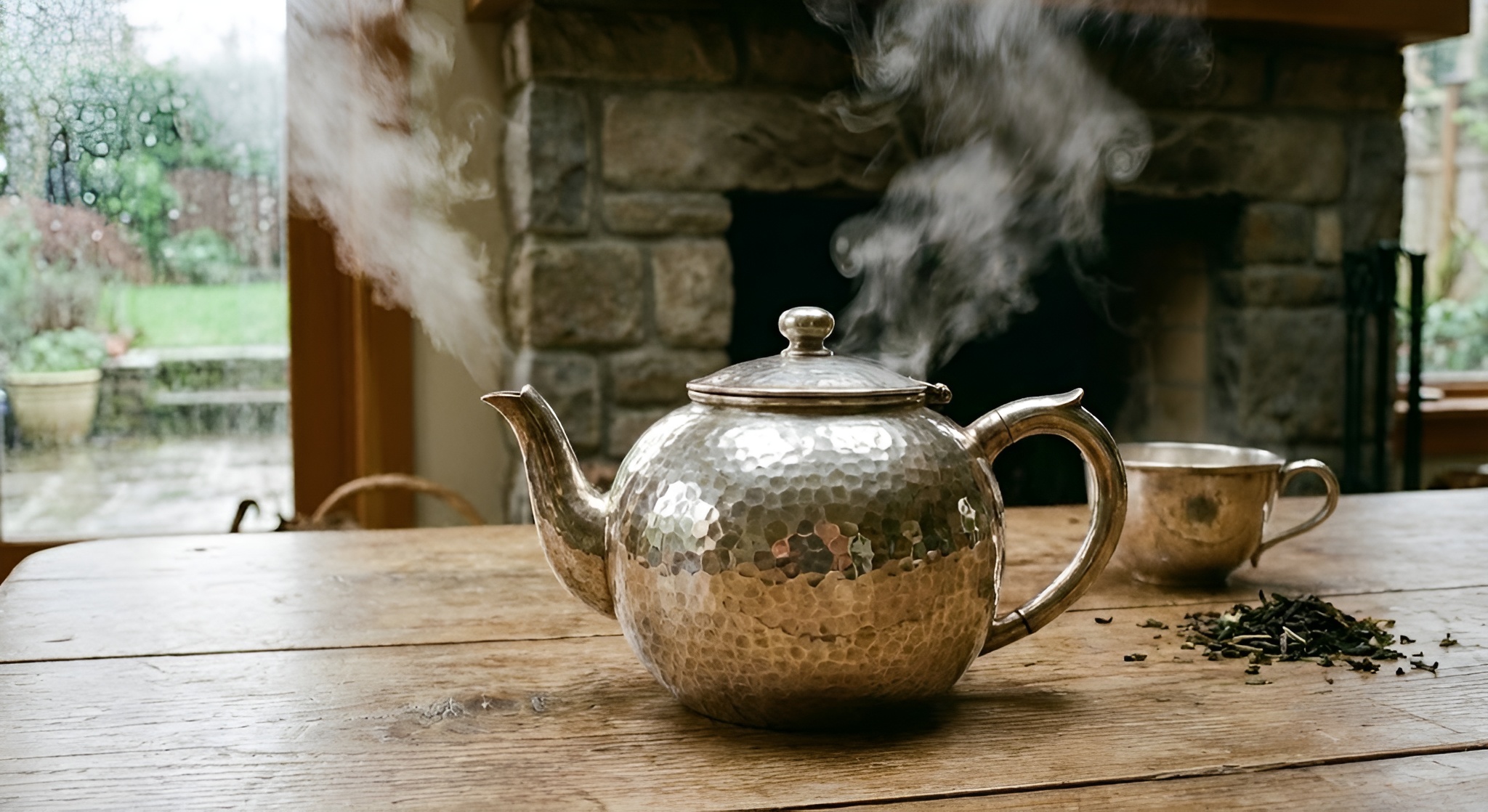
1. The thermodynamics: The Ferrari of Heat
To understand why a silver teapot brews differently than Yixing-teapot.html" class="internal-link">Yixing Clay, we must look at Thermal Conductivity (measured in Watts per meter-Kelvin, W/mK).
- Porcelain: ~1.5 W/mK
- Iron (Cast Iron): ~80 W/mK
- Silver: ~429 W/mK
Silver is nearly 300 times more conductive than porcelain. What does this mean for your tea?
1. Instant Heat Transfer: When you pour hot water into a silver pot, the pot itself heats up instantly, pulling energy from the water.
2. Rapid Cooling: Conversely, heat escapes through the silver walls into the air incredibly fast.
3. The "Flash Brew": This creates a unique brewing curve. The tea leaves are hit with a high thermal shock that extracts volatile aromatics (top notes) instantly, but the temperature drops quickly enough to prevent the extraction of deep, heavy bitterness. The result is a liquor that is bright, crisp, and incredibly fragrant.
Safety Warning: The Handle
Because silver conducts heat so efficiently, the handle of a silver teapot will reach 90°C in seconds. High-end silver teapots always have handles wrapped in leather, cord, or made of hollow wood/jade to prevent burns. If you buy a solid silver pot with a bare handle, you will need a towel to pour it.
2. The Chemistry: The Oligodynamic Effect
Silver is biocidal. The Oligodynamic Effect refers to the ability of heavy metal ions to kill bacteria, algae, and fungi. Historically, settlers put silver coins in water barrels to keep them fresh. In tea, we aren't worried about bacteria (the boiling water kills that), but we are interested in the Taste of Purity.
The "Fresh" Taste: Tap water often contains trace sulfides and chlorine, which give it a subtle "rotten egg" or chemical smell. Silver ions ($Ag^+$) react avidly with sulfur compounds to form Silver Sulfide ($Ag_2S$), which precipitates out of the liquid (this is also why silver tarnishes—it's pulling sulfur out of the air).
By stripping these sulfur compounds from the water, silver removes the "off" notes that cloud the flavor of delicate teas. The water tastes functionally "cleaner" and "sweeter."
Mouthfeel Modification: Users consistently report that water boiled or brewed in silver feels "silky" or "oily." This is likely due to the ionization affecting the surface tension of the water, allowing it to coat the tongue more evenly. Read our Deep Dive on Water Chemistry here.
3. Purity: Sterling (.925) vs. Fine (.999)
Not all silver is created equal.
Sterling Silver (.925): This is 92.5% silver and 7.5% copper (usually). It is harder and cheaper. However, copper oxidizes into verdigris (green rust) which is toxic and bitter. Antique British teapots are often Sterling. They are beautiful but not ideal for direct brewing due to the copper alloy.
Fine Silver (.999): This is 99.9% pure silver. It is softer and more expensive. This is the standard for high-end Chinese (Yunnan) and Japanese teaware. Because there is no copper, there is no metallic taste—only the sweet, purifying effect of the silver itself.
4. What to Brew (And What Not To)
Because silver enhances high notes and suppresses heavy body, it is a specialist tool.
Best Matches (The High Notes):
- High Mountain Oolong (Gaoshan): The floral, creamy notes of Taiwanese Oolong sing in silver. The pot amplifies the orchid aroma.
- White Tea (Silver Needle): Silver on Silver. The delicate, hay-like sweetness of Silver Needle is perfectly preserved by the rapid heat dissipation.
- Young Sheng Pu-erh: The aggressive, crisp energy of young raw Pu-erh is sharpened by silver.
Worst Matches (The Bass Notes):
- Shou (Ripe) Pu-erh: This tea relies on thick, earthy body and heat retention. Silver makes it taste thin and watery. Stick to Yixing Clay for this.
- Black Tea (Assam): While okay, silver can emphasize the astringency of black tea. Porcelain is usually safer.
Expert Tip: Tarnish is Flavor
Some collectors religiously polish their silver pots to a mirror shine. Others let the inside turn black. A tarnished interior (silver sulfide layer) is actually harmless and some believe it adds a "mineral" complexity to the water. However, for the purest taste, rinse the pot with baking soda and boiling water occasionally to keep the ions active.
Start with a Kettle
A solid silver teapot costs $500 - $2,000. A cheaper way to get the benefit is to use a Silver Kettle (or a kettle with a silver lining) to boil the water, then pour it into a ceramic pot. This purifies the water volume without the heat-loss issues of brewing in silver.
See Luxury Teaware Guide
Comments