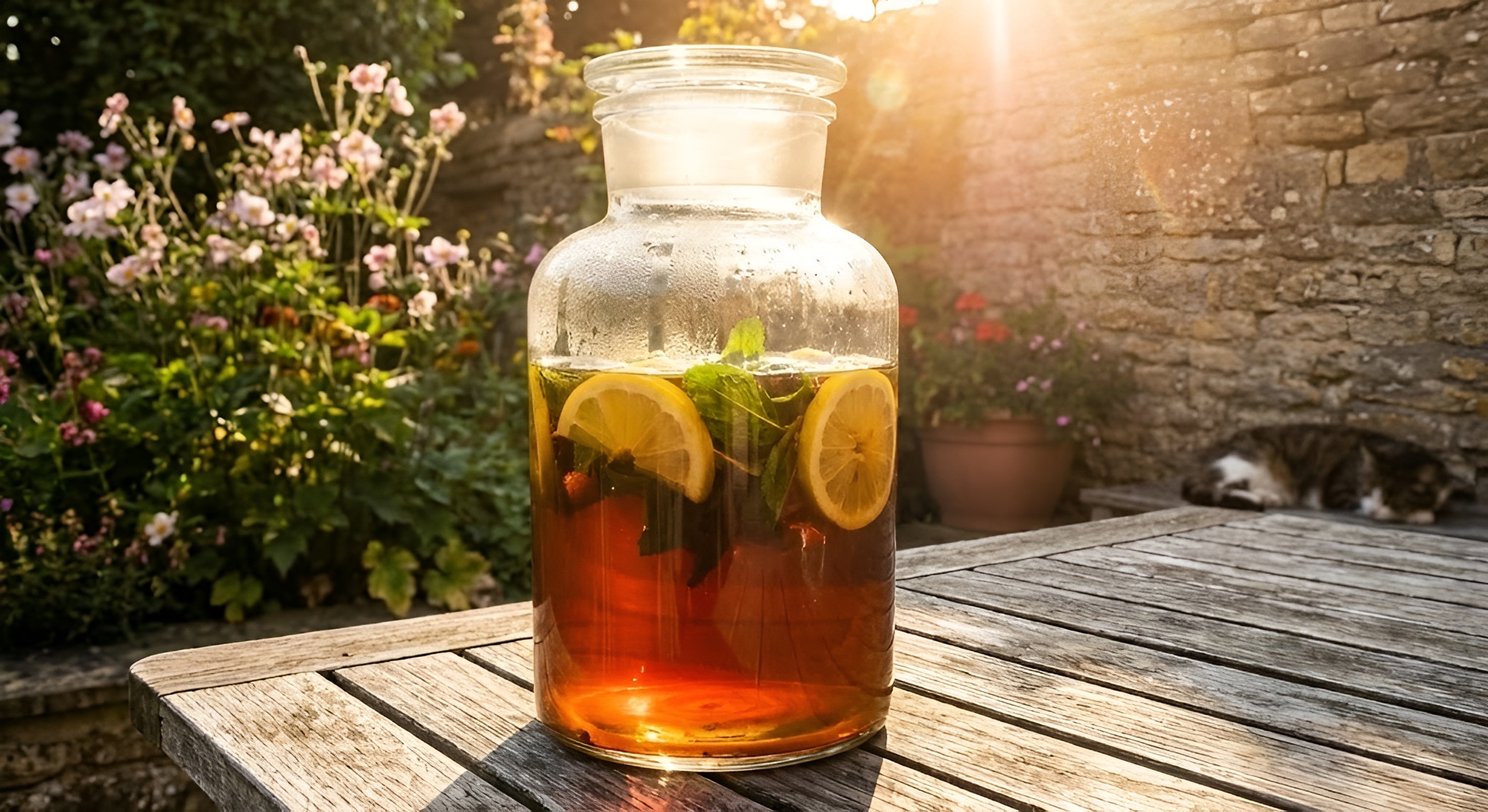
1. The Science: Why the Sun isn't Hot Enough
To kill bacteria, water generally needs to reach a boiling point (212°F / 100°C) or be held at a high temperature for a sustained period. When you brew traditional hot tea, the boiling water sterilizes the leaves and the jar instantly.
Sun Tea, however, relies on solar energy to slowly heat the water. Even on a scorching hot day, the water inside the jar typically only reaches 102°F to 130°F (38°C - 54°C).
The "Danger Zone"
In food safety science, the range between 40°F and 140°F is known as the "Danger Zone." In this range, bacteria don't die; they multiply exponentially. By leaving tea in the sun for 3-4 hours, you are essentially creating a warm nutrient bath for microbes.
The "Ropey" Texture Warning
If your Sun Tea ever looks syrupy, thick, or has thin white threads floating in it, pour it down the sink immediately. This "ropey" texture is a colony of Alcaligenes viscolactis bacteria. It won't necessarily kill you, but it will likely cause significant stomach upset.
2. The Better Way: Fridge Cold Brew
If you want smooth, slow-brewed tea without the bacterial risk, the solution is simple: put it in the fridge. This is known as Cold Brew.
Cold brewing happens at roughly 35°F-40°F (below the Danger Zone). It takes longer (6-12 hours), but the results are scientifically superior:
- Safety: Bacteria cannot grow at fridge temperatures.
- Taste: Cold water extracts flavors differently. It pulls out the sweet amino acids (L-theanine) but leaves behind the bitter tannins and catechins (which require heat to dissolve).
- Clarity: Cold brew tea is crystal clear, whereas Sun Tea can often become cloudy due to bacterial activity or mineral reaction.
| Feature | Sun Tea | Fridge Cold Brew |
|---|---|---|
| Temperature | ~130°F (Danger Zone) | ~40°F (Safe Zone) |
| Bacterial Risk | High | None |
| Flavor Profile | Often bitter / "cooked" | Smooth, sweet, clean |
| Brew Time | 3-4 Hours | 8-12 Hours |
Never Add Sugar Before Brewing
If you absolutely insist on making Sun Tea, never add sugar or fruit to the jar while it sits in the sun. Sugar is fuel for bacteria. By adding it to warm water, you are essentially running a science experiment. Add sweeteners only after the tea is brewed and refrigerated.
3. If You MUST Make Sun Tea (Harm Reduction)
We do not recommend it, but if tradition compels you, follow these strict hygiene rules to minimize the risk:
- Sanitize the Jar: Scrub your glass container with hot soapy water or run it through the dishwasher before use.
- Use Distilled Water: Tap water contains minerals that can promote cloudiness.
- Limit the Time: Never leave Sun Tea out for more than 4 hours.
- Discard leftovers: Drink the batch immediately or refrigerate it. Do not keep Sun Tea for more than 24 hours.
- Check the Dispenser: If you use a jar with a plastic spigot, disassemble and bleach it. Spigots are the #1 hiding spot for tea mold and biofilm.
The Best Teas for Cold Brewing
Since you are switching to the fridge method, try Japanese Sencha or a First Flush Darjeeling. The cold water preserves their delicate top notes that hot water often destroys. Read our full guide on The Best Cold Brew Teas & Gear →
References
- Centers for Disease Control and Prevention (CDC). (1996). Bacterial Contamination of Tea. Memo on Food Safety.
- Snider, S. (1995). Use Caution When Making Sun Tea. University of Delaware Cooperative Extension.
- National Center for Home Food Preservation. (2014). Iced Tea Safety. University of Georgia.
Comments