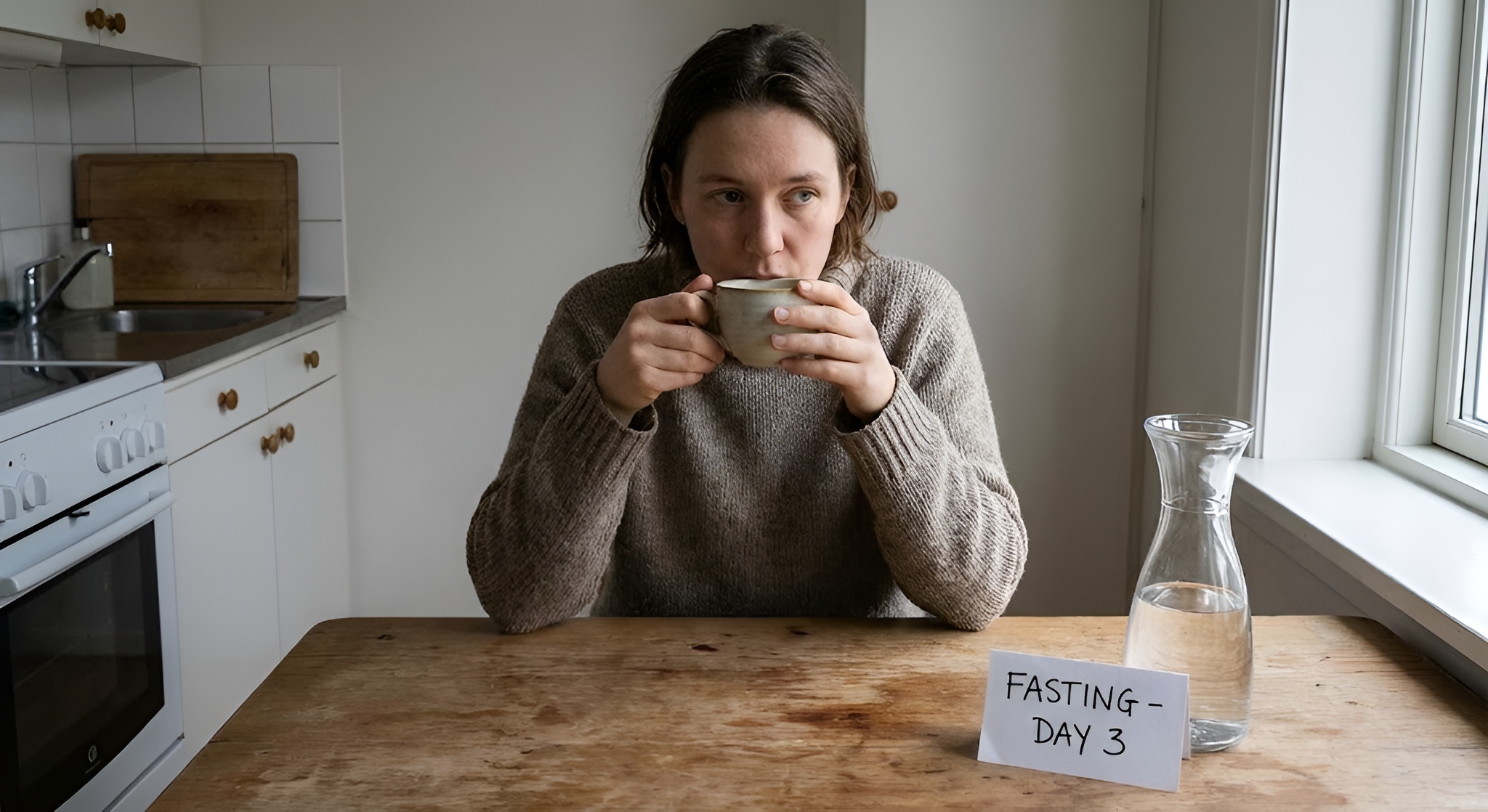
1. Defining the Goal: Insulin vs. Autophagy
To know if tea "breaks" a fast, you must define why you are fasting. There are two main biological states fasters aim for:
- Metabolic Fast (Weight Loss): The goal is to keep Insulin low so the body burns fat (Ketosis). As long as you stay under ~50 calories, you generally stay in this state.
- Cellular Fast (Autophagy): The goal is "Self-Eating," where cells repair themselves. This is extremely sensitive. Any protein (mTOR activation) or significant insulin spike stops it instantly.
The Verdict: Plain tea is safe for BOTH types of fasting. The polyphenols in tea (catechins) may even upregulate autophagy, making the fast more effective.
2. The "Green Light" Teas (Safe to Drink)
Any true tea made from the Camellia sinensis plant, when brewed with water and removed (strained), is fasting-safe. This includes:
- Green Tea & Sencha: Contains EGCG, which helps mobilize fatty acids.
- Black Tea (Assam/Darjeeling): Safe if drunk black.
- Oolong: Safe.
- Pu-erh (Ripe & Raw): The ultimate fasting tea.
Why Pu-erh is the "Fasting Hack"
Ripe Pu-erh is known to suppress Ghrelin (the hunger hormone) and stabilize blood sugar. If you are struggling with hunger pangs at hour 16, a cup of thick, dark Pu-erh can kill the appetite instantly. Learn more: The One-Hour Rule for Weight Loss →
3. The "Grey Area": Matcha and Herbal Teas
Here is where people accidentally break their fast.
Matcha (Caution Required)
Unlike brewed tea, when you drink Matcha, you are eating the entire leaf.
The Problem: 1 teaspoon of Matcha contains about 3-6 calories and trace amounts of protein and carbohydrates.
The Verdict:
- For Weight Loss (Dirty Fasting): Safe. 5 calories won't spike insulin enough to stop fat burning.
- For Autophagy (Clean Fasting): Technically breaks the fast. The amino acids (protein) may trigger the mTOR pathway, pausing cellular repair. If you are fasting for longevity, stick to brewed Sencha.
Fruit Teas & "Sweet" Herbals
Many "Fruit Tisanes" (like apple-cinnamon or berry blends) contain chunks of real dried fruit. Even if they say "Sugar Free," the fruit releases natural fructose into the water.
Verdict: Avoid fruit teas during the fasting window. Stick to bitter herbs like Peppermint or Chamomile.
Need a Safe Green Tea?
If you want the antioxidants without the calories of Matcha, switch to a high-quality loose leaf Sencha. It gives you the EGCG boost with 0 calories. See our top picks: The 6 Best Green Teas of 2025 →
4. The "Red Light": What Definitely Breaks a Fast
This is where 90% of people fail. You cannot add "just a splash" of anything.
| Additive | Breaks Fast? | Why? |
|---|---|---|
| Milk (Dairy/Oat) | YES | Even 1 tsp contains lactose (sugar) and protein. Spikes insulin immediately. |
| Sugar/Honey | YES | Pure glucose/fructose. Stops fat burning instantly. |
| Stevia/Sweeteners | MAYBE | The "Cephalic Phase Response." Tasting sweetness can trick the brain into releasing insulin, even without calories. Best to avoid. |
| Lemon Juice | NO | A small squeeze is negligible in calories and acidity can lower glycemic response. |
5. The "Dawn Phenomenon" and Morning Tea
Many fasters experience high blood sugar in the morning despite not eating (The Dawn Phenomenon). This is caused by a cortisol spike waking you up.
The Tea Fix: Drinking Green Tea or Oolong in the morning can help blunt this cortisol response and sensitize the body to insulin, helping to bring those fasting blood sugar numbers down faster.
Warning: Empty Stomach Nausea
Be careful drinking strong Green Tea on an empty stomach. The tannins can cause severe nausea (Tea Drunkenness). If this happens, switch to Hojicha or Ripe Pu-erh, which are gentler. Read more: Why Green Tea Makes You Sick →
6. Protocol: The Ideal Fasting Tea Schedule
To maximize results, align your tea with your circadian rhythm.
- Morning (Wake Up): Green Tea or Raw Pu-erh. The caffeine mobilizes fat, and the L-theanine prevents the "jittery" feeling on an empty stomach.
- Mid-Day (Hunger Pangs): Ripe Pu-erh or Black Tea. The heavy mouthfeel tricks the stomach into feeling full.
- Evening (Fasting Window): Peppermint or Rooibos. Caffeine-free options that won't disrupt sleep but keep you hydrated.
Comments