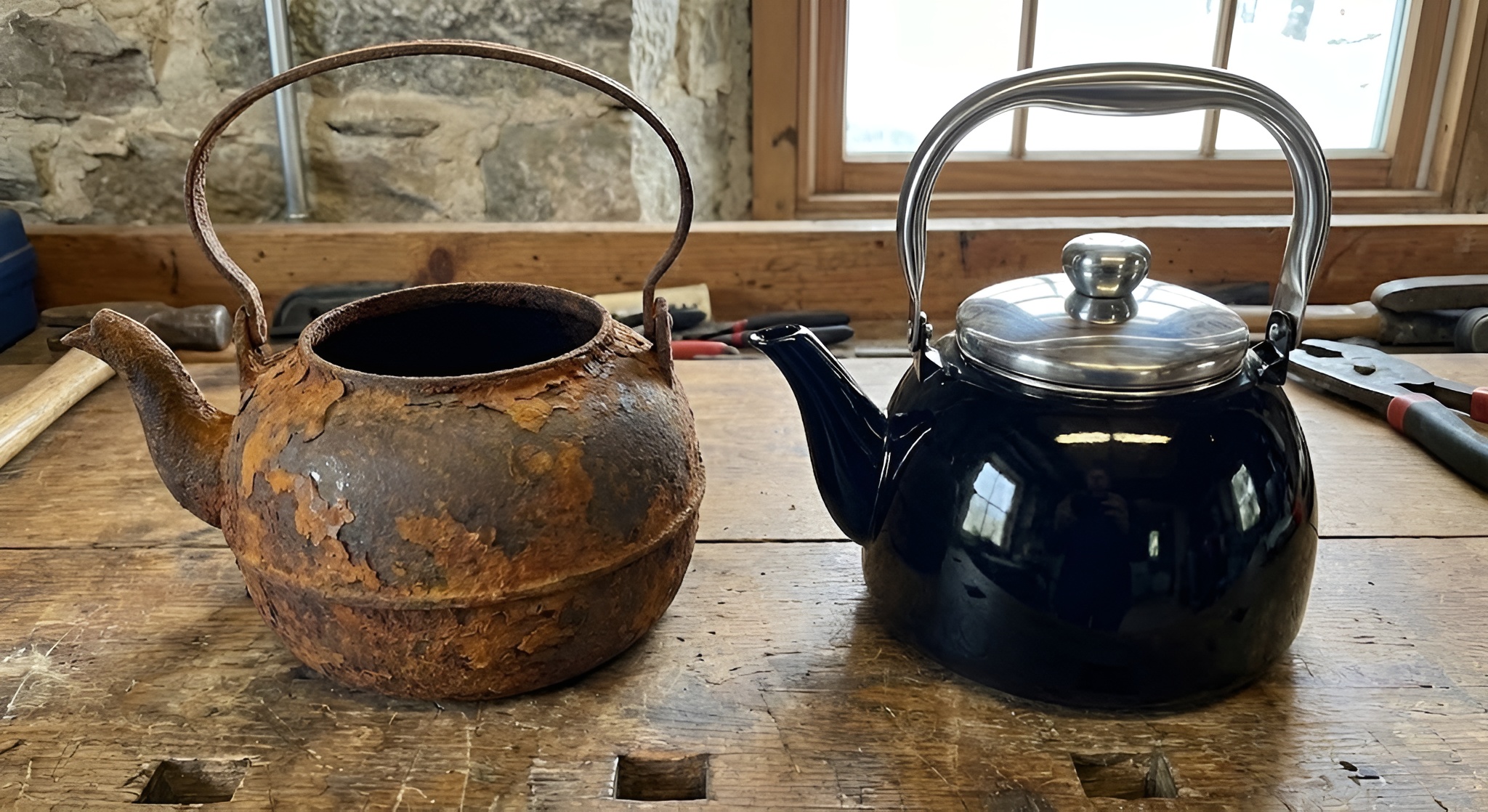
1. The Definitions: Pot vs. Kettle
In Japanese, the terminology is distinct, but in English, marketing has blurred the lines.
The Tetsubin (Iron Kettle)
A true Tetsubin is an unlined cast iron vessel designed to be placed directly on a charcoal fire (or gas/induction stove). Its sole purpose is to boil water. The interior is raw iron, usually activated by a high-temperature firing process (Kamayaki) that creates a protective oxide layer.
Price: £150 - £2,000+ (Handmade Nanbu Tekki).
Use: Boiling water for tea or coffee.
The Tetsu Kyusu (Iron Teapot)
This is what you see in gift shops. It is a cast iron shell lined with a layer of enamel (glass). It usually comes with a stainless steel strainer basket.
Why Enamel? Raw iron reacts with tea tannins (see below). To allow you to brew tea inside the pot, manufacturers seal the iron with glass.
The Trap: Because the iron is sealed, it does not interact with the water. It adds no iron to your diet. It does not sweeten the water. It is simply a very heavy, durable teapot that holds heat well.
Warning: Never put an enamel teapot on a stove. The expansion rate of iron is different from glass. The enamel will crack and shatter.
Expert Tip: The Rim Check
How to tell if your pot is enamel? Look at the rim where the lid sits. If the shiny black interior coating stops abruptly at the rim, revealing raw metal underneath, it is enamel. A true Tetsubin will have a uniform, dull, matte texture inside and out.
2. The Science: Ferrous Ions ($Fe^{2+}$)
Why do tea masters prize true Tetsubin? It's the water chemistry.
When water boils in raw iron, trace amounts of iron dissolve into the water. Crucially, this is Ferrous Iron ($Fe^{2+}$), which is bio-available and has a sweet taste profile.
1. Chlorine Removal: Ferrous ions react with residual chlorine in tap water, neutralizing the chemical smell.
2. Texture: The ions alter the ionic strength of the water, often making it feel "rounder" and thicker on the palate.
3. Health: Studies show that water boiled in iron cookware can increase dietary iron intake, which is beneficial for those with anemia (though it should not replace medication).
3. Why You Don't Brew Tea in Iron
So, if iron is good, why can't I brew tea in a Tetsubin?
Because of Tannins.
Tea leaves (especially Black and Green tea) are rich in polyphenols called tannins. When tannins meet iron ions, they react instantly to form Ferric Tannate.
The Visual: The tea turns a murky, dark purple or ink-black color.
The Taste: The reaction strips the tannins from the liquid, making the tea taste metallic, flat, and strange. While not toxic, it destroys the flavor profile of fine tea.
The Protocol: You boil the water in the Tetsubin (to get the ions), then pour that hot water into a ceramic teapot (Kyusu/Gaiwan) containing the leaves. The brief contact time prevents the ink reaction while preserving the sweet water texture.
| Vessel | Material | Function | Water Effect |
|---|---|---|---|
| Tetsubin | Raw Iron | Boiling Water | Adds Iron, Sweetens, Removes Chlorine |
| Tetsu Kyusu | Enameled Iron | Brewing Tea | Neutral (Like Glass), Holds Heat |
| Stainless Kettle | Steel | Boiling Water | Neutral, Fast |
4. Maintenance: The Fear of Rust
Owning a Tetsubin is like owning a cast iron skillet; it requires care.
The Rule: Never leave water in it. When you are done boiling, pour out all water immediately and remove the lid. The residual heat will evaporate the remaining moisture in seconds.
The "Kisame" Scale: Over time, white spots will appear inside. This is Calcium Carbonate (limescale). Do not scrub this off! In Japan, this scale is prized. It protects the iron from deep rust while still allowing ion exchange. A well-used Tetsubin will be completely white inside.
Red Rust: If you see bright red rust, don't panic. It is not toxic. Boil green tea leaves in the kettle for 20 minutes. The tannins will react with the rust (forming black ferric tannate), sealing it and stopping the corrosion.
Want the Real Thing?
Authentic Nanbu Tekki (Southern Ironware) is certified by the Japanese government. We reviewed the best sources for genuine unlined Tetsubin versus high-quality enamel pots for those who just want the aesthetic.
See Teaware Reviews
Comments