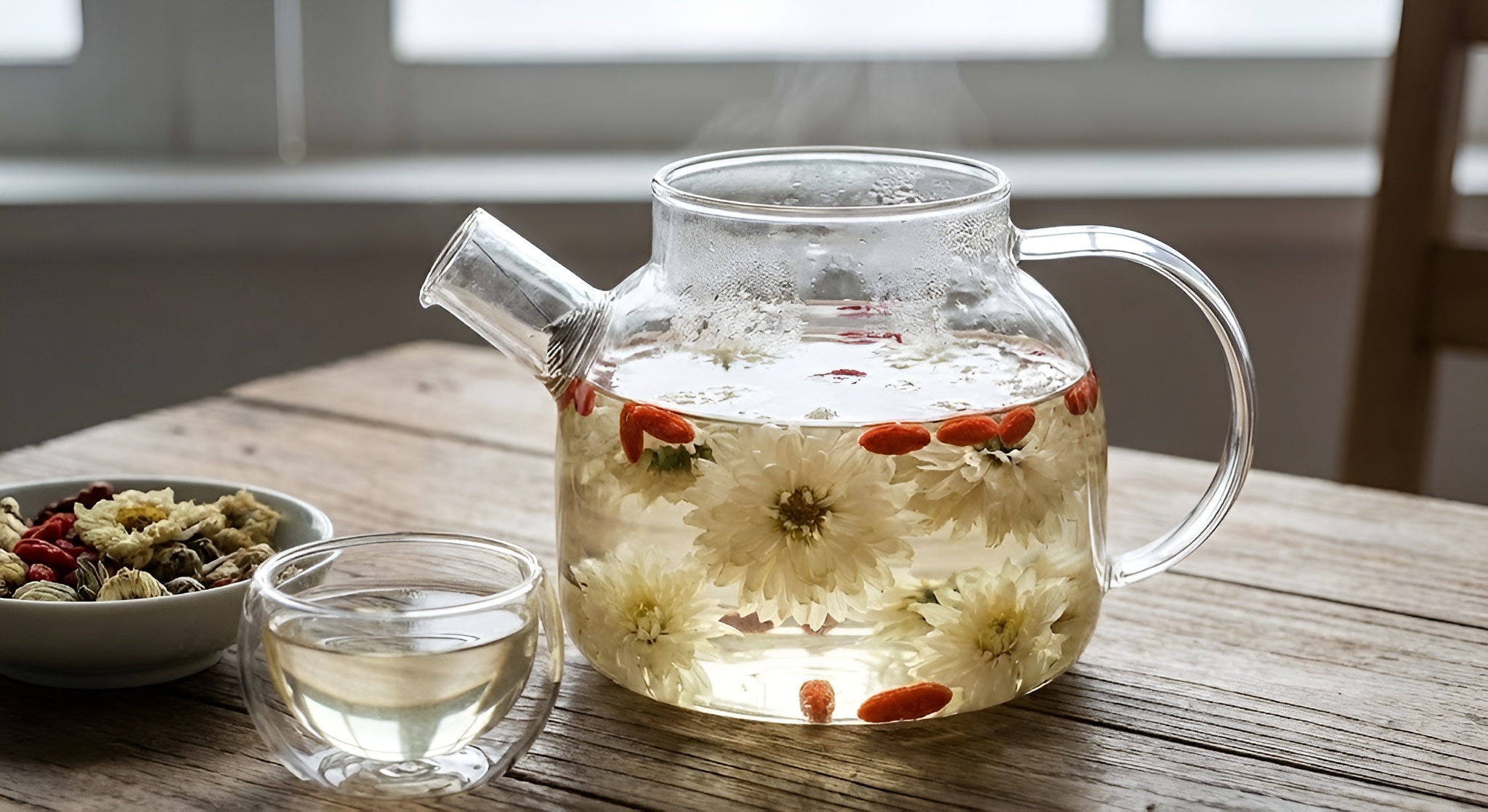
1. The "Scholar's Flower": A History
Chrysanthemum has held a revered spot in Chinese culture since the Song Dynasty (960–1279). It is known as one of the "Four Gentlemen" (四君子) of Chinese Art, alongside the Orchid (Spring), Bamboo (Summer), and Plum Blossom (Winter). Chrysanthemum represents Autumn.
It symbolizes endurance and the ability to withstand the coming cold. Because it blooms late in the year when other flowers wither, it became a symbol of longevity and the solitary scholar who maintains his virtue in difficult times. Scholars would drink chrysanthemum wine on the 9th day of the 9th lunar month to prolong life, a tradition that evolved into the daily tea drinking we see today.
2. The Science: Why It Works
While TCM speaks of "Liver Heat," modern pharmacology speaks of Inflammation. The two concepts map onto each other surprisingly well.
Recent studies have isolated the active compounds in *Chrysanthemum morifolium*:
- Apigenin & Luteolin: These are powerful flavonoids that have demonstrated anti-inflammatory effects. They help inhibit the enzymes that cause inflammation in the body.
- Cardiovascular Health: Research on hyperlipidemia rats suggests that chrysanthemum flavonoids can help reduce Total cholesterol (TC) and Triglycerides (TG), supporting heart health.
- Eye Health: The traditional use for "brightening eyes" is supported by the flower's high content of Vitamin A and Beta-carotene, essential nutrients for vision health.
Expert Tip: The "Tech Neck" Cure
TCM doctors specifically prescribe Chrysanthemum tea for what we now call "Computer Vision Syndrome"—dry, red, blurry eyes caused by screen strain. The cooling energy clears the heat from the eyes.
3. Know Your Variety: A Buyer's Guide
Not all chrysanthemums are the same. In China, there are four famous "Tribute" varieties. Knowing the difference ensures you buy the right tea for your needs.
| Variety Name | Origin | Flavor Profile | Best Used For |
|---|---|---|---|
| Hangbaiju (Hangzhou White) | Tongxiang, Zhejiang | Sweet, floral, mild | Daily drinking, eye strain, liver health. |
| Gongju (Tribute) | Huangshan Mountains | Crisp, clean, slight bitter note | Clearing internal heat, detoxifying. |
| Chuju (Chu) | Chuzhou, Anhui | Stronger medical potency | Headaches, dizziness, heat stroke. |
| Boju (Bo) | Bozhou, Anhui | Loose petals, light bitterness | Summer heat relief, cooling. |
4. Advanced Brewing: The "Eight Treasures" Tea (Babao Cha)
While you can brew the flowers alone, the ultimate TCM wellness drink is Babao Cha (Eight Treasures Tea). It was originally a palace recipe in the Tang Dynasty but is now a staple for health and longevity.
To make it, combine the following in a gaiwan or teapot:
- Base: Green Tea leaves (Jasmine or Longjing)
- Cooling: 4-5°Chrysanthemum flowers
- Nourishing: 1 tsp Goji Berries (Wolfberries)
- Blood Building: 2 Red Dates (Jujubes), sliced
- Energy: 2 slices of American Ginseng
- Calming: 1 dried Longan fruit
- Sweetness: Rock Sugar to taste
- Aromatics: A few dried Rose buds
Steep with boiling water for 3-5 minutes. This creates a complex, sweet, and deeply nourishing tonic that balances Yin and Yang.
Where to buy authentic flowers?
We've reviewed the top brands of Tongxiang and Hangzhou Chrysanthemum, including convenient instant options and pure whole buds. See our Top 5 Chrysanthemum Teas of 2025 →
Comments