1. The Science: Why It Beats Cucumbers
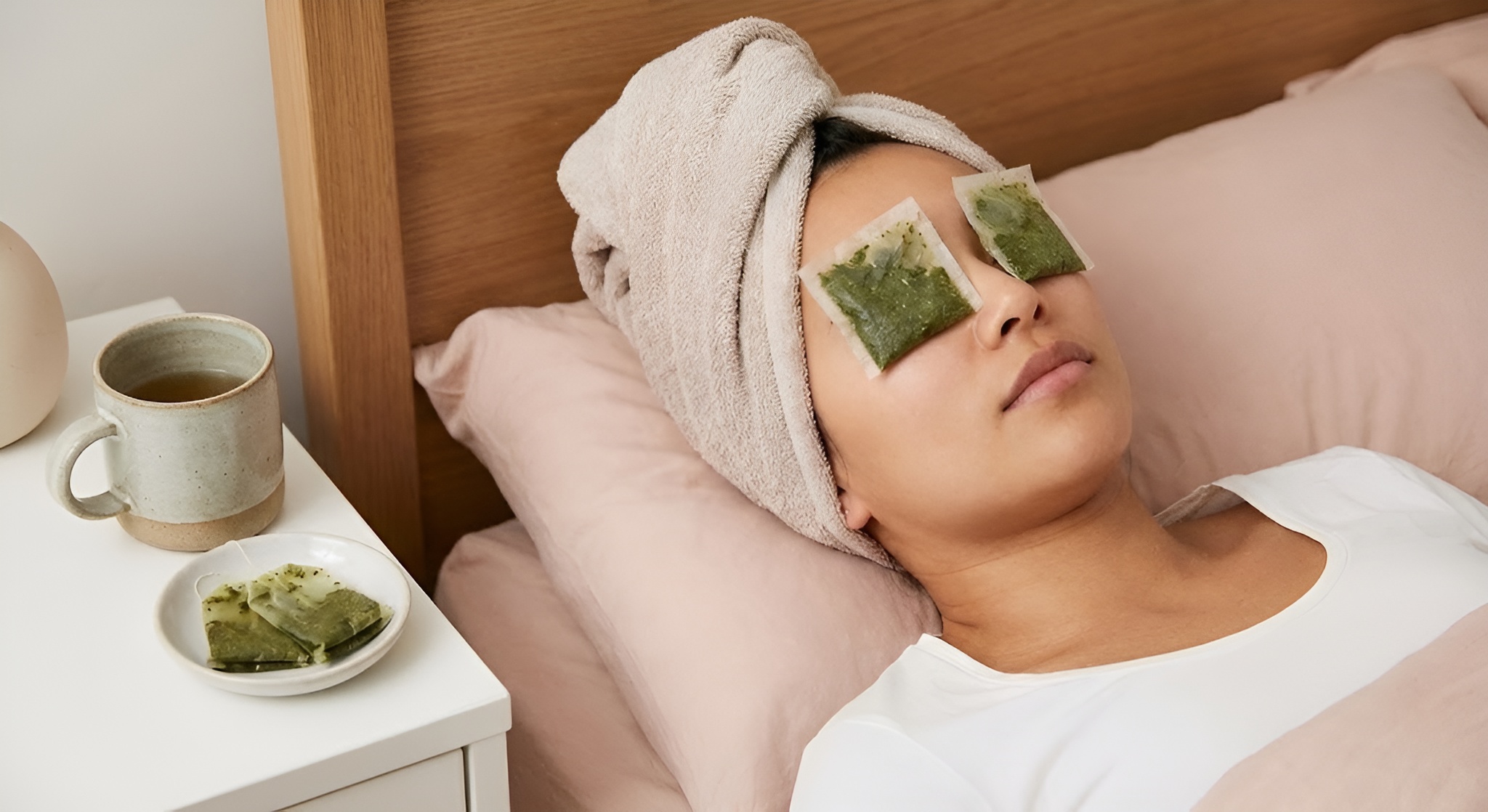
We've all seen the spa trope of cucumber slices on the eyes. While cucumbers are cooling, they are mostly just water. Green Tea bags, however, are a transdermal delivery system for bioactive compounds.
The skin around the eyes is the thinnest on the body, making it highly permeable. When you place a wet tea bag there, the caffeine penetrates the skin barrier. As discussed in our Tea & Caffeine Guide, caffeine restricts blood flow. By shrinking the dilated vessels under the eyes, it reduces the "shadow" that creates dark circles and depuffs the tissue.
Expert Tip: No Decaf allowed
Do not use decaffeinated green tea. The primary mechanism for reducing puffiness is vasoconstriction driven by caffeine. If you remove the caffeine, you remove 50% of the benefit. You might as well use a wet towel.
2. Why Green Tea is Superior to Black Tea
Both Black Tea and Green Tea contain caffeine and tannins. So, can you use your English Breakfast bag? Technically, yes, but Green Tea has a distinct advantage: Flavonoids.
Green Tea is unoxidized, preserving its high levels of EGCG (Epigallocatechin Gallate). EGCG is scientifically proven to reduce cytokine production, effectively telling your cells to "calm down" and stop swelling. Black tea, while high in tannins (great for tightening), lacks this specific anti-inflammatory punch.
Expert Tip: Squeeze It Out!
Before applying, squeeze the tea bag thoroughly. You want it damp, not dripping. If concentrated tea liquid drips into your actual eye, the tannins can cause stinging and dryness. Keep the treatment on the skin, not the eyeball.
3. When to Use Herbal Tea (Styes & Infection)
While Green Tea is the king of beauty (puffiness/dark circles), it is not the best choice for infection. If you have a Stye (a red, painful lump on the eyelid) or Conjunctivitis (Pink Eye), caffeine is irrelevant.
For these issues, reach for Chamomile Tea. Chamomile contains bisabolol and chamazulene, compounds that are naturally antibacterial and incredibly soothing to irritated mucous membranes.
Expert Tip: The "Warm" Protocol
For a stye or clogged tear duct, never use a cold bag. You need heat. A warm (not hot) tea bag acts as a compress to melt the hardened oil blocking the gland. Use Chamomile, keeping it warm for 10-15 minutes.
4. Step-by-Step Protocol: The "Morning After" Fix
Here is the exact method dermatologists recommend for treating tired, puffy eyes (from lack of sleep or crying).
| Step | Action | Why? |
|---|---|---|
| 1. Brew | Steep 2 Green Tea bags in hot water for 3 mins. | Heat is required to extract the caffeine and EGCG from the leaf. Cold water won't work. |
| 2. Chill | Squeeze bags, place in fridge for 20 mins. | Cold constricts blood vessels. Heat dilates them (which would make puffiness worse). |
| 3. Apply | Place over closed eyes for 10–15 mins. | Allows time for transdermal absorption of antioxidants. |
| 4. Rinse | Rinse face with cool water. | Removes any tea pigment to prevent staining the skin. |
Expert Tip: Sustainability Hack
You do not need to waste tea just for your eyes. Brew your morning cup of Green Tea as usual, drink it, and then save the used tea bags in the fridge. They retain enough caffeine and tannins for a second life as an eye compress later that day.
5. The Safety Warning: Microplastics & Staples
Not all tea bags are eye-safe. As detailed in our investigation into Tea Bag Microplastics, many modern "silky" pyramid bags are made of nylon or PET plastic. When heated, they release billions of microplastics.
Furthermore, the sharp edges of plastic mesh can scratch the delicate cornea or eyelid skin. Always use traditional paper tea bags for eye treatments. Also, check for metal staples—you do not want a sharp piece of metal resting on your eyelid!
Expert Tip: Avoid "Earl Grey"
While Black Tea is generally fine, avoid flavored teas like Earl Grey or Chai on your eyes. Bergamot Oil (found in Earl Grey) and spices like cinnamon are potent irritants that can cause burning, redness, and contact dermatitis on sensitive eye skin.
Summary: Which Tea for Which Issue?
| Eye Issue | Best Tea | Temp | Why? |
|---|---|---|---|
| Puffiness / Bags | Green Tea | COLD | High Caffeine + EGCG for maximum constriction. |
| Dark Circles | Black Tea | COLD | Highest Caffeine content creates strongest pump. |
| Stye / Redness | Chamomile | WARM | Antibacterial & Soothing (No caffeine needed). |
| Dry Eyes | None | N/A | Avoid tea. Tannins are astringent and will dry eyes further. |
Want glowing skin to match your bright eyes?
Green tea is great, but White Tea might be the ultimate beauty hack. Learn how it stops collagen breakdown in our guide: Forget Botox: Why White Tea is the Secret to "Glass Skin" →
Comments