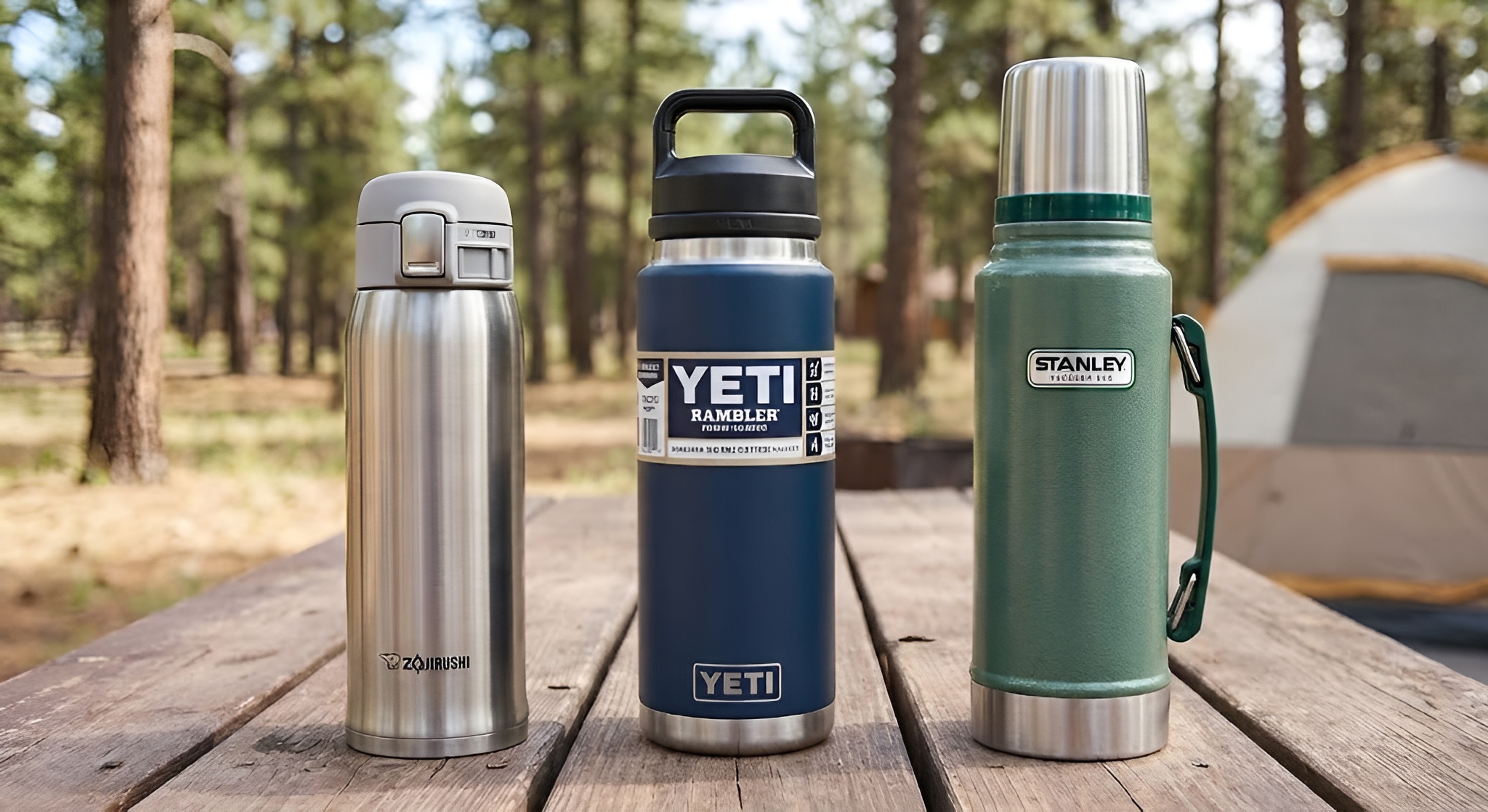
1. The Thermodynamics of Heat Loss
To understand why one bottle works better, we must understand how heat escapes. There are three mechanisms:
1. Conduction: Heat travelling through solid material. In a thermos, heat travels from the inner wall to the outer wall. vacuum insulation stops this by removing the air molecules between the walls, creating a void where heat cannot travel.
2. Convection: Heat moving through air currents. This happens primarily at the lid. Every time you open the bottle, hot air escapes and cold air enters.
3. Radiation: Heat radiating as infrared waves. This is why the insides of high-end thermoses are often polished or copper-plated—to reflect this radiation back into the liquid.
The Vacuum Test
How do you know if your vacuum seal is broken? Fill the bottle with boiling water. After 5 minutes, touch the outside. If the outside feels hot, the vacuum has failed (heat is conducting through to the outer wall). If it stays cool, the vacuum is intact. Zojirushi's thinner walls make them more susceptible to dents that bridge this vacuum gap.
2. Zojirushi: The Precision Engineer
Zojirushi treats heat retention as an obsession. Their vacuum layer is reduced to just 1mm thick, allowing for a lighter bottle without sacrificing insulation.
The Lid Technology
Zojirushi's dominance lies in its lid. It uses a flip-top mechanism with multiple rubber gaskets that create an airtight seal. This prevents Convection almost entirely. The small drinking spout minimizes the surface area exposed to air when you sip.
The Result: Tea put in at 95°C at 8:00 AM will often still be scalding (around 70°C) at 2:00 PM. This is actually a problem for some; you have to wait for your tea to cool before putting it in the bottle.
The "Flavor Trap"
Zojirushi bottles often feature a non-stick coating (like Teflon) on the interior. This repels stains and odors, making it great for strong teas like Earl Grey or coffee. However, some purists claim this coating can impart a slight chemical taste initially. Yeti uses uncoated 18/8 stainless steel, which is neutral but stains heavily with tea tannins. Learn how to remove tea stains here.
3. Yeti: The Rugged Fortress
Yeti Ramblers are built like tanks. They prioritize "Over-Engineering" for durability. The steel walls are significantly thicker than Zojirushi.
The MagSlider Lid
Yeti uses a magnetic slider lid. While convenient and easy to clean (dishwasher safe!), it is not leak-proof and it is a major source of heat loss. It is not airtight. Hot air constantly escapes through the slider gaps.
The Result: Yeti is excellent for keeping tea hot for 1-3 hours (the length of a morning commute or campfire session). Beyond 4 hours, the temperature drops noticeably compared to Zojirushi.
The Dishwasher Debate
This is Yeti's ace card. You can throw the entire Yeti bottle and lid into the dishwasher. Zojirushi bottles are strictly Hand Wash Only. The high heat of a dishwasher can damage the vacuum seal port on the bottom of a Zojirushi and ruin the exterior finish. If you hate hand-washing, Yeti wins by default .
4. Tea Brewing Inside the Flask
If you plan to brew tea directly inside the flask ("Grandpa Style"), thermal retention matters even more.
Over-Steeping Risk: Because Zojirushi holds heat so well, if you leave tea leaves inside, they will "stew." The water stays near boiling for hours, extracting extreme bitterness and tannins. If using a Zojirushi, you MUST remove the leaves before sealing the lid.
The Yeti Advantage: Because Yeti cools down faster, it is actually more forgiving for leaves left in the water. The temperature drop prevents the tea from becoming undrinkable sludge as quickly. Learn more about Grandpa Style brewing.
Ready to Buy?
We've compared the top models side-by-side, including the Zojirushi SM-KHE48 and the Yeti Rambler 20oz. Find the best price and detailed specs in our full review.
Review: Best Tea Thermos 20255. The Final Verdict: Lifestyle Choice
The choice isn't about which is "better," but which fits your life.
| Feature | Zojirushi | Yeti |
|---|---|---|
| Heat Retention (6 hrs) | Excellent (Scalding) | Good (Drinkable) |
| Leak Proof? | Yes (100% Lock) | No (Splash resistant) |
| Cleaning | Difficult (Hand Wash) | Easy (Dishwasher) |
| Durability | Medium (Dents easily) | High (Indestructible) |
| Best For | Office, Commute, Bag | Camping, Car Cupholder |
Comments