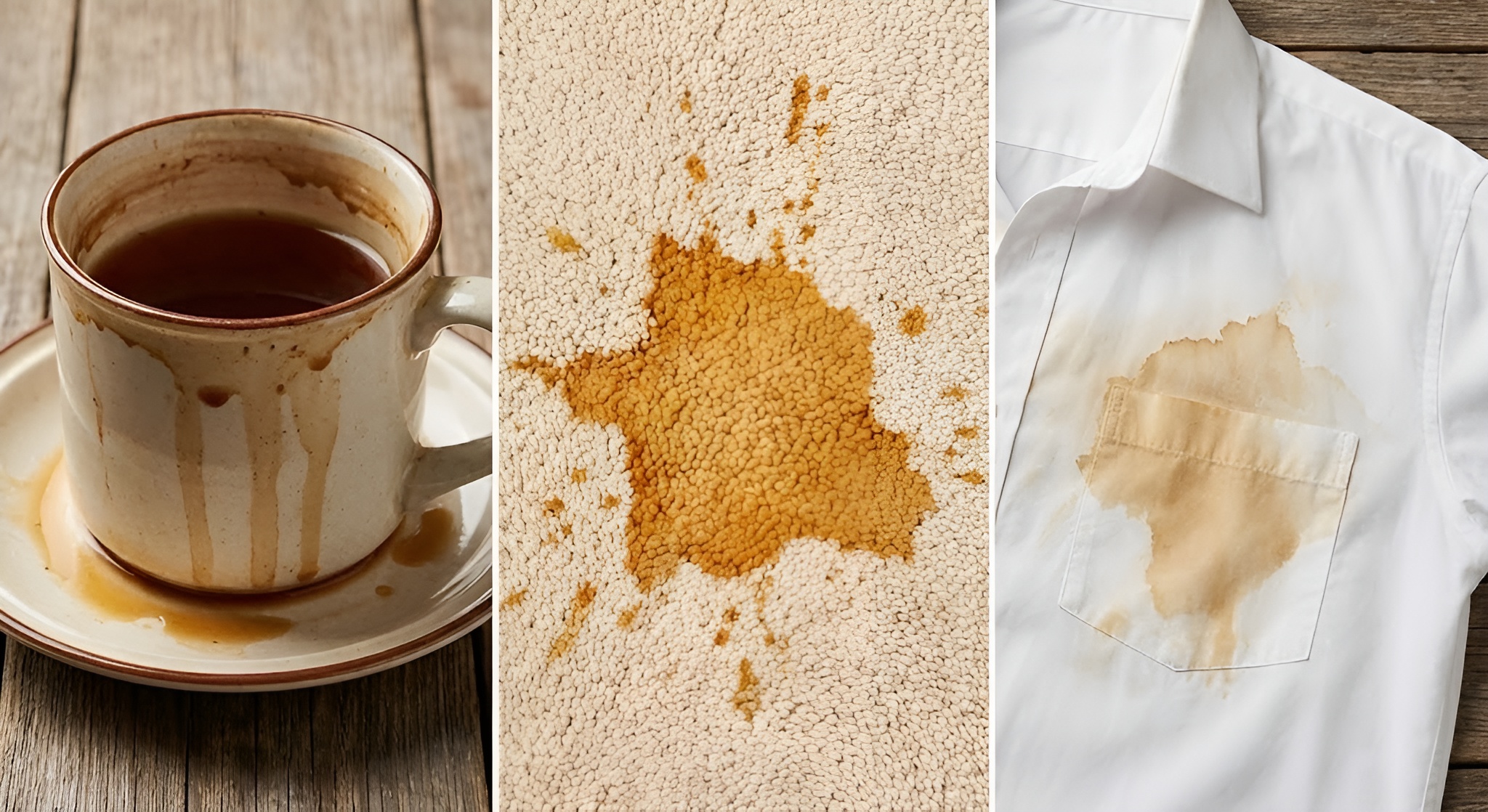
The Master Table: Find Your Stain
Select your stain below to jump to the dedicated guide.
| Surface | The Problem | The Fix | Read Guide | Top Products |
|---|---|---|---|---|
| Clothes / Fabric | Tannins dyeing the fiber. | Cold water flush + Vinegar. | How to Save Your Shirt → | Best Laundry Stain Removers → |
| Carpet / Rugs | Liquid soaking into pile/backing. | Blotting + Baking Soda. | Emergency Carpet Guide → | Best Carpet Cleaners → |
| Mugs / Teapots | Polymerization on glaze. | Baking Soda Paste (Abrasive). | Restore Your Mugs → | Best Cleaning Tablets → |
| Teeth | Binding to enamel protein. | Water Swish + Casein (Milk). | Prevent Teeth Stains → | Best Toothpastes → |
1. Clothes: The "Cold Water" Rule
The biggest mistake people make when they spill tea on their shirt is rushing to the sink and running hot water over it. Stop! Hot water opens the fibers of cotton and linen, allowing the tannin dye to penetrate deeper and bond permanently. It essentially "sets" the stain.
We explain the correct protocol: turn the garment inside out, flush with cold water to push the stain out, and then treat with a simple vinegar solution. We also cover the "Milk Factor"—why protein stains from milky tea require a different approach involving enzymes.
Read: How to Remove Tea Stains from Clothes (Step-by-Step)
Expert Tip: Lemon Juice for Whites
If you have a white cotton shirt, lemon juice acts as a natural bleach. Squeeze fresh lemon on the wet stain and leave it in direct sunlight. The UV rays activate the citric acid, bleaching the brown mark away without damaging the fabric like chlorine.
2. Carpet: The "No Rub" Rule
Spilled a mug on the beige rug? Your instinct is to scrub. Don't. Rubbing a carpet stain creates heat (friction) and frays the fibers, damaging the pile permanently while spreading the stain outward. You need to use capillary action.
Our guide covers the "Blotting Technique," why you should never use ammonia on wool (it dissolves the fibers!), and how to deal with "Wicking"—where a stain mysteriously reappears days after you cleaned it.
Read: How to Remove Tea Stains from Carpet
3. Mugs: The "No Bleach" Rule
It's tempting to pour bleach into your brown-stained mugs. While it removes the color, it chemically damages the ceramic glaze, making the surface porous. This means your mug will stain faster and darker next time.
We show you safe, non-toxic alternatives using baking soda (abrasive) and denture cleaning tablets (oxidizers) to restore your china to sparkling white without ruining the finish.
Read: How to Clean Tea Stained Mugs Safely
4. Teeth: The "Milk" Rule
Did you know tea actually stains teeth worse than coffee? Coffee causes surface yellowing, but tea causes greyish staining due to the tannins bonding with enamel proteins. However, there is a simple fix: Milk.
Research shows that the casein protein in milk binds to the tannins before they can bind to your teeth. We dive into the dentistry of tea and which types (Green vs Black) are safer for your smile.
Read: Does Tea Stain Teeth? (And How to Stop It)